
On March 1, violent protests erupted across several Pakistani cities after the confirmed killing of Iran’s Supreme Leader Ayatollah Ali Khamenei in a reported US-Israeli airstrike on Tehran. The unrest, driven largely by Pakistan’s Shiite community (around 20% of the population), led to at least 10 deaths and over 30 injuries in Karachi, with demonstrations spreading to Lahore, Islamabad, Gilgit, and Skardu.
The most severe clashes occurred in Karachi, where protesters attempted to storm the US Consulate on Mai Kolachi Road. Police responded with tear gas, rubber bullets, and live fire, resulting in 10 fatalities and 31 injuries, including four policemen. Civil Hospital Karachi confirmed receiving 10 bodies, many with bullet wounds. Protesters breached security cordons, vandalized property, and clashed with law enforcement. Sindh’s Information Minister expressed grief over the deaths, while authorities announced a judicial inquiry and formed a joint investigation team (JIT) to determine responsibility. In Gilgit and Skardu, protesters set fire to the United Nations Military Observer Group (UNMOGIP) offices, a school, the superintendent of police’s office, and the Agha Khan Rural Support Programme (AKRSP) office. Authorities imposed a curfew in Skardu and called in the Pakistan Army under Section 245 of the PPC. Demonstrators also blocked the Karakoram Highway at multiple points, further escalating tensions.
In Lahore, hundreds gathered outside the US Consulate, chanting anti-American slogans and carrying portraits of Khamenei. Some attempted to enter the consulate but were detained by security. Police later deployed heavy reinforcements to secure the area. In Islamabad, protesters were stopped from approaching the US Embassy. The city administration imposed Section 144, banning public gatherings, and warned of strict legal action against violators.
Interior Minister Mohsin Naqvi urged citizens to protest peacefully, expressing solidarity with Iran while discouraging violence. He briefed Prime Minister Shehbaz Sharif on the situation. The US Embassy in Islamabad issued advisories to American citizens, urging them to avoid large crowds, monitor local news, and update their Smart Traveller Enrollment Programme (STEP) registration.
Sindh’s Interior Minister Ziaul Hasan Langar emphasized that law enforcement agencies were on high alert, rejecting claims that US Marines fired on protesters. He stressed that violence erupted when demonstrators attempted to breach consulate security.
A judicial inquiry was announced to investigate the Karachi incident. Enhanced security was ordered at sensitive installations nationwide. Authorities appealed to citizens to express emotions legally and peacefully, warning against taking the law into their own hands.
The protests highlight the volatile reaction in Pakistan to Khamenei’s death, with Karachi bearing the brunt of casualties. The unrest spread to multiple regions, including Gilgit-Baltistan, where attacks on UN offices and government facilities marked a serious escalation. While the government has called for calm and initiated inquiries, the situation remains tense, with heightened security and curfews imposed to prevent further violence.
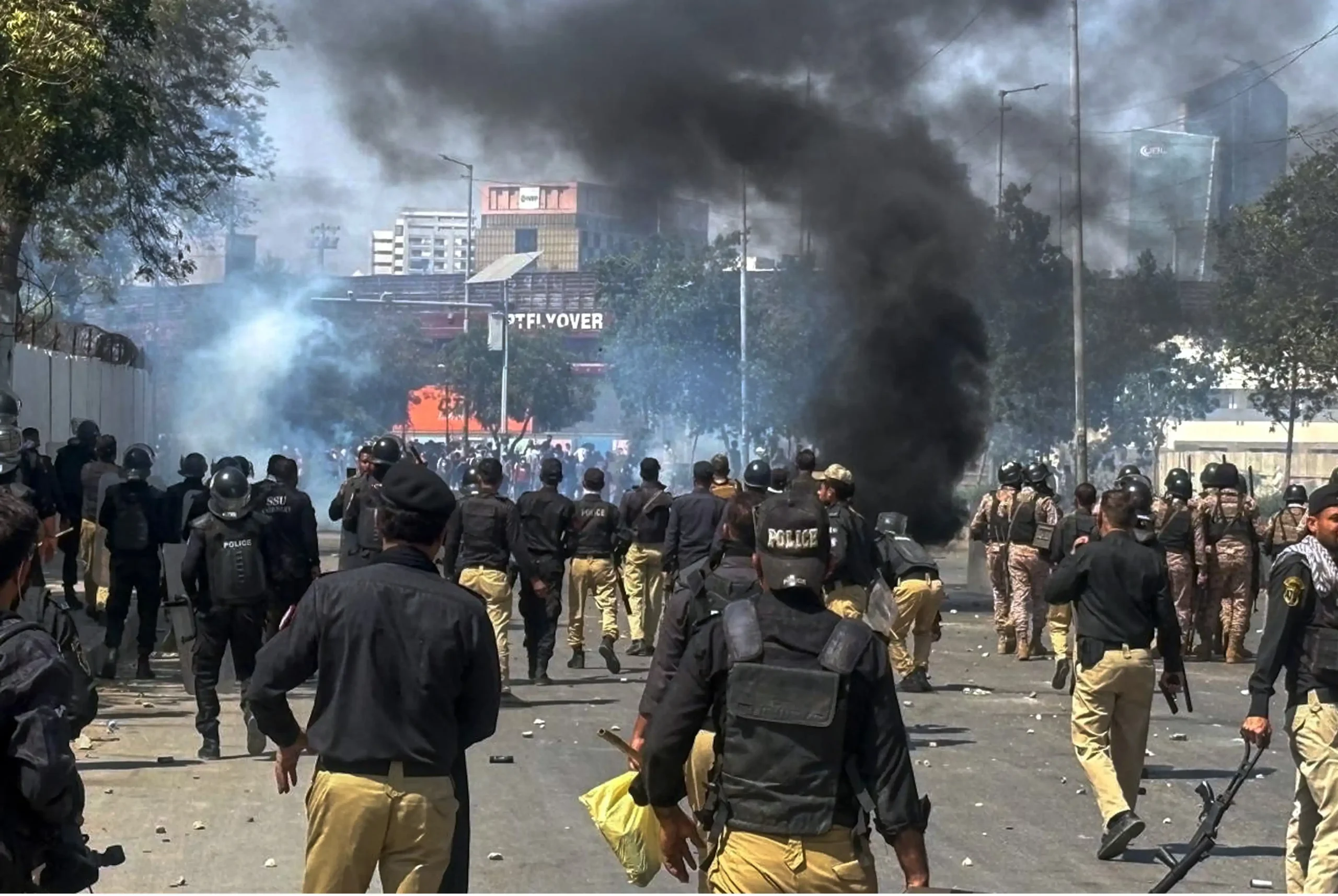
10 killed as protests at US missions rock various Pakistan cities
ISLAMABAD/KARACHI/LAHORE, MAR 1 (PTI):