
Guwahati/ Shillong/ Imphal/ Agartala/ Itanagar/ Aizawl/ Gangtok, ( PTI/IANS): Along with the rest of the country, Northeast India observed the 80th Independence Day with state functions in the capitals and even at the district level. The celebrations were also marked by patriotic fervor.
Assam to invest Rs 1.5 lakh cr in infra in 5 yrs: Himanta
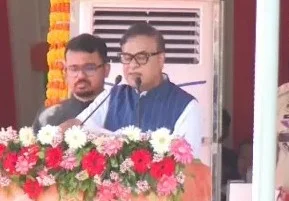
Assam Chief Minister Himanta Biswa Sarma on Saturday said that Rs 1.50 lakh crore will be invested in capital expenditure in the state in the next five years, of which Rs 50,000 crore will be from its own resources.
Speaking after hoisting the National Flag at the Independence Day celebration here, he also appealed to people from various parts of the country who have settled here to list ‘Assamese’ as their mother tongue during Census data collection.
He, however, added that people of Barak Valley and tribals may mention their own languages in that category. The Barak Valley has a predominantly Bengali-speaking population.
“For building a ‘Vikshit Assam’ by 2047, we shall be spending Rs 50,000 crore in capital expenditure. The next four years will see investment in roads, schools, urbanisation, rural growth, etc, and this will be from our own funds,” Sarma said, in his first Independence Day speech after retaining the chief minister’s position for the second term.
“In the next five years, we shall try to get Rs 1 lakh crore from the central government. From 2026 to 2031, the state will spend Rs 1.50 lakh crore on infrastructure,” Sarma added.
He said the state’s economy has tripled in a decade and the state is now known from ‘chai’ to ‘chip’ of semiconductors, referring to the upcoming Tata factory in the state.
“We don’t have the sea and resources like Odisha; faced decades of insurgency; but the ‘Assam model of development’ is shining now,” the CM asserted.
He said schemes like ‘Orunodoi’ for women empowerment, transparently providing 1.65 lakh government jobs, digitalisation of administration, etc. are measures taken in the last five years that have transformed the state’s image.
Thanking the people for reaffirming their trust in the BJP-led government in the April elections, Sarma said development will be further accelerated, and it can be seen through the steps taken in the first 100 days of the new regime, including bringing the Uniform Civil Code.
He also expressed his gratitude to Prime Minister Narendra Modi for allotting massive infrastructure and other projects to the state, from highways to semiconductors, and from underwater tunnels to the Kaziranga Elevated Corridor, without the state even having to demand these.
Sarma maintained that mandatory rendition of the complete six stanzas of the Vande Mataram for the first time since independence made the occasion more special.
Blaming the Congress for the previous shorter version of the National Song being sung, he said, “For their own political interest, a section of Congress leaders had fragmented it. It is under PM Modi that all six stanzas of the song have been given the same status as the National Anthem.”
Condoling the loss of lives in the recent floods, which especially devastated four eastern districts, Sarma said that funds for rehabilitation of the affected people and areas will not be a constraint.
He appreciated the help extended by NDRF, SDRF, IAF and Army, besides the outpour of assistance from various social, religious, business organisations, students’ bodies and individuals.
Affirming the government’s commitment to protect the indigenous people, he said the right to sale and purchase of land in 40 revenue circles will soon be restricted to dwellers for three generations of that area.
Sarma also announced a 30-day special crackdown on child marriage from Nov 1 and affirmed that the government will not rest till underage weddings and polygamy are eradicated.
He added that 12,196 cases against child marriage had been registered and 11,196 arrests made in the last five years.
Dismissing the concepts of Gen Z and Alpha as “European” ones, the CM announced formation of a new Youth Development and Empowerment department that will work for the skill enhancement and all-round growth of the youth.
He also urged the parents to invest in the education of their children, while calling upon the youth to draw inspiration from their own culture and history and work for a self-reliant Assam.
He also announced eight new co-districts and disposal of pending government files in mission mode, among other measures to make governance smooth and closer to the people.
The CM added that the state will commemorate 800 years of the arrival of Swargadeo Chaolung Sukapha of the Ahom dynasty which ruled the state for 600 years and was credited with first integrating the state.
The state will also commemorate 200 years of the revolt of Gomdhar Konwar against the colonial rulers this year, he said.
Lauding the recent victories of boxer Lovlina Borgohain and shuttler Ashmita Chaliha, Sarma said ‘Khel Maharan 3.0’ will be conducted in a grand fashion and corporates will be roped in to nurture identified sporting talents.
New system of governance central to ZPM govt’s vision for Mizoram: CM

Mizoram Chief Minister Lalduhoma on Saturday said that a new system of governance remains central to the present ZPM government’s vision to build a self-reliant economy.
Addressing the Independence Day programme here, Lalduhoma said achieving self-sufficiency in food and other essential sectors was a key objective of his government, alongside improving livelihoods and ensuring balanced development across Mizoram.
“We are taking steps to build a stronger system of governance and a self-reliant, more developed state, while improving the living standards of the people. To achieve self-sufficiency in food and other essential areas, our central vision has been, and will continue to be, a ‘people’s government’ with a new vision and a new approach,” he said after hoisting the Tricolour.
He described the state’s flagship programme “Bana Kaih” or Handholding scheme as the government’s most important initiative for transforming the Mizoram economy.
Lalduhoma said that the scheme aimed at going beyond financial assistance by enhancing skills, creating livelihood opportunities and supporting the economic development of individuals, families and the state.
Highlighting measures aimed at promoting entrepreneurship, Lalduhoma said the government has launched a Rs 20 crore Mizoram Bana Kaih Venture Capital Fund to help young people establish businesses and become self-reliant.
The state government had also introduced the Mizoram Grand Challenge, the Industrial and Investment Policy, 2025, and an Investment Promotion Agency to attract investors and encourage investment, he said.
The Bana Kaih scheme has been extended to agriculture and allied sectors, with the government continuing to procure and market ginger and other key crops produced by farmers, he said. The state provided Rs 140 crore as support price in 2025, while about Rs 22 crore had already been provided in 2026, Lalduhoma said.
He said the government was also promoting ginger processing and exports, including through the Sairang Horticulture Centre.
A Rs 30.13 crore project sanctioned by the Ministry of DoNER for a ginger processing unit in Champhai is expected to increase the value of processed produce and boost farmers’ incomes, he said.
The government’s broader push for food self-sufficiency includes oil palm, off-season vegetables, bamboo, livestock, dairy, fisheries and sericulture.
Under the National Mission on Edible Oils, oil palm cultivation has covered 1,607 hectares, while farmers have sold 7,225 metric tonnes of produce worth Rs 10.53 crore.
Off-season tomato and cabbage production also generated around Rs 40 crore for farmers in 2025, he said.
Lalduhoma said that the scheme was also being used to support people recovering from drug dependence through skill-development programmes implemented in collaboration with churches and voluntary organisations.
Around 2,200 people have received treatment so far, he said.
The government has further expanded Bana Kaih scheme into sports through Empowering Mizoram Sports (EMS), under which talented athletes are being identified and trained with the 2036 Olympic Games in view.
In the employment sector, the government is implementing initiatives such as Eizawnna Kailawn and Rahbi Chhertu to help young people secure sustainable livelihoods, he said.
Lalduhoma said the government’s development initiatives were aimed not merely at increasing awareness but at building a stronger, more inclusive and self-reliant Mizoram through the collective efforts of farmers, workers, traders, youth, women, government employees and voluntary organisations.
He also highlighted a Rs 1,000 crore loan agreement with the Asian Development Bank for the implementation of Mizoram Universal Health Care Scheme (MUHCS), with 90 per cent of the loan to be borne by the Union government.
The chief minister said the state had also secured a Rs 350 crore incentive for effective implementation of Centrally Sponsored Schemes through the SNA SPARSH system.
On fiscal reforms, Lalduhoma said Mizoram’s tax collection had reached Rs 1,278.55 crore in 2025-26, while reforms, including GST 2.0, were helping widen and streamline revenue collection.
Lalduhoma said that his government was also expanding rural infrastructure and social welfare programmes.
Mizoram is among the first states preparing to implement VB-GRAM (G), with Rs 611.65 crore earmarked for its launch, he said.
Under VVP-II, 109 border villages are being covered, while 273 new computer-equipped libraries have been established in rural areas.
Under PMAY-Gramin, 25,433 houses have been completed, he said.
To strengthen food security, the government has distributed benefits under the Mizoram State Special Ration Package to 29,000 families and stocked over 1,67 lakh quintals of rice as monsoon reserve for 2026-27, the chief minister said.
Meghalaya 3rd fastest-growing state over five years, economy more than doubled since 2018: CM
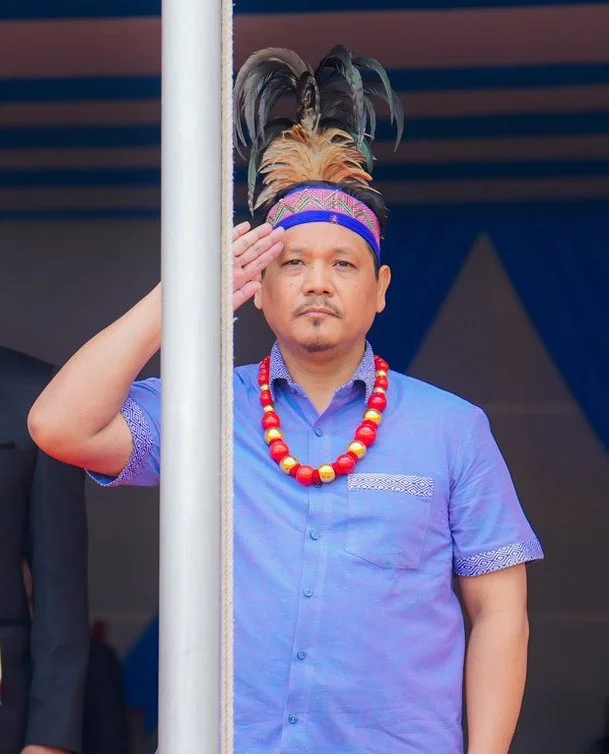
Meghalaya Chief Minister Conrad K Sangma on Saturday said the state’s economy has more than doubled since 2018, making it the third fastest-growing state in India over the last five years.
He also asserted that his government remained committed to financial discipline and on a war footing for the state’s overall development.
Addressing the Independence Day programme at Polo Grounds here, Sangma said the government had focused on three foundations — “protecting and preserving our land, empowering our people and upholding our culture”.
“The foundations for strong results have been laid in every sector. We have come a long way from where we stood eight years ago, and it gives me real satisfaction to see today’s Meghalaya and the road ahead of us,” he said.
Sangma, the NPP chief who became the chief minister for the first time in 2018, said the state has witnessed improvements in roads, basic infrastructure, agriculture, healthcare, education, tourism and sports.
“Today, our economy has more than doubled since 2018, making Meghalaya the third fastest-growing state in India over the last five years,” he said, while thanking Prime Minister Narendra Modi for the Centre’s support.
On environmental conservation, he said Meghalaya has 76 per cent forest cover and highlighted the Green Meghalaya Plus programme, under which communities are being incentivised to protect natural forests. He said more than 60,000 springs had been mapped and efforts were underway to protect them, while more than 500 large water-harvesting structures had been created.
Sangma also highlighted the state’s efforts to transition towards sustainable mining, saying scientific mining had begun and a framework was being developed to support small miners.
On agriculture, he said the government was promoting high-value crops through schemes including CM Farm Plus, the Organic Mission, Floriculture Mission and Ginger Mission.
“Through the scheme, we are providing high-value, long-gestation crops to over 25,000 farmers across all 12 districts,” he said.
The chief minister said the government has also expanded healthcare initiatives, with maternal deaths declining by 56 per cent since 2020 and infant deaths by nearly 40 per cent.
He said the Safe Motherhood Scheme helped transport more than one lakh pregnant women to healthcare facilities, including over 15,800 high-risk mothers.
On education, Sangma said Meghalaya had moved out of the lowest category in the Performance Grading Index, with its score improving from 448 to 525 in a single year.
He said the CM Skills Mission had trained more than 55,000 young people since 2022, while entrepreneurship programmes such as PRIME and CM-ELEVATE had supported thousands of beneficiaries and generated employment.
Tourism, he said, had emerged as one of Meghalaya’s strongest sources of livelihood, with annual visitors increasing from around 10 lakh in 2018 to nearly 18 lakh.
“Tourism has not just created income. It has brought dignity,” Sangma said.
He also highlighted the state’s sporting initiatives ahead of the 39th National Games, saying more than 20,000 grassroots sports projects had been completed or were under way and the STAR programme had supported over 2,400 athletes.
On the drug menace, Sangma urged young people to take up sports, music and skills, saying the strongest defence against drugs was “a full life”.
He also highlighted the government’s efforts to improve citizen grievance redressal through CM Connect, saying more than one lakh citizens had been reached since 2024 through the helpline and other channels.
On culture, Sangma said the government would continue efforts to promote Khasi and Garo languages and pursue their inclusion in the Eighth Schedule of the Constitution.
He also referred to the Meghalaya government’s agreement with Assam in March 2022 that resolved boundary differences in six of the 12 areas of dispute.
“Participation means building with people, not just for them,” he said.
Looking ahead, Sangma said the coming year would be particularly significant as Meghalaya turns 55 and hosts the 39th National Games.
“Let it be this: be optimistic, stay patient and aspire high,” he said, calling on people to become partners in the state’s development journey.
People’s welfare top priority of SKM govt: Sikkim CM Tamang
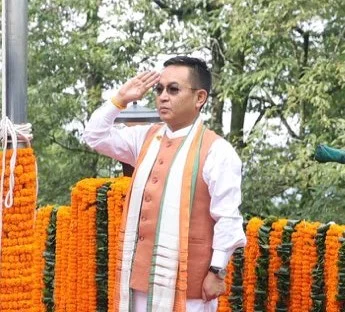
Sikkim Chief Minister Prem Singh Tamang on Saturday said the welfare of the people and fulfilling their aspirations would remain his government’s top priority.
Addressing the 80th Independence Day celebrations at Paljor Stadium here, Tamang said his government had remained focused on development, with the people’s trust serving as its “greatest source of strength and inspiration”.
“From the very beginning, we have remained committed to placing the needs and aspirations of our citizens at the heart of governance and working tirelessly to build Sikkim as a model state,” he said.
“As we proudly hoisted our Tricolour high, we reaffirmed our collective resolve to build a ‘Sunaulo, Samriddha and Samarth’ (golden, prosperous and empowered) Sikkim,” he said.
Tamang said Sikkim had received several prestigious recognitions in recent times and attributed the achievements to the collective efforts of its people.
The ceremonial parade at Paljor Stadium was the centrepiece of the celebrations in the state.
Achievements across various fields were recognised at the function, with gallantry awards, police medals, Shrawan Kumar Awards and State Meritorious Service Awards presented.
Academic achievers who secured top ranks in the Class X and XII board examinations in 2025-26 were also honoured. Cooperative societies and sportspersons were also recognised for their contributions to the state.
The chief minister said the awards recognised “dedication, perseverance and accomplishments” and should inspire others to strive for excellence.
Tamang also announced a 2 per cent increase in Dearness Allowance (DA) for state government employees and Dearness Relief (DR) for pensioners, applicable from January 1, 2026.
The arrears will be paid before Dashain 2026, he said.
The function was attended by ministers, MLAs, government officials and senior police officers, among others.
The 2nd IRBn was adjudged the best all-round platoon in Division A, while Home Guards and Civil Defence won Division B. Tashi Namgyal Senior Secondary School was adjudged the best school contingent at the parade.
Tripura doubled GSDP in 6 years, progressed across sectors: CM Saha
Tripura Chief Minister Manik Saha said on Saturday that the state has made significant progress across sectors in recent years, with its Gross State Domestic Product (GSDP) doubling in six years and a strong focus on creating economic opportunities for nearly 40 lakh people.
Hoisting the National flag at the Assam Rifles ground here on the occasion of the 80th Independence Day, the Chief Minister paid homage to freedom fighters, martyrs and nation-builders and called upon the people to work together to build a developed, peaceful, inclusive and self-reliant Tripura.
Chief Minister Saha added that Tripura is the only state in the country where e-office has been successfully implemented from the highest level of the state administration to the panchayat level. The state has also ranked first nationally for two consecutive years in the compliance reduction and deregulation exercise, he noted.
At the recent Destination Tripura Business Conclave 2026, the state signed 468 MoUs involving potential investments of around Rs 1.32 lakh crore across major sectors, the Chief Minister claimed.
Tripura has also received national recognition for its implementation of PM-JANMAN and Dharti Aaba Janbhagidari Abhiyan, CM Saha said. He added that Sepahijala district was awarded as the country’s best district panchayat under the Nanaji Deshmukh Sarvottam Panchayat Satat Vikas Puraskar, while Kanchanbari Gram Panchayat in Unakoti was recognised as the best healthy panchayat.
Highlighting agriculture, the Chief Minister said that more than 26,800 farmers have taken up organic farming and around 2.30 lakh farmers received direct financial assistance under the PM-KISAN scheme, while 56,600 farmers were provided loans amounting to Rs 438 crore through Kisan Credit Cards.
The state government has also supported animal husbandry and fisheries, including insurance coverage for more than 21,000 animals and 1.1 lakh fish farmers and fish workers.
Cage fish farming has been introduced on a large scale in Dumbur reservoir and Sitadara Lake, CM Saha added.
The Chief Minister told that the tourism infrastructure is being expanded, including development of major destinations under the Matabari Tourism Circuit.
“The state is also developing facilities around Tripura Sundari Temple, Unakoti, Chabimura, Amar Sagar and other tourist destinations. In healthcare, the number of annual MBBS seats in the state has increased to 500,” he said.
CM Saha added that the state government is also developing a Tripura University of Health Sciences and expanding district and sub-divisional hospitals.
More than 5.7 lakh beneficiaries have received cashless treatment under Ayushman Bharat PM-JAY, involving an expenditure of more than Rs 307 crore, he said.
“The state government has launched a campaign to screen more than 15 lakh people aged above 30 years for non-communicable diseases, including hypertension, diabetes and cancer,” he added.
According to the Chief Minister, in education, pre-primary sections have been introduced in 411 schools, benefiting more than 21,000 children.
“The state has also established 125 Vidyajyoti schools as centres of excellence, while more than 1.64 lakh bicycles have been distributed among Class 9 students.”
Chief Minister Saha said that nearly 4.96 lakh rural women have been organised into 55,693 self-help groups under the Tripura Rural Livelihood Mission, with Rs 837 crore in community funds and Rs 2,400 crore in bank credit provided to strengthen the groups.
“The state government is also expanding digital connectivity, with 104 new mobile tower sites commissioned under the 4G Saturation Project,” he added.
“Financial assistance has been provided to 63,249 students for purchasing smartphones under the Chief Minister’s Yuva Yogayog Yojana. In infrastructure, modernisation of Agartala, Dharmanagar, Kumarghat and Udaipur railway stations is underway under the Amrit Bharat Station Scheme. Mainline Electric Multiple Unit (MEMU) services have also been introduced on the Agartala-Karimganj route.”
Chief Minster Saha said that 1.24 lakh hectares of the state’s 2.55 lakh hectares of cultivable land now have irrigation facilities, while drinking water has been provided to 6.49 lakh rural households.
“The state government has also intensified its anti-drug campaign. A record quantity of narcotics was seized, leading to the registration of 542 cases under the NDPS Act and the arrest of 858 people,” he added.
The Chief Minister said that Tripura has received more than 360 national and regional awards over the past eight years for good governance, transparency and efficient administration.
CM Saha called upon the people to work collectively towards the goal of building a “Developed Tripura, Developed India” by 2047.
Arunachal’s border villages attracting tourists: Khandu
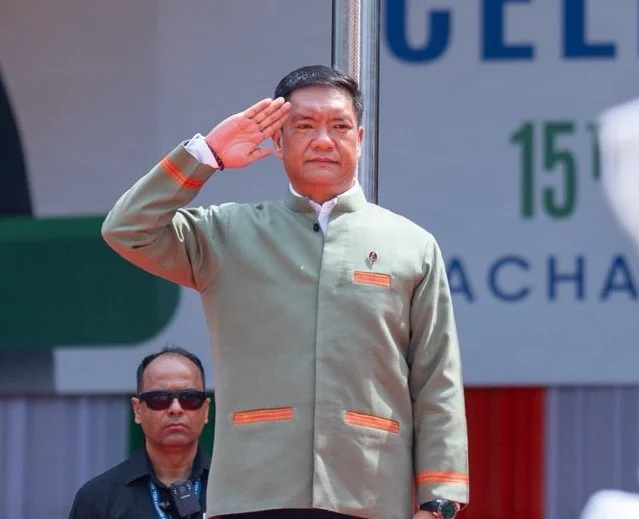
Arunachal Pradesh Chief Minister Pema Khandu on Saturday said the state’s border villages are emerging as new destinations for tourism, livelihood and local enterprise, with the Vibrant Village Programme opening up new opportunities for frontier communities.
Hoisting the Tricolour at Indira Gandhi Park here on the occasion of the 80th Independence Day, Khandu said the programme is improving infrastructure, strengthening local livelihoods and showcasing the natural beauty and rich cultural heritage of border villages.
Under Phase-I of the Vibrant Village Programme, projects worth around Rs 2,800 crore are being implemented in 455 villages along the India-Tibet (China) border, he said. Under Phase-II, another 122 villages along the India-Myanmar and India-Bhutan borders have been included in the programme.
The Chief Minister said the initiatives are aimed at strengthening basic infrastructure and connectivity in remote frontier areas while creating sustainable livelihood opportunities for local communities.
Highlighting the state’s enormous hydropower potential, Khandu said Arunachal Pradesh has a unique role to play in India’s clean energy transition and in achieving the country’s net-zero goals.
“Guided by this vision, we declared 2025-2035 as the Decade of Hydropower, with a target of commissioning nearly 19 GW of hydropower capacity, supported by investments of approximately Rs 1.9 lakh crore,” he said.
The Subansiri Lower Hydroelectric Project, described as India’s largest hydropower project, has already operationalised four of its eight generating units, producing 1,000 MW of clean energy. The remaining four units are expected to become operational this year, Khandu said.
He said the Union Government has approved investments of about Rs 40,175 crore for the 1,720 MW Kamala Hydro Electric Project and the 1,200 MW Kalai-II Hydro Electric Project. Work is also progressing on the Tato-I, Tato-II and Heo hydroelectric projects.
Referring to the challenges posed by the state’s difficult terrain, scattered habitations and connectivity gaps, Khandu said his government has worked over the past decade to bridge these gaps and ensure that the benefits of development reach the last mile.
“Development must touch every life and every region, and no citizen should be left behind because of distance, terrain or circumstance,” he said.
Khandu said more than 1.5 lakh women are now organised into over 16,000 Self Help Groups (SHGs), with thousands of them becoming entrepreneurs, community leaders and agents of change.
Highlighting the education sector, he said Rs 3,112.50 crore has been invested in Phase-I of Mission Shikshit Arunachal to transform the education system through reforms in infrastructure, governance, teaching quality, digital education and institutional capacity. Another Rs 500 crore has been invested to upgrade 50 government schools into Golden Jubilee Schools, creating modern and future-ready learning environments.
These initiatives have already contributed to a 13.33 per cent increase in enrolment in government schools, he said.
The Chief Minister also expressed solidarity with families affected by the recent floods and landslides in Arunachal Pradesh and neighbouring Assam and Nagaland. “Nature has tested us once again, bringing immense challenges to our communities, disrupting lives, livelihoods and vital infrastructure,” he said.
Khandu expressed gratitude to Prime Minister Narendra Modi and Union Home Minister Amit Shah for approving the advance release of Rs 44.55 crore under the State Disaster Response Fund, saying the assistance has strengthened relief, rescue and rehabilitation efforts in flood-affected areas.
An Inter-Ministerial Central Team also visited the state to assess the damage and extend necessary support, he said. Khandu recalled Prime Minister Modi’s visit to Itanagar on September 22, 2025, when he dedicated and laid foundation stones for development projects worth over Rs 5,100 crore. On the occasion, the Prime Minister also laid the foundation stones for the 186 MW Tato-I and 240 MW Heo hydroelectric projects, involving cumulative investments of over Rs 3,700 crore in the state, he said.
Emphasising the need for environmentally sustainable development, Khandu said Arunachal Pradesh, as the custodian of some of India’s richest forests, rivers, biodiversity landscapes and mountain ecosystems, has a responsibility to pursue development in a climate-resilient and environmentally responsible manner.
He also highlighted efforts to promote the state’s rich Buddhist heritage following the Union Budget announcement on developing Buddhist circuits in the Northeast.
Peace, mutual trust and justice foundation for Manipur’s development: CM Khemchand Singh
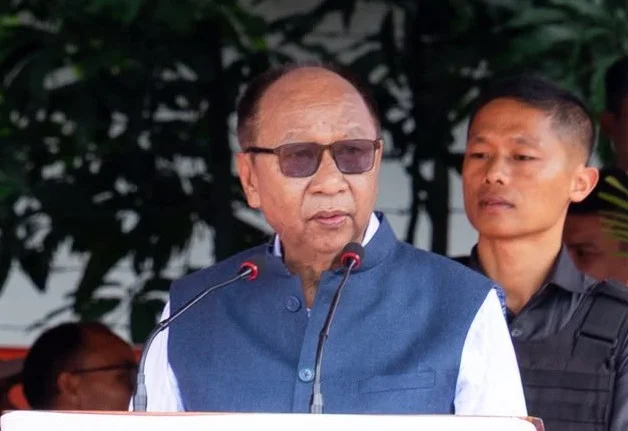
Manipur Chief Minister Yumnam Khemchand Singh on Saturday stressed that peace is the foundation of development and lasting stability can be achieved only through mutual trust, justice, dignity and the participation of all communities.
Hoisting the National flag at the 1st Manipur Rifles Parade Ground in Imphal, the Chief Minister strongly condemned Friday’s unfortunate incident in which two Naga farmers were killed and two others injured in Kangpokpi district, and appealed to all sections of society to rebuild mutual trust and live together peacefully.
Acknowledging the support extended by the Central government in restoring peace in the state, CM Singh called upon the people to work collectively towards peace, development and building a stronger Manipur.
The programme included cultural performances by four troupes of the Department of Art and Culture and the presentation of a special issue of Manipur on Saturday.
Recalling the sacrifices of freedom fighters and ancestors who contributed to India’s independence, the Chief Minister highlighted the country’s progress in infrastructure, manufacturing, innovation and inclusive development.
He said that initiatives under ‘Aatmanirbhar Bharat’ and Digital India are creating employment opportunities, strengthening domestic manufacturing and improving access to public services and digital payments.
Referring to the vision of ‘Viksit Bharat’, CM Singh added that the goal is to make India a developed, self-reliant and globally competitive nation by 2047.
Highlighting development initiatives in Manipur, the Chief Minister said that infrastructure works are being undertaken in both rural and urban areas, while healthcare services are being extended to remote hill areas through Mobile Medical Units, PM-JANMAN and the Dharti Aaba Janjatiya Gram Utkarsh Abhiyan.
He also highlighted efforts under Jal Jeevan Mission 2.0 to strengthen rural drinking water supply across the state.
On rural livelihoods and employment, the Chief Minister said the Viksit Bharat–Guarantee for Rojgar and Aajeevika Mission (Grameen) has increased guaranteed employment from 100 to 125 days and wages from Rs 263 to Rs 300.
He also highlighted the Pradhan Mantri Viksit Bharat Rojgar Yojana aimed at promoting formal employment.
In agriculture, he said a bio-reactor unit for biofertiliser production has been established at CSIR-NEIST to support organic farming and improve soil fertility.
On welfare measures, Yumnam Khemchand Singh said that 35 ethnic violence-affected Internally Displaced Persons (IDPs) suffering from chronic illnesses were recently provided Rs 1 lakh each, while around 2.4 lakh beneficiaries received assistance of Rs 91 crore under 17 social welfare schemes.
An Integrated Monthly Pension Processing Scheme has also been launched to ensure timely and transparent delivery of social security benefits, he added.
On law and order, the Chief Minister said 477 new vehicles were distributed to the Manipur Police and the Emergency Response Support System (ERSS)-112 was launched to strengthen emergency response.
A Manipur Police Museum has also been established to preserve the history and legacy of the police force.
An exclusive Special NIA Court was established in Thoubal district, while the Nodera Emergency Response Application was launched in Noney to facilitate reporting of emergencies.
In education, the Chief Minister highlighted the establishment of a District Institute of Education and Training (DIET) building at Salam and a school library at Heirangoithong High School.
Under the 77th Van Mahotsav, 15 lakh tree saplings were planted across the state.
He also highlighted initiatives to combat drug abuse among the youth, including the ‘Nasha Mukt Yuva for Viksit Bharat Sankalp Abhiyan’ and the 10-Crore Addiction-Free Pledge Mega Campaign.
The Chief Minister also highlighted Jan-Bhagidari-Sabse Dur, Sabse Pehle and Jan Kalyan Shivir as initiatives aimed at ensuring direct and people-centric delivery of government services.
“Yashoda AI, a national AI literacy and digital safety campaign, was also highlighted for promoting digital awareness among women through the National Commission for Women,” he added.
On sports, Chief Minister Singh congratulated Manipuri sportspersons who won medals at the recent Commonwealth Games in Glasgow and noted the successful organisation of the Durand Cup tournament.
He also lauded Manipur sportsperson Ariha Pangambam for winning India’s first gold medal at the Asian Aerobic Gymnastics Championship in Mongolia.
The ceremonial parade was commanded by Haobam Sanghamita, Commandant of the 9th Manipur Rifles battalion, with Pramesh Arambam, 4th Indian Reserve Battalion Commandant, serving as the Reserve Parade Commander.
A total of 23 contingents representing the security forces, police, civil departments, youth and educational institutions took part in the parade.