
A one-day workshop on “Best Practices of Waste Management” was held on July 11 at Don Bosco Institute for Development & Leadership, River Belt Colony, Dimapur. Organised by Pro Rural, the workshop brought together officials from Dimapur Municipal Council (DMC), Nagaland Pollution Control Board (NPCB), District Administration, NGOs, student bodies and environmental activists. The aim was to find better ways to manage Dimapur’s waste, especially in light of recent flooding caused by heavy rains.
In a press release, Tolivi N Sumi, Project Coordinator, Environment & Waste Management
Pro Rural informed that Paul Lokho, director of Pro Rural, at the event said that solid waste management can only succeed with full community participation. “At least 80% of the city’s population must be sensitized,” he said. He suggested a Public-Private-Partnership (PPP) model involving NGOs, youth and village institutions, and urged for youth-led campaigns like the “Zero Litter Campaign,” with reward systems for schools and colleges.
Revenue officer Bendang Longkumer from the district administration highlighted the urgent need for improved civic sense, especially in managing natural drainages and avoiding encroachments which worsened flood impacts. He called for mass awareness drives to educate citizens.
Presenting city data, DMC consultant Adrian Mahung revealed that Dimapur generates around 74.6 MT of solid waste daily—roughly 0.43 kg per person, which is above the national average. Of this, 86% is dumped at the trenching ground, 9% is recycled, and 5% ends up in drains and water bodies. He pointed out the serious gaps in the city’s waste system due to low public participation, poor segregation habits and planning flaws. He also highlighted rising volumes of non-biodegradable waste such as sanitary pads and diapers.
To address the issues, Mahung suggested-educating citizens through grassroots engagement; encouraging segregation of waste with ward-level rewards and involving waste workers in planning and creating value from waste
NPCB scientist B, Yanthung, provided alarming data about microplastic contamination in food and water. He raised concern over domestic animals feeding on garbage piles and entering the human food chain. He emphasized that Nagaland lacks basic infrastructure for modern waste handling and called for joint efforts from government bodies and citizens.
The workshop also saw inputs from several NGOs like Peace Channel, Bethesda and E-Circle who proposed action plans involving schools, community leaders and religious institutions. The role of pastors and the pulpit was recommended to spread awareness and civic responsibility.
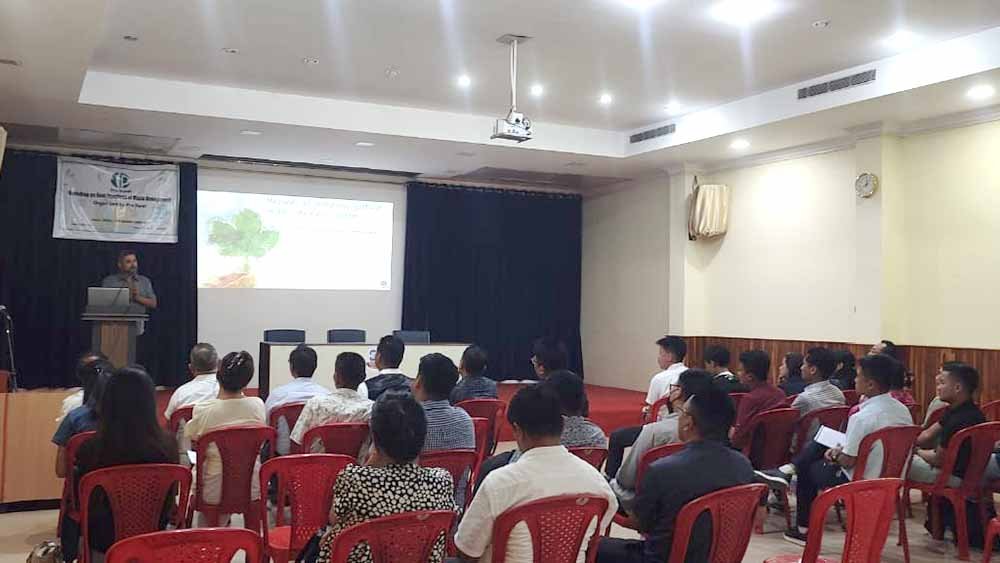
Calls for community action in waste management reform
DIMAPUR