
“Dada, if you deposit 1 lakh, you could get 20 lakhs in just one year!”
“My neighbor has already received his first installment of 10 lakh, and he’s expecting the second soon.”
“Someone else even bought a Thar SUV!”
Have you heard these kinds of stories from people promising unbelievable returns on investments? Don’t worry—you’re not alone.
Many people have fallen for such scams, often because the appeal of quick money is so strong. Who wouldn’t want quick profits with astronomical returns? Sometimes it’s due to greed; other times, it’s because we trust outsiders with impressive titles and smooth muk-bahadurs!
A scam that promises overnight, life-changing returns is almost always a Ponzi scheme. Named after Charles Ponzi, who orchestrated such schemes in the 1920s, this type of fraud remains widespread even today and is likely to persist in the future.
So, what is a Ponzi scheme? A Ponzi scheme is a type of investment fraud where early investors are paid returns using the money collected from new investors, rather than from real profits. Organizers usually promise high returns with little or no risk, but there’s often no actual business generating the earnings.
Now that we know what a Ponzi scheme is, how do we stay cautious and check whether the tempting offer from the so-called aunty or that slick businessman from an Indian city is presenting is real?
Let’s test their promises with two basic concepts:
• Compound interest
• Rule of 72
Compound Interest: First, let’s understand what realistic investment returns in India look like. If you invest in mutual funds, what returns can you expect? Take a guess.
A look at SBI’s mutual fund, the SBI Savings Fund, shows a 1-year annualized return of about 8% as of August 2025. Some mutual funds may offer slightly more, but let’s use 8% as an average annual return for this discussion.
Now, if someone promises to turn 1 lac into 10 lacs in a year, that’s a whooping 900% return! How do you check this?
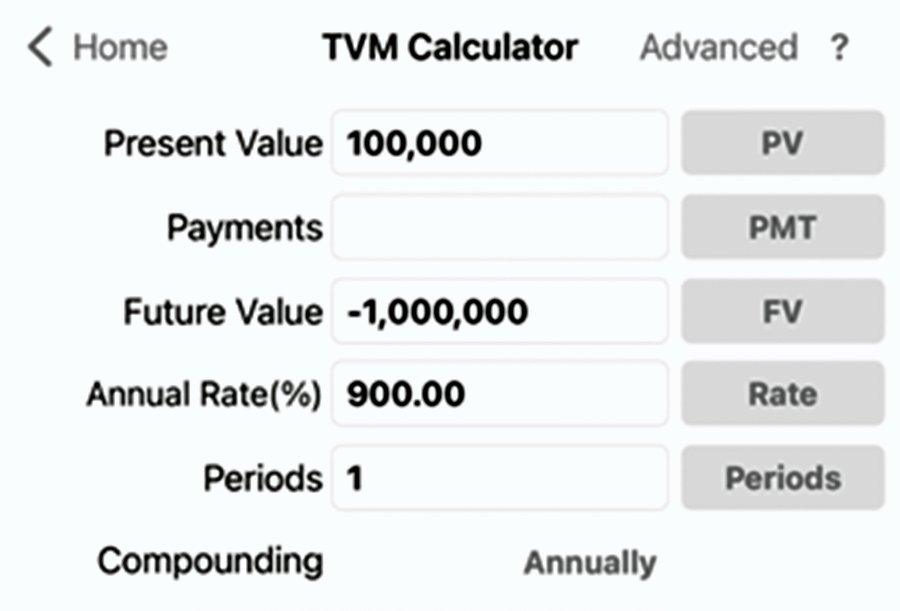
There are so many online calculators you can use. For this article, let’s use fncalculator.com and enter these details:
• Present Value: 100,000
• Annual rate (%): leave blank
• Future Value: -1,000,000
• Number of periods: 1 (i.e., 1 year)
Press the Annual Rate button, and you’ll see 900%!
Now you see that while average mutual fund returns are around 8% per year, this person is claiming he/she can give you 900% on your 1 lakh investment. That’s a huge red flag (warning)—be ready to Naga wrestle with this person!
Another way to find out whether the returns he/she mentioned is achievable is by using the Rule of 72. This is a quick way to see how long it takes for money to double. Using that average return of 8%, simply divide 72 by 8—that’s 9. So, it will take about 9 years for your 1 lac to double to 2 lakhs. Surprised? Sorry to burst your bubble, but there’s no shortcut to making money. Money takes time to grow- be cautious of anyone who claims otherwise.
Now that you know how to check potential returns using a compound interest calculator and the rule of 72, always verify claims before saying yes. Don’t let anyone fool you! If someone claims return above 15-20%, be extremely cautious! And if they claim a 900% return in just one year, it’s best to politely show them the door.
Final Thoughts:
Understanding these basic principles empowers you to make smart investment decisions and avoid losing money to Ponzi schemes. Remember, wealth grows best with patience, consistent investing, and realistic goals.
Stay vigilant, do the math then you will protect yourself from unrealistic promises.
Disclaimer: This guide is provided solely for educational purposes to raise financial awareness and help you make informed decisions. It is not investment advice, nor is it a solicitation or endorsement of any financial products or services. Always consult with certified financial advisors and invest only through well-established and regulated companies to ensure the safety and suitability of your investments.