
As the National Sports Governance Bill is set to become a law, the country’s national federations and Indian Olympic Association President P T Usha on Tuesday welcomed the landmark policy, calling it a step in the right direction as India gears up to bid for the 2036 Olympics.
The Bill, which is set to become a law after being passed in both the Lok Sabha and Rajya Sabha, aims to revamp and standardise India’s sports administration, creating a clear framework for good governance in the National Sports Federations (NSFs) and the Indian Olympic Association (IOA).
India will thus join countries like the USA, UK, China, and Japan in having formal laws for streamlined sports administration.
“It’s certainly good since it will make things pretty straight forward in the sense that there will be no ambiguity now. The same set of rules and regulations will have to be followed by everyone. No different rules for different people as was the case before,” All India Tennis Association (AITA) interim secretary Sunder Iyer told PTI.
Iyer though felt that limiting the seats on the Executive Committee is not an ideal situation.
“India is a big country, so restricting the EC to 15 members will be tough to follow. At least 4-5 seats will go to sportspersons of extraordinary merit and members of the athletes’ commission, so practically out of 36 states, you can have only 10-11 in EC. It is quite tough, this should have been looked into, the number should have been more,” he added.
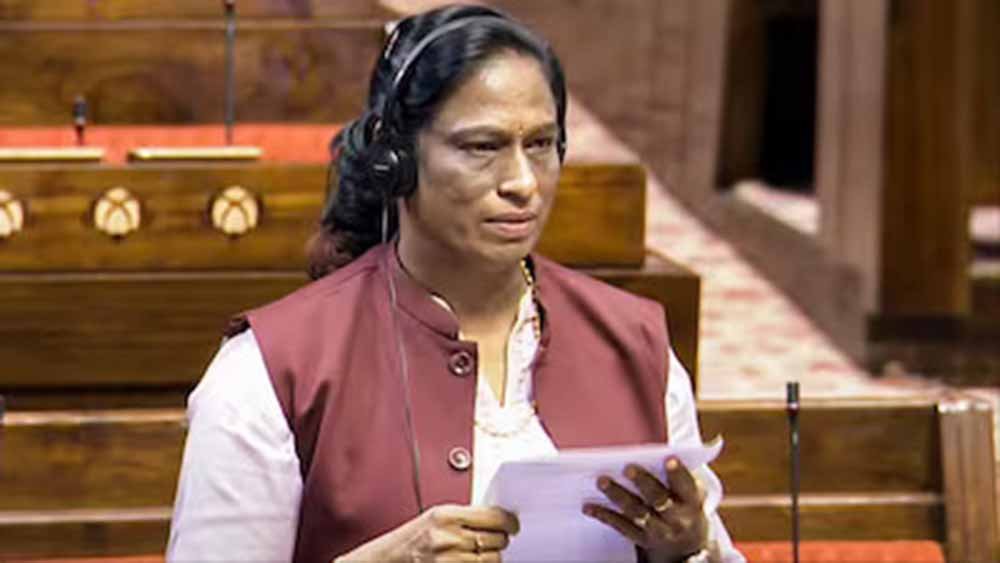
Usha, who is also a nominated member of the Rajya Sabha, offered her unequivocal support, saying that it will end decades of “stagnant status quo” to usher in “transparency, and accountability” in the country’s sports administration.
“Today is a day of immense personal and national significance. I have long awaited this moment,” Usha, who sat alongside another nominated member Sudha Murthy, said in her address to the House.
“This bill will usher in transparency, accountability, and gender parity. It will empower athletes and build confidence among sponsors and federations. It is about justice and fair-play,” she added. A key provision in the Bill is establishment of a National Sports Tribunal, which will have the powers of a civil court to decide disputes ranging from selections to elections involving federations and athletes. Once constituted, the Tribunal’s decisions can only be challenged in the Supreme Court.
“The bill is line with the PM’s vision for the 2036 Olympics. It will reduce the number of legal cases in federations and allow sports to prosper. It will also save needless expenditure on prolonged court battles,” said Indian Weightlifting Federation President Sahdev Yadav. All India Football Federation president Kalyan Chaubey said it will greatly benefit Indian sports by promoting good governance.
“Many national sports federations are burdened with court cases; in fact, the IOA is involved in more than 350 cases. The proposed Tribunal in this bill can save a substantial amount of money.
“It will also be able to address use of national names and insignia, such as the words ‘India’ or ‘Indian’in sports organisations, by preventing the formation of parallel bodies under the guise of a federation or association,” he said.
Athletics Federation of India spokesperson Adille Sumariwalla said, “This will bring better governance to NSFs. Almost all the NSFs are affected by court cases. Elections are challenged in every second court of law. Many courts have little idea (about sports). Different courts have given different judgments in the same matter, which makes things even more complex. One judgment for BCCI, one for IOA, one for AIFF.
“I believe, with all these court cases, the federations would have to be shut down soon. All this will hopefully end as the decision of the National Sports Tribunal can be challenged only before the Supreme Court.
“But at the end of the day, a policy or legislation will serve the purpose only if there is proper implementation. Only good intention is not enough, implementation is the key. Today, people are manipulating the system because it was a Sports Code and not a Bill/Act,” he said.
Badminton Association of India secretary Sanjay Mishra lauded the Bill’s transparency.
“It is a progressive step toward aligning India’s sporting framework with global best practices. Its focus on transparency, athlete welfare, and accountable governance not only strengthens our domestic ecosystem but also prepares us for responsibilities and opportunities that come with hosting major international events in future, including a potential Olympics bid,” Mishra said.
Swimming Federation of India secretary Monal Chokshi said, “This is a step in creating proper policy because, until now, the National Sports Code 2011 and subsequent court judgments left a lot of grey areas. Various courts had passed contradictory orders. Everything is now in black and white.”
Hockey India president Dilip Tirkey called the bill’s passage “historic”.
“This reform will inspire new confidence among athletes and all stakeholders, creating a governance model aligned with global standards.”
Table Tennis Federation of India secretary general Kamlesh Mehta called the move “a big step in the right direction.”
“The bill covers all aspects, including dispute resolution, which is important because differences are inevitable in any organisation. Now, these differences can be settled faster.”
Sports Governance Bill need of the hour: NSFs
NEW DELHI, AUG 12 (PTI)