
Prime Minister Narendra Modi on Wednesday highlighted an article by Union Minister Ashwini Vaishnaw, which states that in the coming decade, as India’s semiconductor units attain scale and maturity, the nation is set to emerge as a competitive hub for the entire semiconductor value chain. PM Modi said the article elaborates “Bharat’s transformative semiconductor journey, noting that the Semicon India Summit 2025 marks the continuation of this path.” The article sees semiconductors as part of foundational sectors such as steel, power, telecom, chemicals, transport and semiconductors. They are the hidden engines inside almost everything we use. Smartphones, cars, trains, medical equipment, defence systems, power grids, satellites, and artificial intelligence, it observes.
The Minister for Electronics & IT has stated that semiconductors are only going to rise in future. Our own consumption and production of electronics is expanding at an unprecedented pace. India today has over 65 crore smartphone users, and our electronics manufacturing is touching Rs 12 lakh crore annually.
At the same time, the country is also developing AI-based systems, data centres, and electric vehicles that require semiconductor chips. This surge in both demand and innovation makes it essential for Bharat to secure its place in the global semiconductor value chain.
The construction work of the plants is progressing at a fast pace. Today, we can confidently say that the first “Made in India” chip will be out this year.
A pilot production line in one of the units has already started in Sanand, and within a year, we expect four more units to go into production.
Global leaders such as Applied Materials, Lam Research, Merck, and Linde are investing in supporting factories and supply chains. This ecosystem approach reflects Prime Minister Narendra Modi’s focus on long-term growth of the industry in Bharat,” the article states.
India has moved from waiting at the bus stop of history to driving the future. Our design and talent pool are playing an important role in this, Vaishnaw observes. Policies and investments are critical to harnessing Bharat’s true edge — its people. India currently has more than 20 per cent of the global design workforce.
According to an industry estimate, the world is expected to face a shortage of over one million semiconductor professionals by the start of the next decade. India is preparing to fill this gap. More than 60,000 users across 350 institutions and startups are using world-class Electronic Design Automation (EDA) tools provided free of cost by the Government of India. In 2025 alone, their usage exceeded more than 1.2 crore hours.
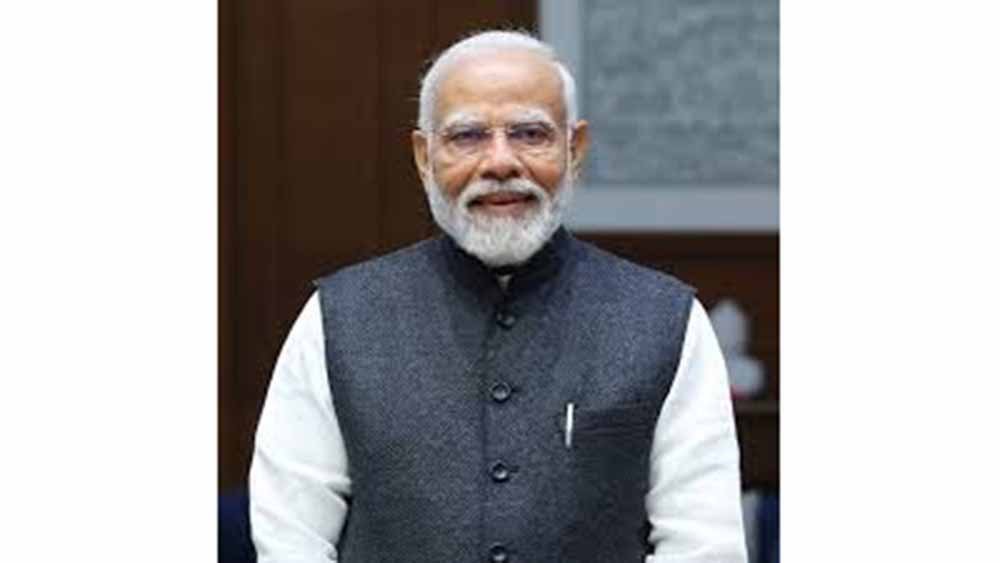
India poised to emerge as hub for semiconductor value chain: PM Modi
New Delhi, Sep 3 (IANS)