
Advisor for Tribal Affairs and Election, Tovihoto Ayemi, on Tuesday inaugurated the two-day workshop on Resource Organisation on Jhum and Biodiversity (ROJB) at Hotel Acacia, Dimapur.
ROJB, established under the JICA-assisted Nagaland Forest Management Project (NFMP) and hosted by the Department of Environment, Forest and Climate Change, is envisioned as a Centre of Excellence for research, innovation and knowledge dissemination on jhum cultivation, biodiversity conservation and sustainable livelihoods.
Speaking as the chief guest, Tovihoto said it was a privilege to be part of the launch and lauded the department, project team and JICA for realising the vision. He said Nagaland’s rich forests and unique biodiversity are integral to the identity of its people, and described jhum cultivation as a way of life that sustains food security, social bonds and cultural heritage.
However, he cautioned that shrinking fallow cycles, declining soil fertility, biodiversity loss and climate change pose serious challenges. In this regard, he termed ROJB a timely and visionary initiative aimed at generating knowledge, innovating solutions and strengthening community action.
Tovihoto emphasized three key pillars for ROJB—customary stewardship, science and learning, and inclusive policy. He urged the organisation to work closely with village councils and elders to document and validate traditional practices, provide training for farmers, youth and women, and generate evidence to inform state policies and programmes.
“If we share knowledge, resources and responsibilities, every village will prosper,” he said, adding that the launch should mark the beginning of a new chapter in Nagaland’s ecological stewardship and community well-being.
Chief Representative of JICA India, Takeuchi Takuro, in his address, said ROJB is not just an institution but a commitment to the people of Nagaland and their ecological legacy. He described it as a regional catalyst integrating scientific research, indigenous knowledge and policy innovation, and expressed hope that it would evolve into a knowledge hub for Nagaland, the Northeast and the Himalayan region.
Takuro also highlighted NFMP’s achievements, including 38,000 hectares of plantation and formation of 429 self-help groups to promote livelihood activities. He said the project integrates digital tools to map jhum cycles, monitor biodiversity and connect farmers to markets and knowledge systems, while emphasizing that human-to-human collaboration remains central to transformation.
ROJB aims to address challenges faced by jhum farmers by promoting sustainable practices that enhance soil fertility, conserve biodiversity, secure livelihoods and build climate resilience.
Its objectives include promoting research and policy advocacy, disseminating knowledge, and enhancing stakeholder capacity.
The inaugural programme was chaired by Dharmendra Prakash, Principal Chief Conservator of Forest & HoFF & CPD, NFMP. Invocation prayer was offered by Rev. Vilodi Sakhrie, Pastor, Town Baptist Church, Dimapur, and welcome address was delivered by M. Senthil Kumar, Addl. PCCF & Project Director (HRD & RE).
The programme was followed by technical sessions on “Jhum in Transition: Realities, Risks and Solutions” and “Biodiversity and Shifting Cultivation: Indigenous and Adaptive”, featuring various panel speakers.
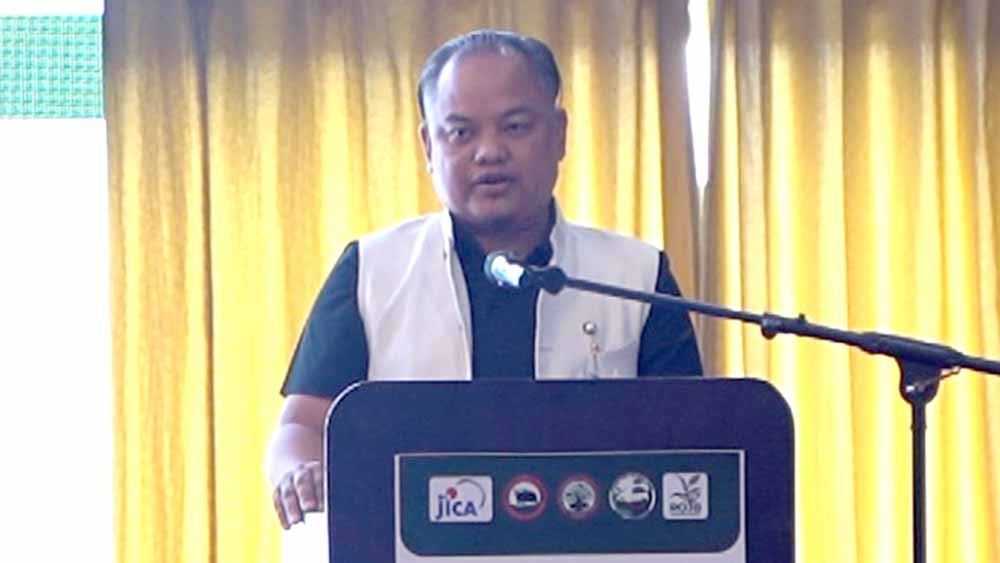
Tovihoto launches jhum, biodiversity initiative
Staff ReporterDIMAPUR, SEP 23 (NPN)