
Typhoon Kalmaegi brought fierce winds and torrential rains to Vietnam on Friday, killing at least five people, flattening homes, blowing off roofs and uprooting trees. In the Philippines, where the storm left at least 204 dead earlier in the week, survivors wept over the coffins of their loved ones and braced for another typhoon.
As the storm moved on, recovery work began in battered towns and villages in both countries. Across central Vietnamese provinces, people cleared debris and repaired roofs on their homes.
Jimmy Abatayo, who lost his wife and nine close relatives after the typhoon unleashed flooding in the central Philippine province of Cebu, was overwhelmed with sorrow and guilt as he ran his palm over his wife’s casket.
“I was able to swim. I told my family to swim, you will be saved, just swim, be brave and keep swimming,” said Abatayo, 53, pausing and then breaking into tears. “They did not hear what I said because I would never see them again.”
Kalmaegi struck Vietnam as the country’s central region was still reeling from floods caused by record-breaking rains. Authorities said more than 537,000 people were evacuated, many by boat, as floodwaters rose and landslides loomed. The storm was forecast to dump up to 24 inches (600 millimetres) of rain in some areas before moving into Laos and northeast Thailand later on Friday. Three fishermen were reported missing Thursday after their boat was swept away by strong waves near Ly Son Island off Quang Ngai province. Search efforts were later suspended due to worsening weather, state media said.
The Philippines experiences about 20 typhoons and storms each year and is among the world’s most disaster-prone countries.
Vietnam, which is hit by around a dozen storms annually, has endured a relentless series this year.
Typhoon Ragasa dumped torrential rain in late September, followed by Typhoon Bualoi and Typhoon Matmo, which together left more than 85 people dead or missing and caused an estimated USD 1.36 billion in damage.
Scientists warn that a warming climate is intensifying storms and rainfall across Southeast Asia, making floods and typhoons increasingly destructive and frequent.
Kristen Corbosiero, a professor of atmospheric and environmental sciences at the University at Albany, said a normal year has 23 named storms by this time, but Kalmaegi and Fung-Wong are the 26th and 27th named storms. Kalmaegi is the fourth strongest typhoon this season, she said.
“If you look at the climatology for the Philippines and for Vietnam, it’s almost the entire year that they can get them because the warm waters that fuel the storm just are there,” Corbosiero said.
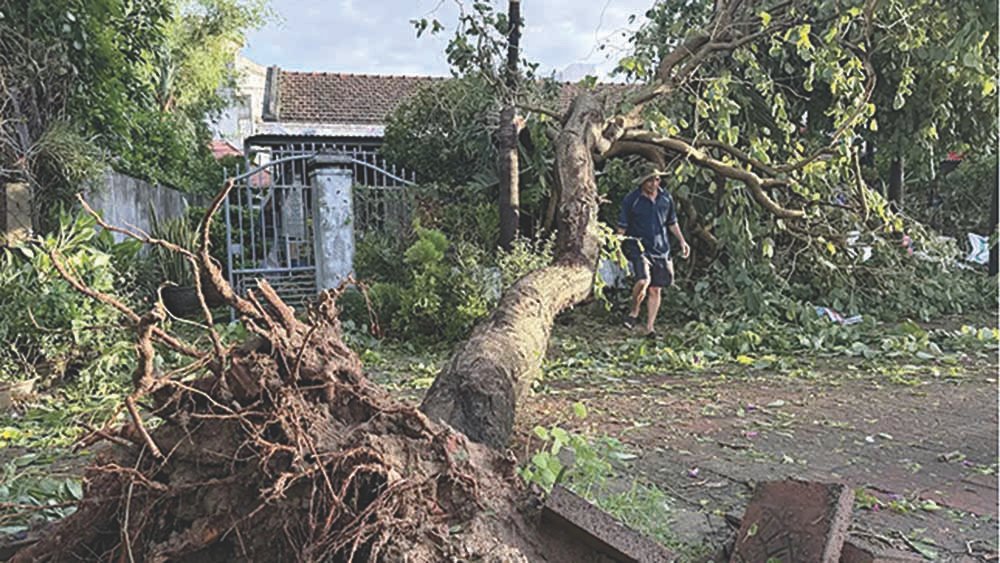
Typhoon Kalmaegi rampages across Vietnam
DAK LAK (VIETNAM), NOV 8 (AP)