
Nagaland State Human Rights Commission (NSHRC), in collaboration with the Internal Quality Assurance Cell (IQAC) of Wangkhao Government College, Mon, conducted an awareness programme on “Human Rights and the Role of Human Rights Commission in its Better Protection” on November 19.
Speaking at the programme, NSHRC chairperson Justice (Retd.) Songkhupchung Serto said human greed and selfishness remain the root causes of conflict in any society, stressing that “there is no peace without human respect and no development without peace.”
He traced the origins of the modern human rights movement to the global atrocities committed during the First and Second World Wars, which compelled nations to prioritise the protection of human dignity and establish universal rights frameworks.
He described the Universal Declaration of Human Rights as a transformative document that guarantees equality, freedom, justice, and the protection of life and liberty.
Justice Serto also explained the functioning and authority of Human Rights Commissions, noting that they play a vital role in ensuring accountability whenever rights are violated, including by government authorities.
He said the Commission can intervene in such cases, recommend strict action, and ensure relief for victims. Calling upon students to become ambassadors of human rights, he reminded them that safeguarding dignity and justice is a collective responsibility.
He also spoke on the symbolism of the Commission’s logo and reiterated that its core purpose is the protection of human rights. Justice Serto thanked the college for facilitating the programme and encouraged students to pursue their education seriously, recalling B.R. Ambedkar’s message: “Be educated, be organised, and be agitated.”
NSHRC Member, R. Nzanbemo Lotha introduced the Commission and elaborated on the meaning and scope of human rights. He provided an overview of the Protection of Human Rights Act, 1993, explaining that it defines human rights as rights related to life, liberty, equality, and dignity guaranteed by the Constitution or international covenants.
Lotha outlined the structure and powers of the National Human Rights Commission and State Human Rights Commissions, highlighting their authority under Section 13 to summon witnesses, receive evidence, requisition documents, and conduct inquiries with the powers of a civil court.
He also detailed the Commission’s mandate to investigate violations and recommend prosecution, disciplinary action, or compensation.
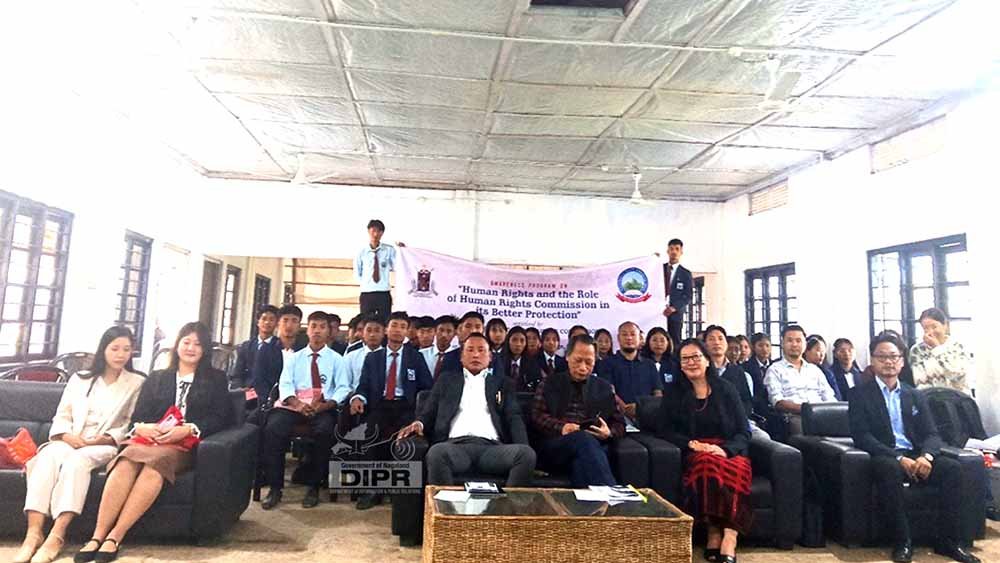
Nagaland State Human Rights Commission holds awarenessprog on Human Rights in Mon
DIMAPUR