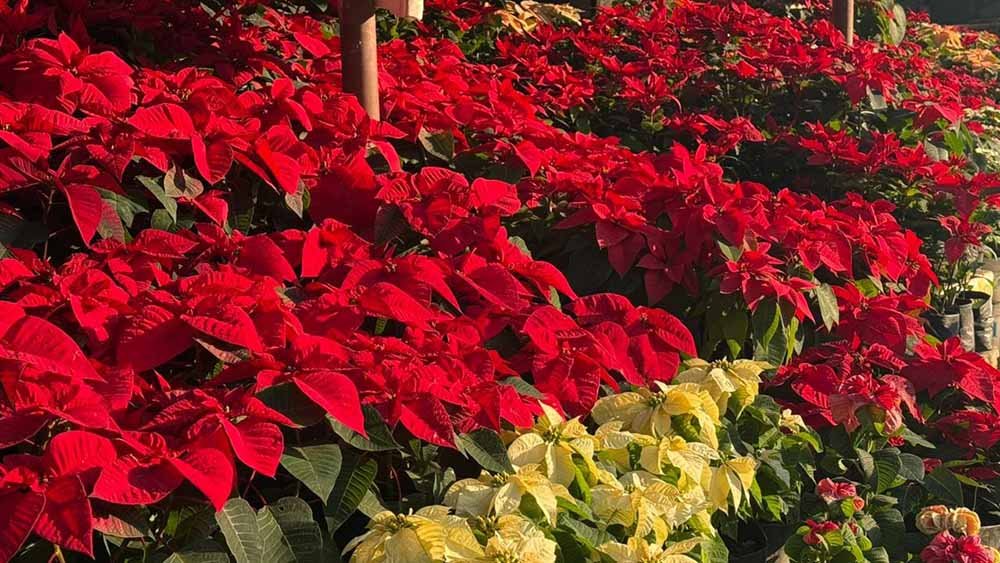
The 4th edition of the Sechü (Zubza) Flower Festival commenced on Friday at Liezha B Colony along National Highway-29, marking the beginning of a vibrant celebration that will continue through December 10. The event is organised by the Sechü (Zubza) Youth Organisation (SZYO) in collaboration with the Department of Horticulture.
Gracing the inaugural ceremony as the special guest, Joint Director of Horticulture S. Senka expressed appreciation for the dedication shown by flower growers in the Zubza area. Highlighting the rising opportunities in floriculture, he described the sector as a “Sunrise Industry” due to its high economic returns, growing domestic and international demand, diverse industrial applications—including perfumes, flavours, and medicines—and strong export potential.
Drawing attention to India’s floriculture landscape, Senka shared key national figures:
Imports: In the 2024–25 fiscal year, India imported live plants and cut flowers valued at USD 54.15 million, with 4,638 shipments recorded between October 2023 and September 2024.
Exports: During the same period, the country exported 5,412 metric tonnes of flowers—such as roses, jasmine, and Nagaland orchids—earning USD 22 million, with major markets including the USA, Germany, and the UK.
Senka also highlighted a case study on Dendrobium orchids, noting that all cut-flower imports enter India solely through Chennai airport, in accordance with DGFT’s phytosanitary regulations to protect native crops from foreign pests and diseases.
Identifying Zubza–Sutsu as an area with immense potential, he urged growers to maintain accurate production and revenue records to access government support and scale operations. He further emphasised the favourable weather and soil conditions of the region, proudly asserting that the “Nagaland Rose is among the best in the world,” recalling past exports to Japan and encouraging growers to revive the practice.
“The market exists,” he said, “but we must be prepared with consistent production.”
Assuring growers of the Horticulture Department’s full support, Senka commended Minister Salhoutuonuo Kruse for her commitment to the sector, and encouraged residents to actively utilise available schemes and projects.
SZYO president Apelie Rino, who chaired the programme, said the festival was initiated to provide a platform for local growers and vendors. He emphasised that the community’s rich soil and water resources support both food and flower cultivation, benefiting nearly every household, with most vendors sourcing directly from village growers.
Sharing her experience, seasoned flower grower Neikhrienuo Nagi highlighted the financial viability of floriculture. She noted that flower prices range from Rs. 150 to Rs. 400 per pot, and last year, one grower earned a net profit of Rs. 3–4 lakh from an initial investment of around Rs. 1 lakh.
She described the sustainable pre-booking model where sellers secure stock from growers before the season, enabling stable income. “Many in the village have started growing from their homes, earning without needing to go to the market,” she said.
With around 40–50 growers—of which 30 are regular sellers—the community’s floriculture sector continues to flourish. Nagi, who shifted from vegetable vending to flower cultivation eight years ago, now supplies flowers to Guwahati and other parts of the country. Her day, often stretching from 8 a.m. to 10 p.m., reflects the dedication driving the growing floriculture trade in the hills of Zubza. (Correspondent)