
Climate change fuelled extreme weather across the world in 2025, worsening heatwaves, droughts, storms and wildfires and pushing millions close to the “limits of adaptation”, according to the World Weather Attribution’s annual report.
Scientists have called for a rapid reduction of fossil fuel consumption to avoid the worst consequences of climate change, it said.
The World Weather Attribution is an international collaboration that analyses and communicates the possible influence of climate change on extreme weather events, such as storms, extreme rainfall, heatwaves and droughts.
According to the report, heatwaves have become measurably more intense since the Paris Agreement was signed, with some events now up to 10 times more likely to happen than in 2015.
“In 2025, climate change fuelled extreme weather across the world, worsening heatwaves, droughts, storms and wildfires, and pushing millions close to the limits of adaptation. Global temperatures were exceptionally high throughout the year,” the report said.
It noted that although natural modes like El Niño Southern Oscillation were in a cooler phase, global warming made 2025 one of the warmest years on record.
“Extreme weather disproportionally affects vulnerable groups and marginalised communities. This inequality is also seen in climate science, where lack of data and limitations in climate models constrain analyses for Global South events,” the report said.
The experts said reducing vulnerability and exposure of the population saves lives, but some extreme events in 2025 showed that climate change is already pushing millions close to the “limits of adaptation”.
“Each year, the risks of climate change become less hypothetical and more brutal reality,” Friederike Otto, professor in Climate Science at the Centre for Environmental Policy at Imperial College London, said.
“The report shows that despite efforts to cut carbon emissions, they have fallen short in preventing global temperature rise and the worst impacts. Decision-makers must face the reality that their continued reliance on fossil fuels is costing lives, billions in economic losses, and causing irreversible damage to communities worldwide,” Otto, who is also the co-founder of World Weather Attribution, added.
The report noted that 2025, despite being a year with La Niña conditions — a feature that is usually associated with colder equatorial Pacific ocean waters and milder global temperatures — this year will still be one of the hottest three ever recorded.
“The three-year average will also cross the 1.5 degrees Celsius threshold for the first time. The rapid studies conducted by World Weather Attribution this year highlight the consequences of this warming. Most extreme weather events analysed by the group showed the fingerprints of climate change.
“The analyses also show that for every extreme event, vulnerable populations are systematically the hardest hit,” the report noted.
In 2025, World Weather Attribution identified 157 extreme weather events that met a set of criteria of humanitarian impact. Floods and heatwaves were the most frequent occurrences, with 49 events each, followed by storms (38), wildfires (11), droughts (7) and cold spells (3).
The team studied 22 of those events in-depth: three in Africa, seven in the Americas, five in Asia, six in Europe and one in Oceania.
Of those, 17 were made more severe or more likely due to climate change, while five yielded inconclusive results, mostly due to the lack of weather data and limitations in climate models.
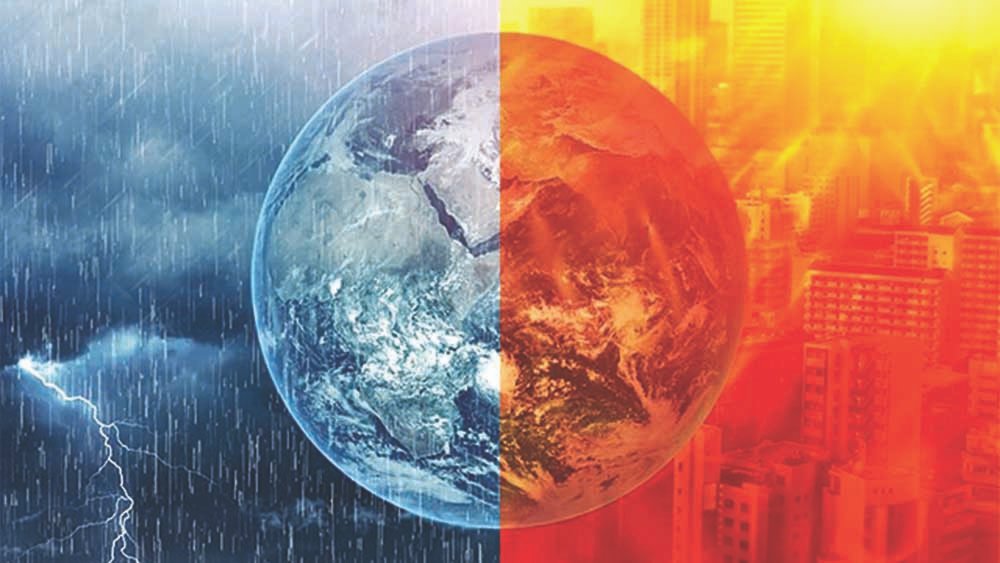
Climate extremes in 2025 exposed inequality; millions closer to limits of adaptation: Report
PTI