
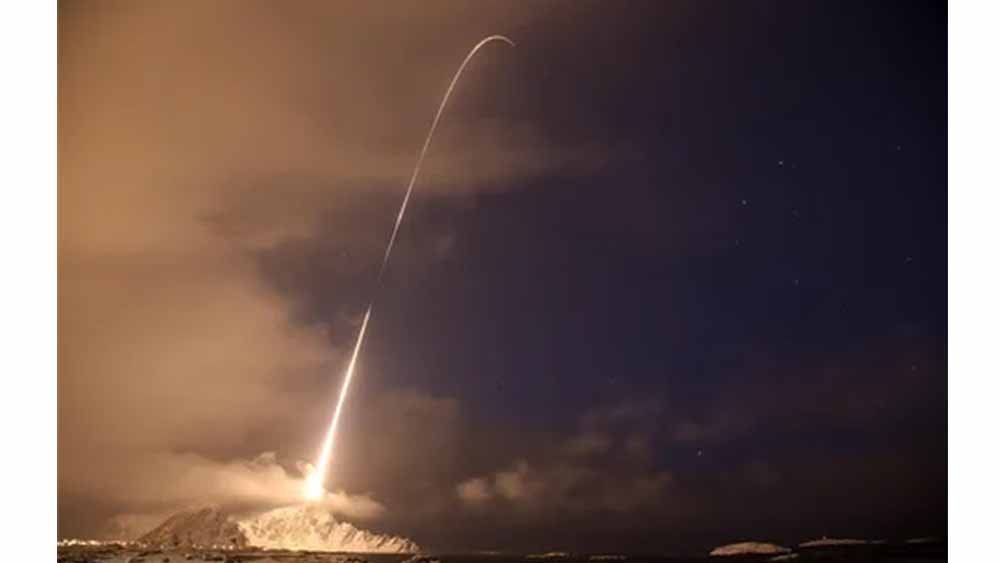
A Norwegian rocket launched on 25 January 1995 in order to study the Northern Lights, was mistaken by Russia for an incoming nuclear missile on a direct course to Moscow.
For just over an hour on a freezing winter’s day, the world had a chilling brush with the worst of Cold War nightmares. On an unremarkable Wednesday afternoon, military technicians on shift at radar stations across northern Russia spotted an ominous blip on their screens. A rocket had been launched somewhere off Norway’s coast and was rising fast. Where was it going and was it a threat? After all, most assumed such nuclear tensions had evaporated when the Berlin Wall came down.
For those monitoring the skies, the implications were dreadful. They knew that one missile fired from a US submarine in those waters could deliver eight nuclear warheads to Moscow within 15 minutes. The message was passed urgently up the chain of command to Russian President Boris Yeltsin.
He became the first world leader to activate a “nuclear briefcase”, a case that contains the instructions and technology for detonating nuclear bombs. Since the end of World War Two, nuclear-armed states have operated a policy of deterrence, based on the idea that if warring states were to launch major nuclear strikes it would lead to mutually assured destruction. In that tense moment, Yeltsin and his advisers had to decide urgently whether to retaliate.
As we all now know, this alarming chain of events did not end in catastrophe. For all the heightened tension, the story ended up as a light-hearted item at the end of that evening’s late news programme, complete with Tom Lehrer’s blackly comic song We Will All Go Together When We Go (“… all suffused with an incandescent glow”).
The BBC’s Newsnight presenter Jeremy Paxman noted: “Before we go, we should report that nuclear war did not break out today, despite the best efforts of a Russian news agency. At 13:46, reports began coming in quoting the Moscow news agency Interfax that Russia had shot down an incoming missile. Reporters, thinking they were about to have ringside seats for Armageddon, immediately called the Ministry of Defence.
A stirred but unshaken spokesman boldly asserted: ‘I am confident that the British have not fired any missiles at Russia.’” A Pentagon spokesperson was none the wiser, saying, “All we have is reports of reports.”
World currency markets wobbled, while politicians, military chiefs and journalists spent a frantic hour scrambling for information. At 14:52 GMT, the people who were aware of the potential crisis could breathe again. Interfax corrected its report to say that – although Russia’s early warning system had registered the launch of a missile – the rocket had landed in Norwegian territory.
Later, a defence official in Norway confirmed the launch was made in peace. It had been part of a routine scientific research programme at a civilian rocket range and was aimed at gathering information about the Northern Lights, the unique weather phenomenon otherwise known as the aurora borealis. The rocket landed as planned in the sea near the remote Arctic island of Spitzbergen, well short of Russian air space. Hours after the report was known to be false, unnamed Russian defence sources told Interfax it was “too soon to tell” if the launch was intended to test their early-warning radar system.
Russia had been sensitive about its air defence capabilities since 1987, when West German teenager Mathias Rust managed to fly more than 500 miles (750km) through every Soviet defensive shield in a single-engine plane to land at the gates of the Kremlin. By now the Cold War was over, but this was a sign that some Russian officials remained jittery about a nuclear threat.
“I was terrified when I heard about the attention our routine firing got,” said Norwegian scientist Kolbjørn Adolfsen, who was in a meeting when the panicked telephone calls started coming in. What was even stranger was that weeks earlier, Norway had already told Moscow about the planned launch. Mr Adolfsen suggested the Russians might have reacted because it was the first time that an aurora borealis rocket had gone up at such a high ballistic trajectory, reaching an altitude of 908 miles. However, he said it should not have come as a surprise. “A message was sent through the foreign ministry on 14 December to all nations concerned that we would be doing the firing,” he said. Yet somehow, that warning never reached the right desks. It was a sobering reminder of how a single missed message could have potentially catastrophic consequences. (BBC)