
3 NSCN-K (K-V) cadres surrender; more arrest likely
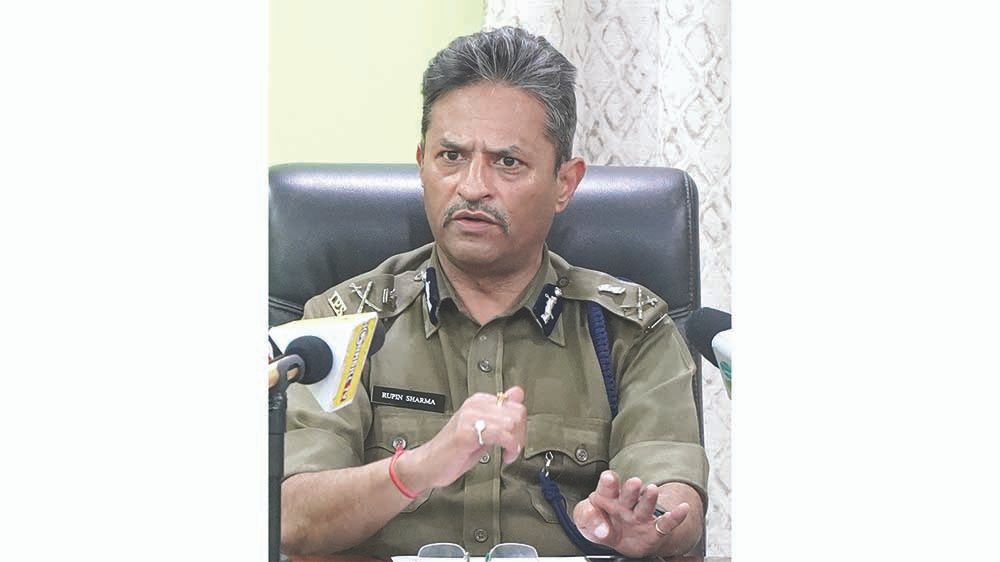
Director General of Police (DGP) Rupin Sharma on Friday came down heavily on armed factions over the January 19 abduction of Kiyeto Zhimomi, terming the incident a “clear-cut violation of ceasefire ground rules” and asserting that no group has any legal or moral authority to summon, detain, abduct, or threaten civilians under any pretext.
Speaking to the media amid heightened public concern, the DGP said three accused cadres belonging to NSCN-K (Khango-Vusshe) group– Lovito Yeptho, Hukhevi Yeptho and Viniho Kiho– were handed over to Nagaland Police for questioning. He added that police have so far identified the involvement of at least seven individuals in the case and did not rule out further arrests. Besides the three accused, police identified the other four as H. Kiba, Vika Chophy, Issak Rochill and Khuluto.
Sharma said police received a complaint regarding the abduction, following which coordinated front-channel and back-channel policing efforts were launched.
“Through collective efforts, Kiyeto was rescued safely,” he said, while acknowledging the media’s role in keeping the public informed and assisting law enforcement during the operation.
Subsequent investigations revealed the involvement of specific individuals and cadres, prompting intensified efforts to apprehend all those responsible. When routine policing measures failed, DGP said the Police Commissionerate, Dimapur supported by Nagaland Police personnel, imposed an embargo and encircled the Ceasefire Supervisory Board (CFSB) office-cum-camp of NSCN-K (Khango-Vusshe) faction.
“We deliberately avoided confrontation,” DGP said, explaining that the embargo was extended to allow room for negotiations.
Police officers attempted dialogue with the faction, urging them to produce the accused if present inside the camp. “They are their cadres, and from statements made by their own representatives to the media, it became evident that the abduction was carried out under instructions from senior members,” he said, ruling out any claim of ignorance.
Sharma informed that police later entered the camp but did not find the accused. Negotiations, however, continued inside, with police reiterating that the faction must cooperate. He said the group eventually had little option but to comply as the chain of command and responsibility had already been established through investigation and public statements.
Throughout the operation, he said senior state leadership and the government were kept fully informed, including the decision to impose an embargo. The issue was also formally raised with the Ceasefire Monitoring Group (CMG) chairman, highlighting violations of ceasefire ground rules.
According to Sharma, a written response from the CMG chairman received around 3-3.30 pm termed the faction’s explanation unsatisfactory and made it clear that maintenance of law and order rests solely with the Government of India and the State government. “No faction has any vested right to interfere in law enforcement matters,” he stressed.
Quoting the essence of the communication, Sharma said grievances, if any, must be addressed through the ceasefire mechanism and not through unilateral action. “Taking law into one’s own hands is unacceptable under any circumstance,” he cautioned.
Sharma pointed out that repeated advisories had been issued over the years, including on drugs and extortion, urging factions to inform police if they had knowledge of any offence. “This was a clear case where the faction chose to ignore the law,” he stated. He also referred to the April 29, 2024 state government clarification on extortion and the limits of factional authority, noting that boundaries were well defined. “They were fully aware of what they can and cannot do.”
DGP stressed that CFSB offices are meant strictly for limited purposes such as maintaining peace, preventing inter-factional clashes, and facilitating coordination between factions and security forces. “They are not meant for summoning people, abducting them, threatening them, extorting money, or conducting patrols,” he said.
He warned that the presence of such camps in populated areas poses a serious threat to public safety and creates fear among civilians. Referring to demands by civil society groups, business chambers, banks, NGOs, and most recently Western Sümi frontal organisations, Sharma said relocation of camps from densely populated areas was legitimate and aligned with ceasefire ground rules.
On the allocation of CFSB and CFMG offices, Sharma clarified that decisions are taken by the CFMG chairman in consultation with stakeholders, including the state government, police, security forces, village councils, and landowners– not unilaterally by the Ministry of Home Affairs. He added that once consent of landowners or village councils is withdrawn, relocation becomes necessary.
Welcoming the stand of Sümi frontal organisations, DGP urged them to persist, saying sustained public pressure strengthens the hands of both the state government and the ceasefire mechanism.
Responding to allegations against the victim, including claims of illegal tax collection, Sharma said police would act strictly as per law if any cognisable offence is established. He urged individuals and factions to submit formal complaints with evidence instead of making allegations publicly. “If there is an offence, irrespective of who is involved, Nagaland Police will take action. We will not spare anyone,” he said.
Issuing a strong advisory, Sharma reiterated that no faction has the authority to summon civilians and warned that paying money to such groups is also a criminal offence. “Financing such activities is an offence. The public must stand with the police,” he said.
Meanwhile, DGP asserted that ceasefire camps are not beyond the reach of law enforcement. Emphasising that peace cannot be built through fear, he said law would prevail and Nagaland Police would continue to stand with the people.