
The Congress on Monday said one of the questions in the houselisting and housing census raises serious questions on the government’s true intentions for the caste census and demanded it hold talks with political parties, states and civil society organisations before finalising the details of the caste enumeration exercise.
Congress general secretary in charge of communications, Jairam Ramesh, said phase one of the much-delayed Census 2027 is scheduled to be conducted during April-September 2026. “This is the Houselisting and Housing Census. Phase 2 of Census 2027 — the population enumeration — is scheduled for September 2026 in Himachal Pradesh, Uttarakhand, Ladakh, and the snowbound areas of Jammu and Kashmir. In all other parts of the country, it will take place in February 2027,” Ramesh said.
“On April 30, 2025, the (Narendra) Modi government did a complete U-turn and suddenly announced that caste enumeration would be included in Census 2027,” he said in a post on X. It bears recall that the Modi government had rejected the idea of a caste census all along, the Congress leader said, adding that in its answer to a question in the Lok Sabha on July 20, 2021, and in its affidavit filed in the Supreme Court on September 21, 2021.
“On April 28, 2024, the prime minister himself had, in a television ‘interview’, accused all those demanding a caste census of suffering from an ‘urban naxal mindset’. “But clearly the prime minister was forced to capitulate and agree to the widespread demand for a caste census that had been given voice to by the Indian National Congress led by Mallikarjun Kharge and Rahul Gandhi,” Ramesh said.
Noting the Modi government has just notified the list of subjects to be covered in the Houselisting and Housing Census Schedule, he said question 12 asks whether the head of a household belongs to the Scheduled Caste, Scheduled Tribe, or ‘Other’ categories rather than explicitly asking about OBC and general categories.
“Since caste enumeration is to be part of Census 2027, Question 12 as formulated does raise serious questions on the Modi Government’s true intentions and on its commitment to a comprehensive, fair, nation-wide caste census,” he said.
“The INC now calls upon the Modi government to immediately initiate a dialogue with political parties, state governments, and civil society organisations before finalising the details of the caste enumeration exercise,” Ramesh said.
He pointed out that such consultations were an integral part of the SEEEPC Survey that was carried out by the Telangana Government in 2025, and which remains the most comprehensive and meaningful way to gather vital caste-wise information on education, employment, income, and political engagement.
These are essential for ensuring greater economic and social justice, Ramesh added.
The government on Thursday notified 33 questions that will be put to citizens during the first phase of the Census — houselisting and housing enumeration — starting April 1.
In a gazette notification published on Thursday, Registrar General of India, Mrityunjay Kumar Narayan, listed questions such as material used in house flooring and roof, number of married couples living there, sex of the head of the household, type of cereal consumed, access to basic and modern necessities, and types of vehicles owned.
The notification said, “The Central Government hereby instructs that all Census officers may, within the limits of the local areas for which they have been respectively appointed, ask all such questions from all persons on the items enumerated below for collecting information through the houselisting and housing census schedule in connection with the Census of India 2027.”
The enumerators will ask about the ownership status of the house, its use, the type of material used in flooring and roof, the number of rooms, and the sex of the head of the household during the survey.
The questions will start with asking the building number (municipal or local authority or census number), census house number, predominant material used in the floor, wall and roof of the house.
The enumerators will then ask about the use of the house, its condition, and the number of persons normally residing in the household.
Officials will also collect information about the head of the household, like the name and sex, whether the head of the household belongs to the Scheduled Caste, the Scheduled Tribe or other communities and the ownership status.
The first phase of Census 2027– houselisting operations — will take place during a 30-day period specified by each state and Union Territory between April 1 and September 30 this year.
There will also be an option for self-enumeration to be conducted in 15 days just before the start of the houselisting enumeration.
The Census, a Rs 11,718-crore mammoth exercise, will be conducted in two phases — house-listing and housing census from April to September; and population enumeration in February 2027. The decadal exercise, which was scheduled to take place in 2021, got postponed due to the COVID-19 pandemic.
Census 2027 will also capture caste data electronically in the population enumeration phase, the government had said earlier.
The last comprehensive caste-based count was done between 1881 and 1931. Caste was excluded from all census operations conducted since Independence.
The decision to include caste enumeration in the upcoming census was taken by the Cabinet Committee on Political Affairs, chaired by Prime Minister Narendra Modi, on April 30 last year.
In the first-ever digital Census, conducted by around 30 lakh enumerators, data will be collected using mobile applications that will be available for both Android and iOS versions to ensure better quality data.
The population of the country, according to the Census 2011, was 1,210.19 million, of which 623.72 million (51.54 per cent) were male, and 586.46 million (48.46 per cent) were female.
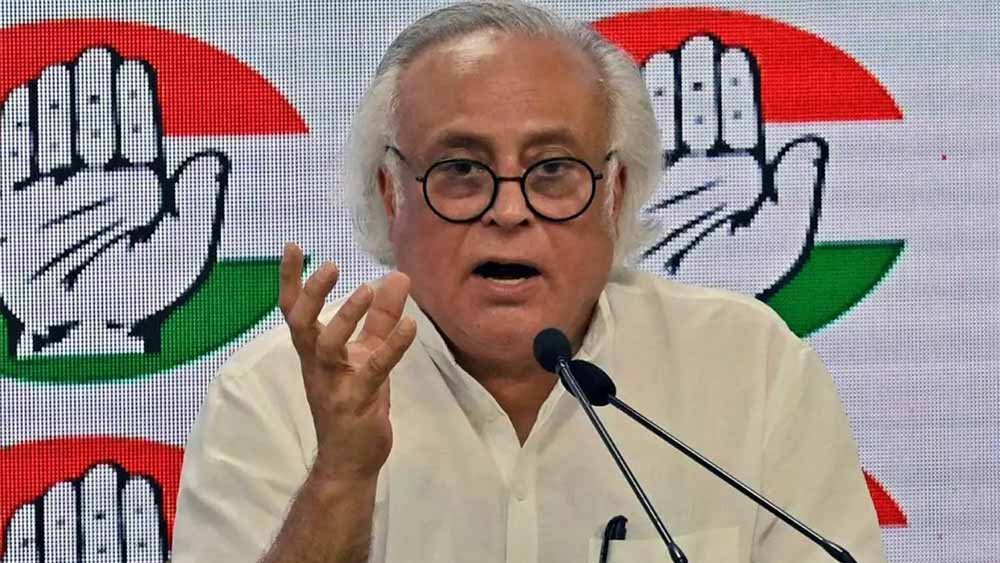
Cong questions Modi govt’s intentions on caste census
NEW DELHI, JAN 26 (PTI)