
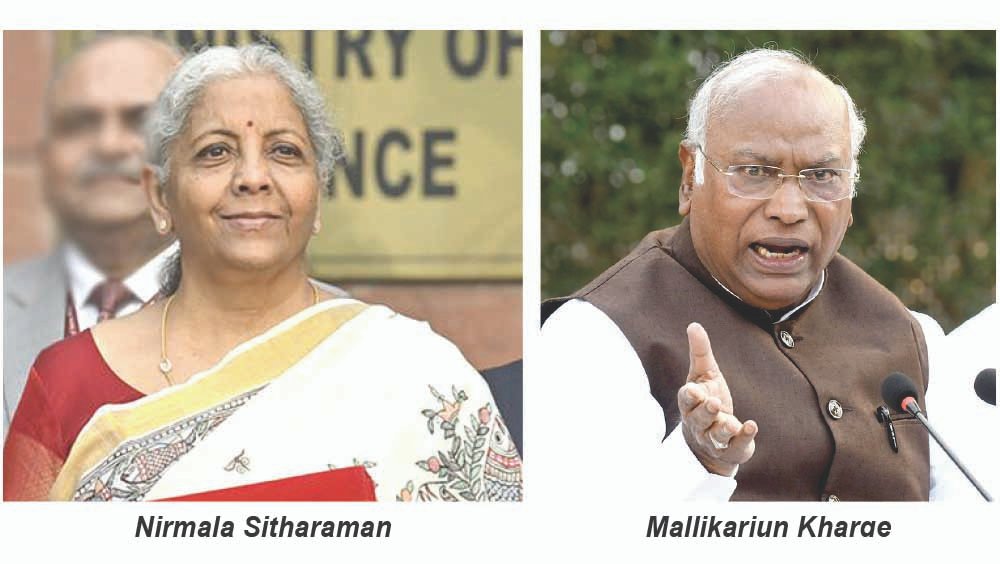
Union Finance Minister Nirmala Sitharaman’s ninth consecutive Union Budget, scheduled for February 1, is expected to break with convention, with Part B of her speech emerging as the main platform to outline India’s economic vision and reform agenda, according to government sources.
Sitharaman tabled the Economic Survey 2026 on Thursday ahead of the Budget presentation. Traditionally, Budget speeches focus on Part A, which reviews the economy and broad policy direction, while Part B, covering tax proposals and technical announcements, remains brief. This year, however, Sitharaman is expected to speak at length in Part B, emphasizing both immediate policy measures and long-term economic goals.
The speech is likely to highlight India’s current capabilities and future potential in manufacturing, trade, and exports, drawing attention from economists and policy experts both in India and abroad.
Officials said the shift reflects the broader reform orientation of Budget 2026–27, internally described as “Reform Express,” and is seen as an opportunity to push structural changes that support growth while insulating the economy from external shocks. Part B is expected to propose changes to export and manufacturing frameworks, including merging existing schemes such as Special Economic Zones, Export Oriented Units, and the MOOWR regime into a Unified Export and Manufacturing Zone.
The move aims to create an integrated and efficient ecosystem for exporters and manufacturers, promote domestic manufacturing, boost export resilience, and encourage higher value addition, in line with the government’s industrial and trade strategy.
Opposition slams govt
On the eve of the Budget, Congress president Mallikarjun Kharge criticized the Modi government, claiming the economy faced multiple challenges. He highlighted a slowdown in manufacturing, with average growth declining from 7.4% under the UPA to 3.54% under the current government, while the sector’s share of GDP remained around 13%, below the 25% target under the “Make in India” initiative.
Kharge cited employment concerns, noting surveys showing only half of graduates are employable, with unemployment at 26.3% for young women and 15.8% for young men. He pointed to a slowdown in exports, a record trade deficit of $41.7 billion, low wage growth, declining household savings, rising food inflation, falling two-wheeler sales, and increasing personal loans as signs of weakening consumption. Infrastructure development was also cited, with 51% of the annual highway construction target incomplete with three months left in the fiscal year. Kharge demanded solutions to these issues in the upcoming Budget.
Marking the third anniversary of the Rahul Gandhi-led Bharat Jodo Yatra, Congress communication chief Jairam Ramesh described the 4,000-km march across 12 States as highlighting economic inequality, social polarization, and political authoritarianism, calling it “a profoundly transformative event in our country’s politics” that “will be recalled and cherished for decades.”