
A two-day Plant Genetic Resources (PGR) conservation awareness programme cum training on organic farming is currently under at Angh Hall, Agri Expo, Chümoukedima.
The programme is being organized by ICAR–National Bureau of Plant Genetic Resources (NBPGR), New Delhi, in collaboration with School of Agricultural Sciences (SAS), Nagaland University, Medziphema Campus, and Department of Agriculture, Government of Nagaland.
Around 200 farmers from across the state are participating in the programme, along with researchers, academicians, and officials from various departments. The initiative is aimed to create awareness on the importance of conserving plant genetic resources and to build capacity among farmers and stakeholders on organic farming practices.
Gracing the inaugural programme as special guest, Chief Conservator of Forest (D&P) and Member Secretary, Nagaland State Biodiversity Board, Sidramappa M Chalkapure, highlighted the intrinsic link between biodiversity conservation, traditional knowledge, and sustainable livelihoods.
He emphasized that biodiversity conservation is not solely the responsibility of scientific institutions or government departments but largely rests with communities.
Explaining the concepts of in-situ and ex-situ conservation, he noted that while gene banks and research institutions conserve germplasm externally (ex-situ), farmers and communities play a critical role in conserving biodiversity within natural habitats and agricultural landscapes (in-situ). Here, he pointed Nagaland’s unique landholding system that places nearly 90% of biodiversity under community ownership, making local participation vital.
He also underscored the need to document traditional knowledge through Biodiversity Management Committees (BMCs) and preparation of People’s Biodiversity Registers (PBRs).
Referring to the Biological Diversity Act, 2002, and Nagaland State Biological Diversity Rules, 2012, he elaborated on the principle of Access and Benefit Sharing (ABS), which ensures that benefits arising from use of genetic resources and associated traditional knowledge are shared equitably with local communities.
He also cautioned that climate change, habitat loss, and changing lifestyles pose serious threats to biodiversity, making documentation and conservation more urgent than ever.
Highlighting indigenous farming systems such as Jhum cultivation, alder-based farming, and Zabo farming, he stated that traditional practices have long preserved biodiversity, even before formal conservation policies were introduced, and encouraged farmers to continue conserving local varieties, emphasizing that water conservation and forest protection were integral to sustaining biodiversity. “In all the scheme of life, water is very important and there will be no biodiversity if no water”, he stated.
Meanwhile, presenting an overview of the programme, principal scientist, ICAR–NBPGR, New Delhi, Dr. Sushil Pandey, described farmers as the “real torchbearers” of the country.
He later informed that NBPGR currently maintains the world’s second-largest gene bank, conserving over 4.8 lakh germplasm accessions, including nearly one lakh rice varieties, stored in 16 large underground modules at minus 20 degrees Celsius for long-term preservation.
He also announced that a second National Gene Bank, estimated at Rs 500 crore, is being established at Keylong, Himachal Pradesh, to serve as an energy-efficient strategic backup facility.
Dr Pandey also dwelled that under the Government of India’s focus on development of the North Eastern Hill (NEH) region, Nagaland University has been identified as the lead centre for cereals, vegetables, and millets for the 2026–31 period, with responsibilities for characterization and evaluation of germplasm from the region.
Senior Professor, SAS-NU, Prof. L. Daiho, in his brief address, emphasized that the North-Eastern Himalayan region is a hotspot of genetic resources and biodiversity, and highlighted the importance of conserving indigenous and underutilized crop landraces such as rice, millets, king chilli, tree tomato, garlic, as well as native livestock like the Nagami Mithun.
He remarked that traditional farmers, though often lacking formal education, possess rich indigenous knowledge passed down through generations, guided by close observation of nature.
He however noted that with growing threat of climate change and rapid technological advancement, he stressed the need for increased awareness and scientific collaboration to ensure future food security and climate-resilient agriculture. Earlier, the session was chaired by Professor in-charge, Research Cell, SAS- NU, Prof. Akali Sema, while vote of thanks was proposed by Centre in-charge, AICRN on Potential Crops, Department of Soil Science, SAS- NU, Prof. A.K. Singh.
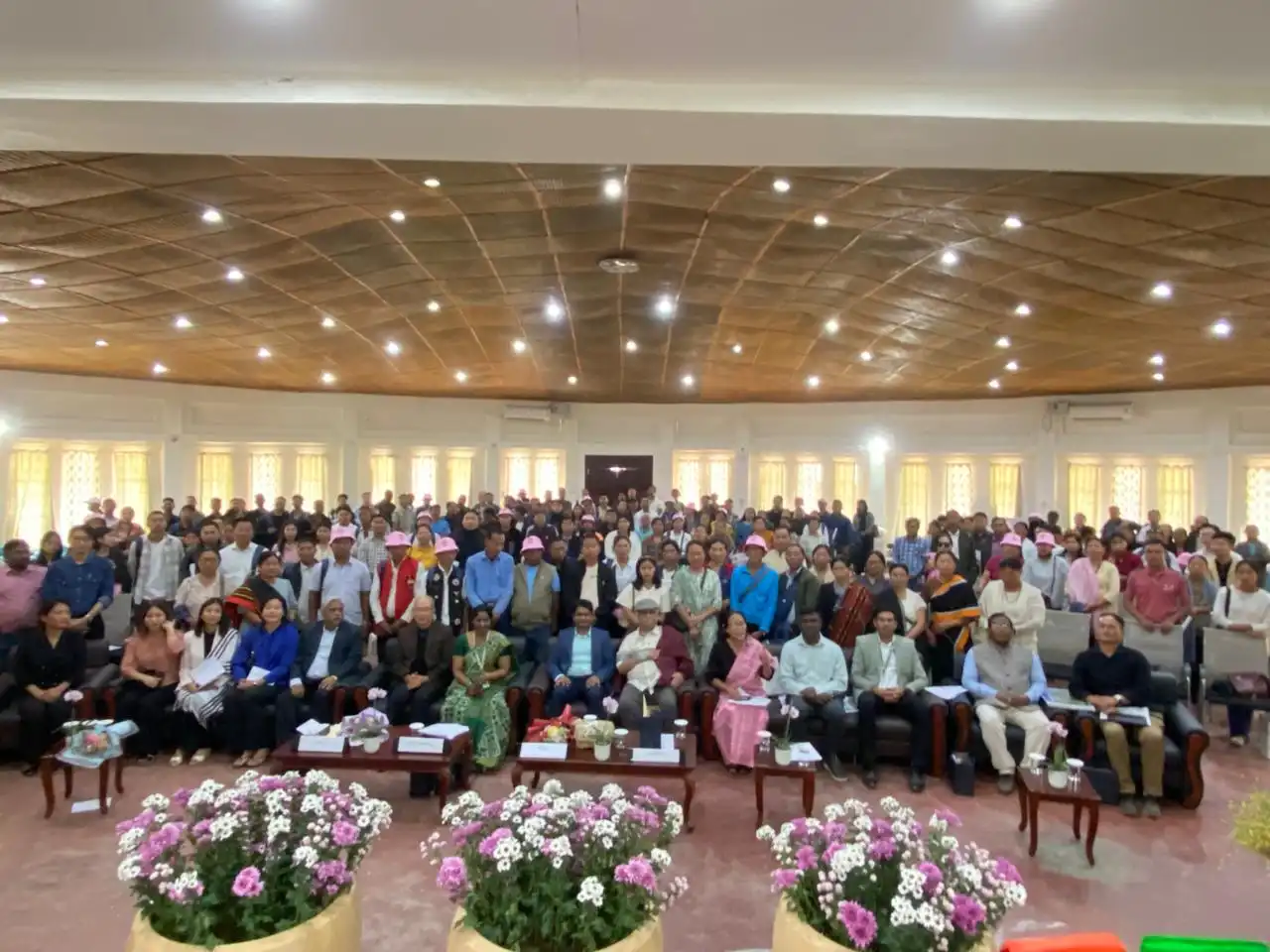
PGR conservation and organic farming training underway at Agri Expo
Staff ReporterDIMAPUR, FEB 19 (NPN):