
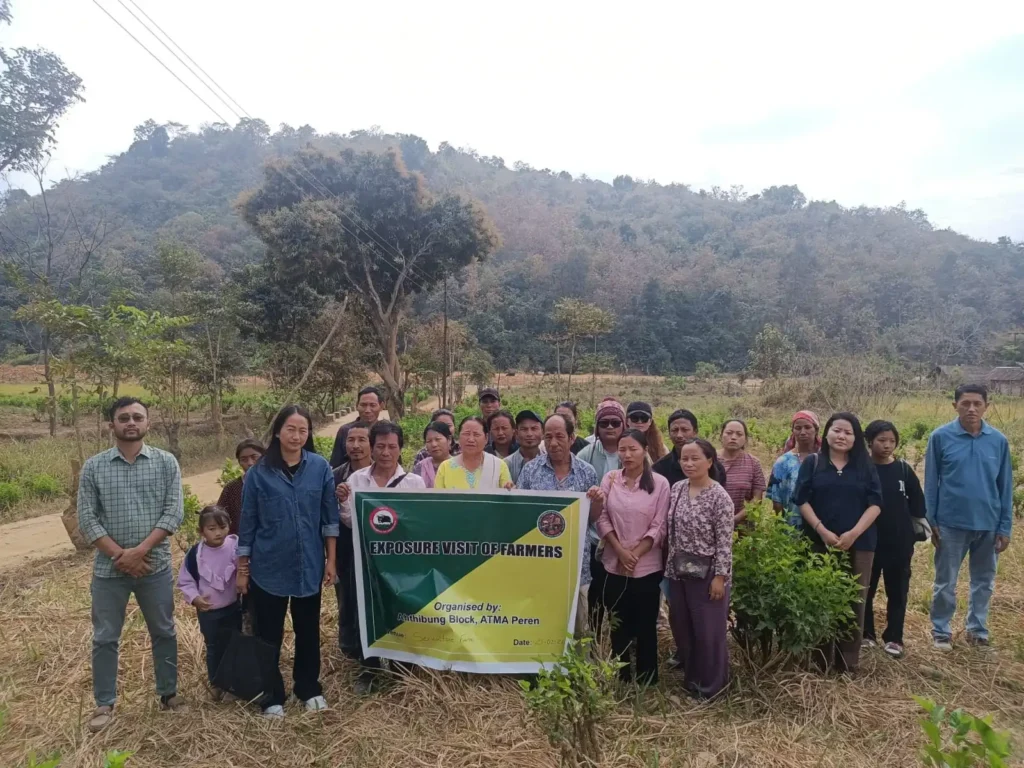
The Agriculture Technology Management Agency (ATMA) Peren Ahthibung Block organized an exposure tour and training programme on February 20 and 21 for farmers from Ahthibung villages at the Mulberry Farm of the Sericulture Department, Mhainamtsi.
Led by BTM Lhaihoichong and ATM Lireni Lotha, the two-day training focused on Eri-spinning. Resource persons included S. Puchong Khiamngan, Deputy Director, Peren, and Hupuakbo Nchang, Extension Officer, Sericulture Department, Peren. Master trainer Nampungbale, a progressive Eri farmer and silk spinner, guided participants on post-harvest cocoon preparation and spinning using equipment such as the reeling machine. Altogether, 20 farmers participated, with the programme aiming to promote backyard Eri silkworm rearing as a profitable supplementary source of income while upgrading skills in rearing and spinning.
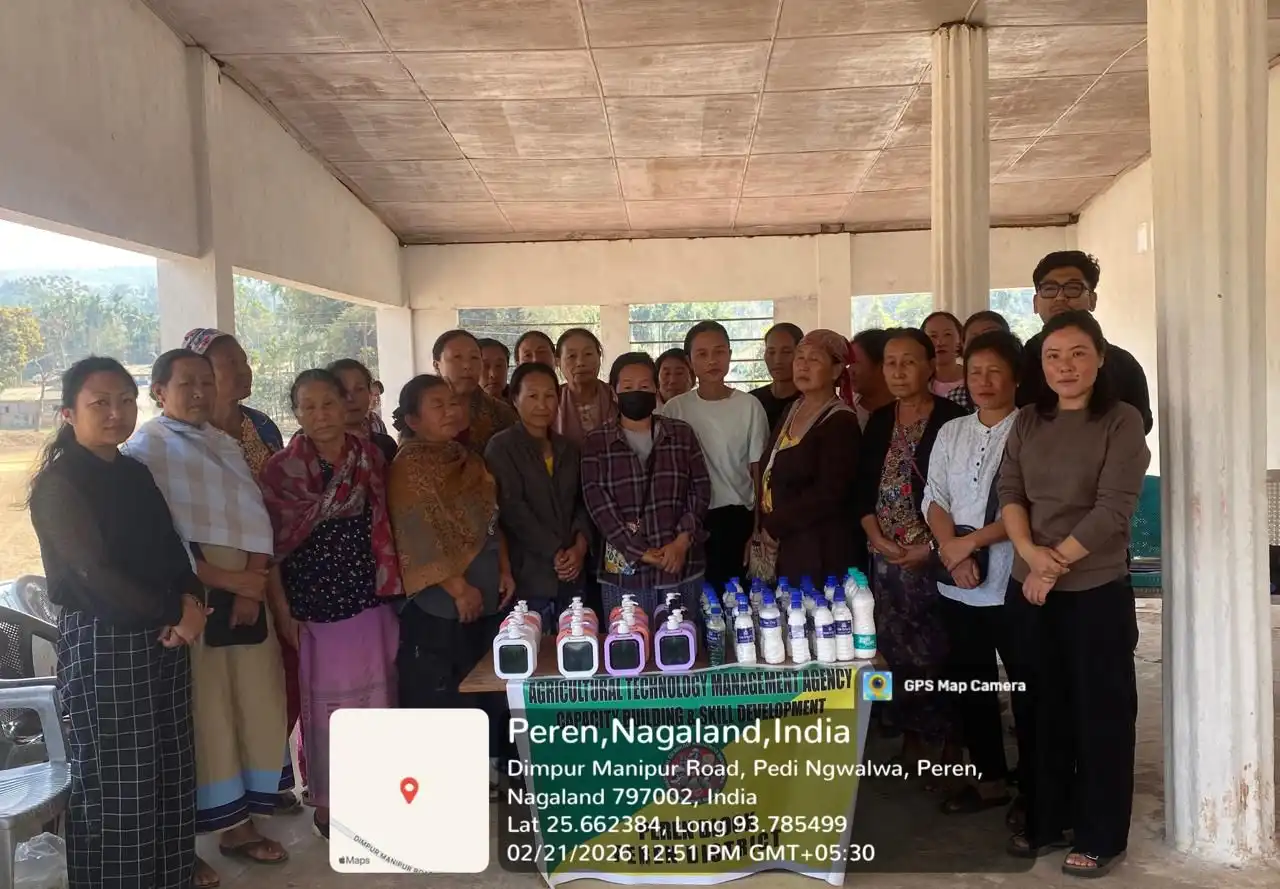
Meanwhile, ATMA Peren Block conducted a Capacity Building and Skill Development Programme at Ngwalwa Village on February 21. The programme was attended by 20 members from Heningkunglwa SHG and Ngwalwa SHG. BTM Lipokjungla delivered the introductory address, stressing the importance of skill-based training for self-reliance and strengthening rural livelihoods. ATM Kibale, serving as resource person, provided hands-on training and demonstrations on the preparation of detergent for handwashing and white phenyl. Participants actively engaged in the practical session and expressed keen interest in adopting the techniques for income generation.
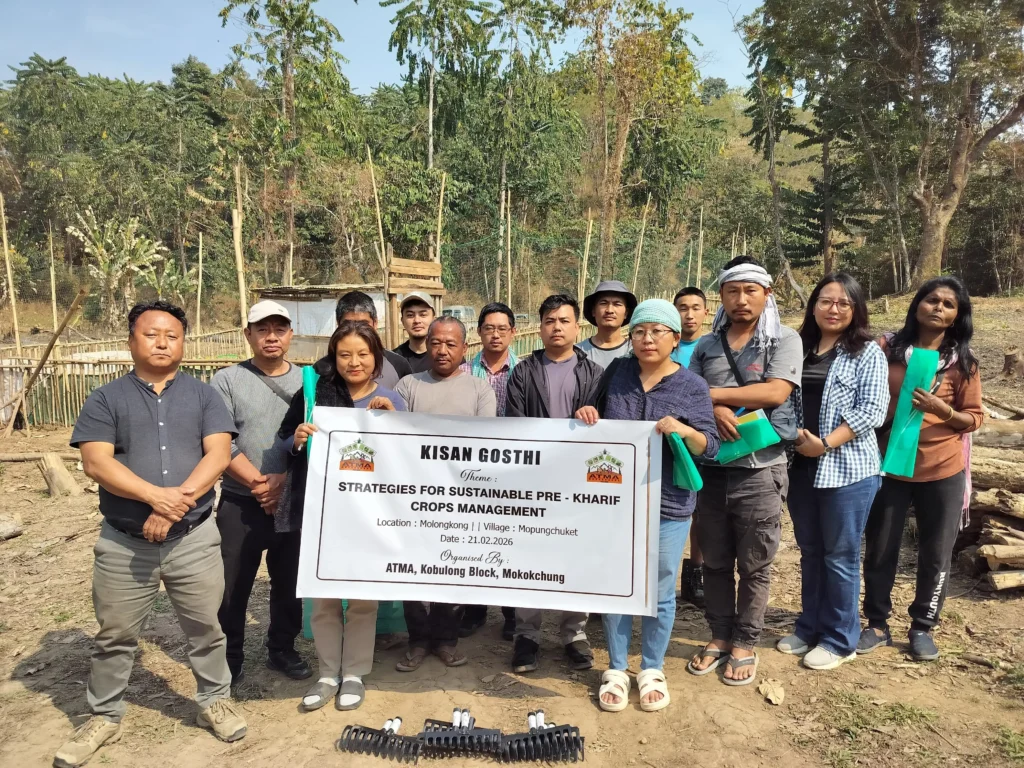
In Mokokchung, ATMA Kobulong Block conducted a Kisan Gosthi under the theme “Strategies for Sustainable Pre-Kharif Crops Management” on February 21 at Molongkong, Mopungchuket village. Resource person Samuel, Assistant Chief Technical Officer (Agronomy), KVK Tuensang, emphasized the importance of location-specific crop planning and advised farmers to undertake proper planning before sowing to ensure continuous harvesting across seasons. He highlighted practices such as planting suitable crops during January–February, applying mulch to conserve soil moisture, and irrigating at critical stages.
The integration of livestock with crop production was also stressed, noting that waste from one component can benefit the other and reduce input costs, particularly feed expenses which constitute 65–70% of livestock rearing costs.
Farmers were encouraged to cultivate fodder crops to meet at least 20% of feed requirements, grow high-value crops, conduct soil testing, and prepare compost to promote soil health and sustainable farming.
During the interactive session, farmers shared experiences and raised queries which were addressed by the resource person. The programme concluded with the distribution of garden rakes and post-harvest bags to the 15 participating farmers, along with ATMA staff and resource persons.