
Observing that the right to pollution-free water is a fundamental right, the Supreme Court on Tuesday closed its 2021 suo motu proceedings on remediation of polluted rivers and directed the principal bench of the National Green Tribunal (NGT) to reopen the matter and ensure continued monitoring.
At the outset, the top court questioned its January 13, 2021, order to initiate the parallel proceedings by taking suo motu cognisance of contamination of rivers by effluent when the National Green Tribunal (NGT) in New Delhi was already seized of a similar matter.
“Is it possible for this court to look at all the polluted rivers? We can look at it one by one. We also keep entertaining so many matters and issue directions…we also have to see that we entertain matters together. Why to have a multiplicity of issues like this?” a bench comprising Chief Justice Surya Kant and Justice Joymalya Bagchi said.
It made the observation when Additional Solicitor General Aishwarya Bhati, appearing for the Central Pollution Control Board (CPCB), referred to the pendency of a similar issue before the NGT.
The law officer urged the bench to consider whether it wanted to continue with the hearing or if the NGT could be asked to revive the hearing.
After hearing the parties for some time, the bench directed the NGT to reopen the matter, stressing that a specialised body is better equipped for the continuous monitoring required to save the rivers.
“It seems to us that instead of issuing suo-motu proceedings, this court should have asked the NGT to ensure compliance with directions till conditions improve. The NGT is not the end of the street, and this court has appellate powers of judicial review. “In light of the above, we are of the view that the suo motu proceedings be closed and proceedings before the tribunal are allowed to be reopened,” it said.
The bench noted that the suo motu proceedings were initiated in 2021 when a matter related to the increased level of pollution in Delhi’s Yamuna River came up before it.
It said the bench had considered contamination of the Yamuna first and had issued notices to Uttarakhand, Haryana, Himachal Pradesh, Uttar Pradesh, Delhi and the Centre.
“There is no gainsaid that the right to live in hygienic conditions with human dignity, with a clean environment and clean water, is embodied in Article 21…the effect of pollution of water on human health drew the attention of this court.
“Under the legislative scheme (water), CPCB and the SPCB were statutorily obligated to take all necessary measures to ensure that sewage affluent is not discharged into rivers unless it is completely treated and will not deteriorate the quality of water,” it said.
The bench said the NGT is empowered to perform judicial and quasi-judicial duties.
“Much water has flown during the pendency of these proceedings. In the absence of any latest order, we are not sure whether the condition of the Yamuna water has improved,” it said.
“The responsibility of the NGT does not come to an end by issuing directions. This has to be an ongoing process where state governments. The Centre and private bodies must implement the law or directions of the NGT. It is imperative for the NGT to direct that status reports are obtained in furtherance of compliance,” it said.
The bench said “multiple and overlapping proceedings” affected continuity and the nature of uniformity of directions.
After hearing the parties for some time, the bench directed the NGT to reopen the matter, stressing that a specialised body is better equipped for the continuous monitoring required to save the rivers.
The CJI said while the top court initiated the suo motu case in 2021 to address the contamination of the Yamuna by sewage effluents, the case had seen little progress in the top court since then.
The bench was also critical of the NGT’s decision to close its own oversight of river pollution after the top court took suo motu cognisance in 2021.
Justice Joymalya Bagchi said the NGT might have felt “embarrassed” to continue proceedings while the top court was seized of the matter.
“The Tribunal committed a grave mistake by closing the case in 2021… they are also in a hurry to close it,” the CJI said, adding that the NGT’s responsibility does not end with merely issuing directions.
“This has to be an ongoing process where state governments, the Centre, or private bodies must implement the law. It is imperative for the NGT to ensure status reports are obtained in furtherance of compliance,” it said.
It further highlighted that under the Water Act, the CPCB and State Pollution Control Boards are statutorily obligated to ensure that no untreated sewage is discharged into rivers.
The suo motu case, titled ‘Remediation of Polluted Rivers’, was originally triggered in January 2021 by a petition from the Delhi Jal Board (DJB). The DJB had alleged that Haryana was releasing water with high ammonia content into the Yamuna, which became carcinogenic when treated with chlorine.
The then bench, headed by CJI SA Bobde (since retired), had widened the scope from the Yamuna to all major rivers, issuing notices to the central government and Uttarakhand, Haryana, Himachal Pradesh, Delhi, and Uttar Pradesh.
The CPCB was tasked with identifying municipalities that lacked functional Sewage Treatment Plants (STPs).
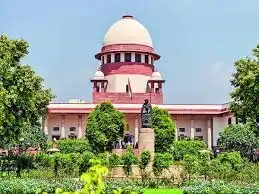
SC asks NGT to revive matter on remediation of polluted rivers
NEW DELHI, FEB 24 (PTI):