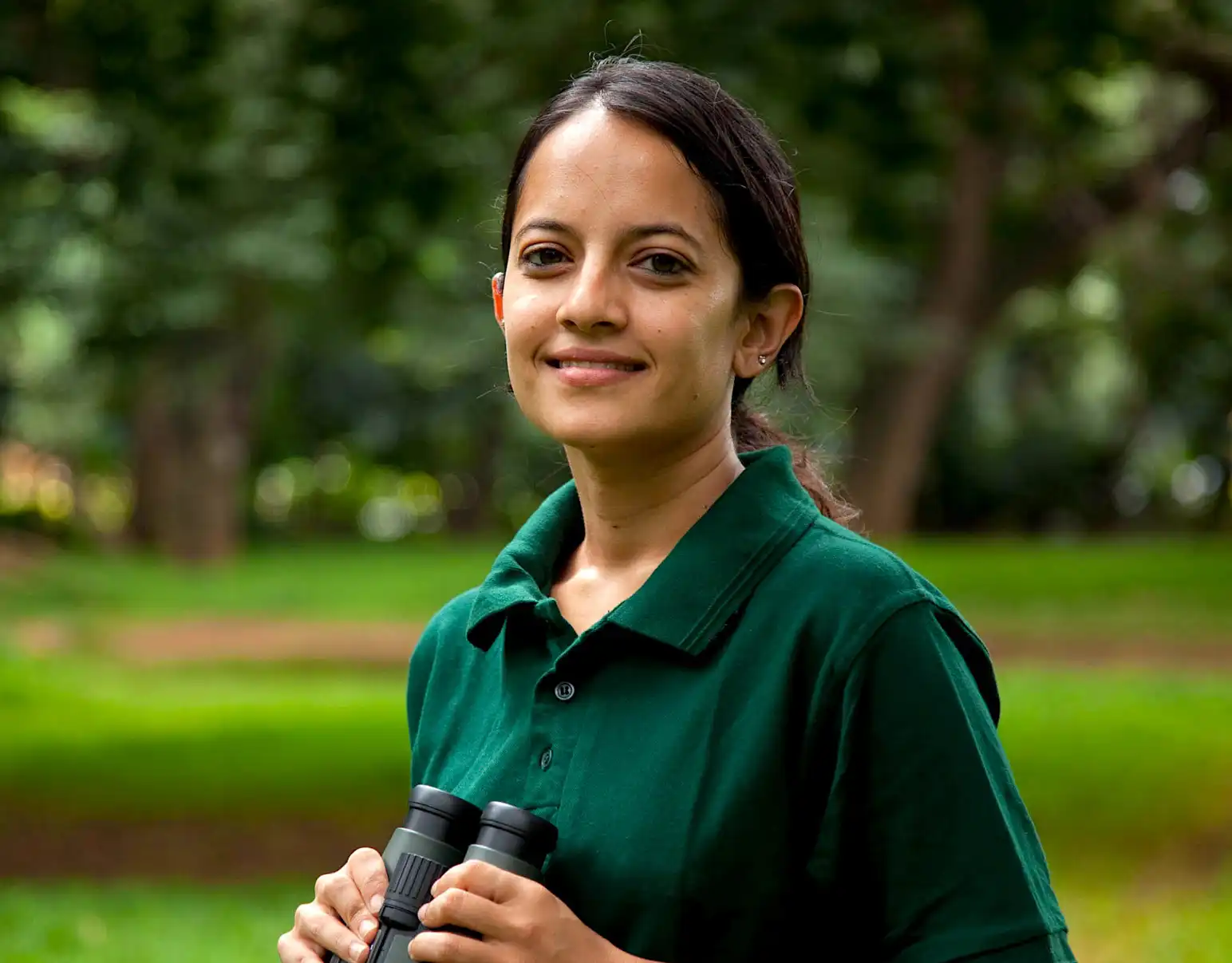
Dr Krithi K Karanth, CEO of the Centre for Wildlife Studies (CWS), became the first Indian to win a prestigious conservation prize from the Royal Geographical Society in London on Thursday.
Bengaluru-based Karanth was named the joint winner of the 2026 Esmond B Martin Royal Geographical Society Prize for her crucial contributions to human understanding of the world’s ecosystems and work to protect the planet’s biodiversity.
She was praised as a major player in changing the narrative around conservation projects in India and beyond, creating holistic interventions that build support networks.
“I am deeply humbled and profoundly honoured to be the first Asian recipient of the Esmond B Martin Prize,” said Karanth.
“At this critical moment for our planet, the need for science-based conservation – grounded in evidence, collaboration, and courage – has never been greater. We must nurture a growing community of stewardship – people who care deeply, act boldly, and work collectively to safeguard our shared future,” she said.
Esmond B Martin was a renowned American geographer and conservationist who left an endowment to honour outstanding achievement by individuals in the pursuit and/or application of geographical research across the breadth of the discipline, typically in the field of wildlife conservation and environmental research studies.
“To be associated with a legacy shaped by Esmond’s courage, curiosity, and unwavering commitment to wildlife conservation is both a privilege and a responsibility,” said Karanth.
With CWS, the scientist and educator leads one of India’s leading international centres of scholarship, policy and public education about the country’s natural heritage. Her conservation work has focused on building localised and accessible knowledge on the coexistence between human and wildlife populations.
Working in rural villages and schools surrounding India’s wildlife reserves, often underserved by educational, public health and conservation infrastructure, her work has helped tens of thousands of children and adults navigate human-wildlife interactions, protect communities, and work alongside conservationists to secure financial support, the Royal Geographic Society stated.
Throughout her career, she has helped to bridge the gap between academic research and the public, empowering scientists to participate in efforts, to focus on expanding pathways for low-income communities and women working in this space, it noted.
“This prize is a catalyst; it strengthens our resolve at CWS to innovate, to scale our efforts, and to deepen partnerships across the world. Together, we will continue working to conserve India’s extraordinary wildlife and wild places – ensuring they thrive for generations to come,” said Karanth.
She shares the 2026 prize with Professor Alexandre Antonelli, Executive Director of Science at the Royal Botanic Gardens, Kew, in London.
Antonelli has been honoured for his work to advance human understanding of the biogeography, evolution and conservation of biodiversity around the world, with a focus on plants and the interactions between human geography and nature.
“I am deeply touched by this award and see it as a recognition for the power of science in helping us heal our planet,” he said.
Both winners will receive their awards at a ceremony hosted by the Royal Geographical Society on April 13, when they will also deliver a public lecture discussing their research and career journeys. (PTI)