
With the LPG supply squeeze impacting hotels, businesses and household consumers through longer waiting periods and panic bookings, the Centre has asked states to expedite approvals for piped gas projects to enable faster rollout and ease pressure on cooking gas availability.
As the war in West Asia, which blocked India’s access to almost 60 per cent of its LPG, continues with no end in sight, the government is now pushing for the use of alternative cooking mediums like induction cookers.
“Situation remains a matter of concern, but we are providing supplies as before to the domestic consumers,” said Sujata Sharma, Joint Secretary, Ministry of Petroleum and Natural Gas.
This was made possible as refineries were asked to ramp up domestic output, which was then prioritised for household kitchens. Commercial use of LPG, such as in hotels and restaurants, was initially curtailed, but later restored to a fifth of their normal offtake.
“We have to look at alternatives,” she said at a media briefing. Giving statistics, she said panic bookings for a refill LPG cylinder peaked to 87.7 lakh on March 13, but have since eased, with about 70 lakh bookings being done on Monday. This compares to about 55 lakh bookings in pre-war days. LPG deliveries have kept pace. “We delivered 62.5 lakh cylinders on March 13, 60 lakh on March 14… this compares to 50 lakh deliveries in pre-conflict times”, she said.
There is still panic booking happening despite assurances that there are enough LPG supplies to meet household needs, she said, adding that domestic production of LPG has increased by 38 per cent compared to March 5 levels.
To ease pressure on LPG, the government is promoting commercial and household LPG users to switch to piped natural gas. City gas companies are offering incentives and faster connections.
The government is also expanding the city gas distribution network to ease pressure on LPG demand, Sharma said.
The central government has, on March 16, written to all state governments to expedite approvals for city gas projects. It asked them to issue deemed permission for pending applications for large city gas pipelines, approvals for new city gas projects within 24 hours, waive road restoration charges, and relax working schedules.
“Situation still is worrying, but there is no dry out at any LPG distributorship,” she said. India’s LPG supplies came under strain as the Strait of Hormuz – a key route for imports – faces disruptions following the US and Israel attack on Iran and Tehran’s sweeping retaliation.
With shipments from major suppliers, such as Saudi Arabia and the United Arab Emirates, affected, India, which imports about 60 per cent of its LPG needs, has moved to ration supplies. The government has curtailed allocation to commercial users and industries to prioritise household consumption and prevent an immediate shortage of cooking gas. The disruption has begun to ripple through several sectors that rely heavily on LPG. Restaurants have started dropping slow-simmered dishes from their menus because they consume large amounts of cooking gas, while industries, such as brick and tile manufacturing, ceramics and glass kilns, are also facing difficulties in sustaining operations due to gas shortage.
Essential services, including crematories, laundries and hospital kitchens, are similarly struggling to maintain regular activity, even as bakeries, street-food vendors and community kitchens report curtailing output amid tighter LPG availability.
Sharma said fuel supplies remain stable with all refineries operating at high capacity and maintaining adequate crude inventories.
Commercial LPG stocks have been placed with states, who have been asked to decide on the priority for its usage, Sharma said, adding that states like Bihar, Delhi, Haryana, Rajasthan, Gujarat, Himachal Pradesh, Karnataka and Uttarakhand have already issued LPG distribution guidelines.
Also, states have been given 48,000 kilolitres of additional kerosene, she said, adding that Bihar, Chhattisgarh, Gujarat, Kerala, Manipur, Tamil Nadu, Uttar Pradesh, and Karnataka have taken stocks from this additional quota.
India, she said, continues to be self-sufficient in petrol and diesel, with no fuel dry-outs reported at retail outlets.
“Citizens have been advised against panic buying as supplies remain sufficient,” she said.
With as much as 30 per cent of India’s gas supplies being impacted due to the blockage of the Strait of Hormuz, supplies to priority segments, such as piped cooking gas (PNG) and CNG, remain fully protected, while supplies to industrial and commercial users have been curtailed to about 80 per cent.
Commercial LPG users are being encouraged to switch to piped natural gas, with city gas companies offering incentives and faster connections. The government is also expanding the city gas distribution network to ease pressure on LPG demand.
LPG supplies continue to be closely monitored, with no reported shortages at distributorships. However, booking patterns have shifted, with online bookings rising to around 90 per cent, while measures, such as enhanced delivery authentication and state-level allocation controls, have been implemented to prevent diversion. Several states have stepped up enforcement action, including raids to curb hoarding and black marketing.
As many as 12,000 raids have been conducted and 15,000 cylinders seized, she said, adding that oil companies have conducted 2,500 surprise inspections of LPG dealerships and petrol pumps.
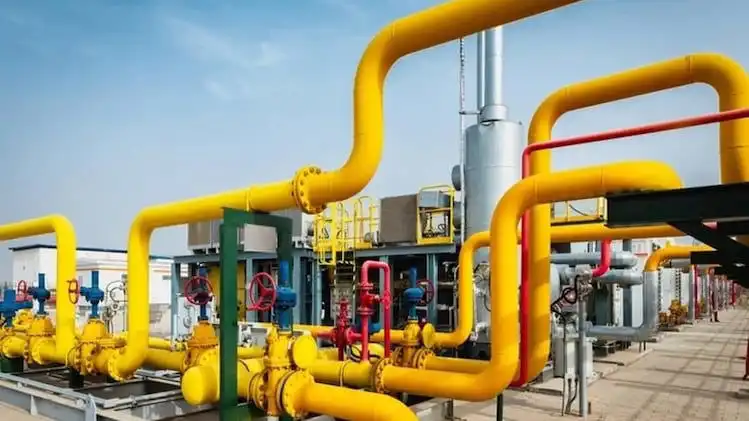
LPG crunch continues; government pushes states to clear city gas projects
NEW DELHI, MAR 17 (PTI):