
The United Naga Council (UNC), the apex body representing Naga tribes in Manipur, has formally petitioned chief minister Yumnam Khemchand Singh to defer the upcoming census operations in the state, citing multiple concerns over fairness and feasibility.
In a letter dated March 16, 2026, UNC president NG Lorho emphasized that the census exercise should be postponed until key issues are resolved to ensure credibility. The UNC highlighted three major reasons for its demand.
Firstly, the council pointed to the “looming issue of illegal immigrants,” stressing that citizenship verification through a National Register of Citizens (NRC) must precede any census. It warned that failure to identify non-citizens beforehand could distort demographic records and undermine the purpose of the exercise.
Secondly, the UNC underscored the fragile law and order situation in Manipur, marked by ongoing ethnic conflict and displacement. It argued that conducting a census amid such volatility would not yield reliable data and could further inflame tensions among communities already living in mistrust and insecurity.
Thirdly, the council raised the unresolved district rollback issue, which it described as a matter of deep public sentiment for the Nagas. It cautioned that census operations in disputed jurisdictions could entrench contested boundaries and trigger social upheaval.
“Given these circumstances, proceeding with the census would be procedurally infirm and contrary to the very purpose of its exercise,” the UNC stated in its letter. The body appealed to the state government to immediately postpone the census until a more stable and conducive environment is ensured, stressing that the move would be in the larger public interest.
The UNC’s intervention adds to growing voices in Manipur calling for deferment of the census, reflecting widespread concerns over demographic integrity, ethnic sensitivities, and prevailing instability in the state.
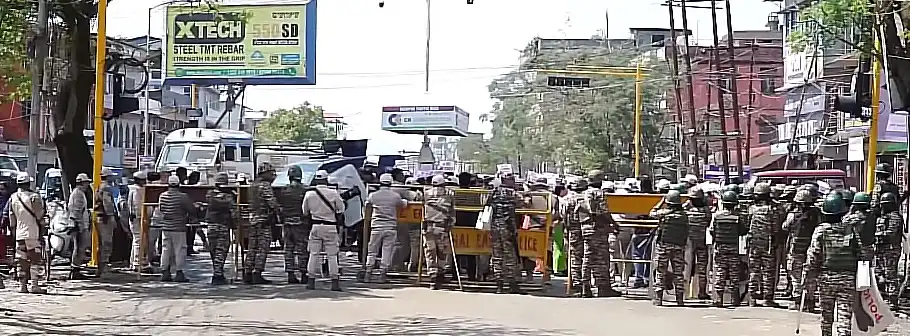
UNC urges postponement of census in Manipur
IMPHAL, MAR 17: