
The Tizu Valley Biodiversity Conservation and Livelihood Network (TVBCLN) successfully inaugurated the 6.0 Edition of the Chengu Festival cum Green Hero Award on 20 March 2026 at Sukhai. Under the theme “Biodiversity Our Heritage,”. The event was co-powered by the Nagaland Tourism Department along with partners including VNV Advisory, TERI, Mountains to Mangroves, Aboriginal Energy, Pluc TV, Ground Up, and FES.
A press release by Media Cell of the 6.0 Edition of Chengu Festival, stated that Dharam Raj, Deputy Commissioner of Zunheboto, served as special guest. He was joined by community leaders, representatives, and locals, the event highlighted conservation efforts, climate resilience, and sustainable livelihoods in the Tizü Valley.
In his keynote, the DC emphasized that biodiversity conservation is an age-old practice woven into the lifestyle of our forefathers. He welcomed TERI’s support for community-led climate action, noting how rapid climate change threatens food security and agriculture.
“United Nations programs encourage biodiversity conservation for sustainable growth and to preserve our natural legacy,” he said. Raj highlighted opportunities like carbon storage initiatives, with companies eyeing investments in Nagaland’s green resources to offset carbon footprints.
“This is a great chance for Zunheboto district, as other villages explore similar setups,” he added. He congratulated the Green Hero Award recipients as champions of nature preservation and expressed delight at participating in the festival.
Toka E. Tuccumi, joint director of tourism, Nagaland, described the Chengu Festival as the intellectual property of Sukhai, Ghukhuyi, and Kivikhu villages. “Its success hinges on collective responsibility from these three communities,” he stated.
Citing Nagaland’s 407 registered conservation areas, Tuccumi urged stakeholders to commit to conservation and tourism. He pointed to other Naga festivals—like the orange, garlic, and potato festivals—as examples of competitive cultural promotion.
The tourism department supports Chengu, now in the Nagaland Tourism Calendar, with a long-term vision for local benefits. Drawing parallels to the Hornbill Festival—which began in 2000 and has become a state powerhouse generating tourism income—Tuccumi stressed homestays as essential. “Tourists crave authentic Naga culture, storytelling, and lifestyles; we’re ready to provide training for guides, homestays, and more across the three villages.”
Aniruddh Soni, Fellow at TERI, reflected on TERI’s collaboration with the Tizü Valley Network since 2014. “The community’s passion shines through, making this theme a grand success—I’ve seen the festival progress across editions,” he said.
Soni noted early documentation of Jhum cultivation, community-maintained registers, and positive international research findings that attract investments. He announced advancements in the Red Plus Project (launched 2022), with approved documents from the Plan Vivo Foundation rewarding years of conservation.
Upcoming collaborations with the Sumi Literature Board, funded by the Japanese Fund for Global Environment, will document traditional ecological knowledge on biodiversity, birds, crops, and land management. “This will benefit not just Nagaland and Zunheboto, but South Asia,” Soni concluded, emphasizing landscape-wide livelihood measures.
Ivan Zhimomi, CEO of TVBCLN, delivered an inspiring welcome address, extending warm appreciation to Sukhai, Kivikhu, and Ghukhuyi villages for their active contributions and enthusiastic participation. “Hosting the Chengu Festival is not just a celebration—it’s an event with profound significance,” he emphasized.
The festival showcases the rich culture and traditions of the Sumi tribe, providing a prime opportunity for locals in Zunheboto District to display and sell products like exquisite handicrafts, agricultural crops, and traditional Sumi attire. Zhimomi stressed its business-oriented approach to boost the local economy, support sustainable livelihoods, and promote biodiversity conservation.
Noting TVBCLN’s strong partnerships with international organizations, he urged the broader Sumi community to participate in the coming event. “These collaborations open doors to greater benefits—let’s seize them together,” he said.
The 2nd Edition of the Green Hero Award (2025-2026) recognized six exceptional individuals and organizations for their dedication to environmental conservation, sustainability, and nature protection:
Green Club Zunheboto – For pioneering community-led initiatives in environmental stewardship.
Tshetsholo Naro, widely known as the “Butterfly Man of Nagaland” – For passionate work in butterfly conservation and biodiversity advocacy.
Vitoka K. Aye, freelance environmental journalist, founder and CEO of Multi Task Media – For amplifying environmental stories through impactful journalism.
The Silver Vision – For innovative projects fostering sustainable development.
Ruichinilo Kemp, co-founder and CEO of Kenono Foundation – For leadership in community-based conservation efforts.
Rokongulie Meyase, Wild Left Tour Operator – For promoting eco-tourism and nature preservation.
Green Hero awardees praise organizers and call for continued grassroots support
Awardees shared inspiring words, highlighting the award’s role in recognizing grassroots efforts and urging greater community involvement. Tavinto K. Sumi, President of Green Club Zunheboto, lauded the organizers, partners, and sponsors. “It is a great honor to receive such a prestigious award. This is not just recognition but a big challenge for us to perform even better,” he said. Emphasizing community-level impact, he noted that grassroots workers often receive limited acknowledgment and assured continued work for society’s betterment.
Tshetsholo Naro expressed surprise and gratitude. “I was not expecting this award, but I am truly grateful for the recognition,” he said. Drawing from his experience with Tizu Valley Biodiversity Conservation, Naro pledged further collaboration.
Vitoka K. Aye an awardees exhorted attendees, calling the Green Hero Award a “good start” for the Sumi tribe in honoring grassroots contributors. “Most grassroots workers devote their time to voluntary service and face many challenges, whether as freelancers or social workers in our Naga society today,” Aye observed. He stressed that such ceremonies provide moral boosts and sharper focus, encouraging organizations and individuals alike.
Aye urged Sumi tribe stakeholders to prioritize grassroots initiatives, support one another, and participate in future Chengu Festivals. “Come forward and take these opportunities, backed by the Tourism Department and international partners driving the festival,” he appealed, while congratulating the organisers on the successful 6.0 edition of Chengu Festival.
The Green Hero Awards celebrate unsung heroes driving environmental conservation at the community level, aligning with the Chengu Festival’s mission to promote sustainable tourism and cultural heritage in Nagaland.
The event featured vibrant indigenous cultural competitions, including traditional fire-making, folk dances, and songs, drawing enthusiastic participation.
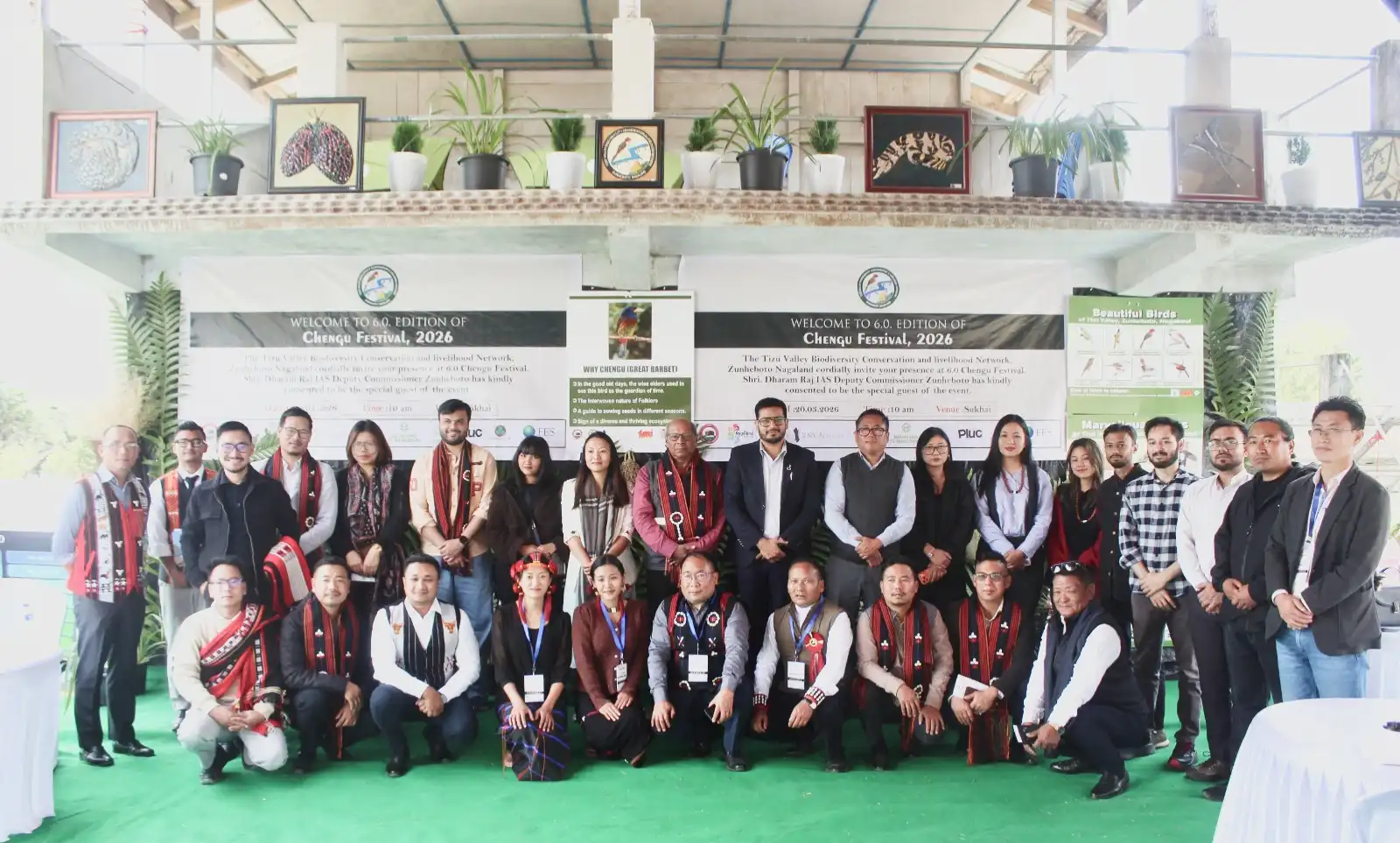
6.0 Edition of Chengu Festival cum Green Hero Award held in Zunheboto
DIMAPUR: