
The Supreme Court on Tuesday ruled that individuals who convert to religions other than Hinduism, Sikhism or Buddhism cannot claim Scheduled Caste (SC) status under the Scheduled Castes and Scheduled Tribes (Prevention of Atrocities) Act.
A Bench of Justices PK Mishra and Manmohan held that only those professing Hinduism, Sikhism or Buddhism are entitled to SC status.
“No person who professes a religion other than Hindu, Sikh or Buddhist shall be a member of Scheduled Caste. Conversion to any other religion results in loss of Scheduled Caste status,” the Bench observed, citing provisions of the Constitution (Scheduled Castes) Order, 1950. The court clarified that the bar under the 1950 Order is absolute and applies regardless of birth.
The apex court upheld an earlier order of the Andhra Pradesh High Court, which had ruled that a person who converts to Christianity and actively practices it cannot be treated as a member of a Scheduled Caste.
The case involved a petition by Chinthada Anand, who had converted to Christianity and was working as a pastor. Anand had filed a complaint under the SC/ST Act against certain individuals alleging assault. However, the accused challenged the case, arguing that Anand had lost his SC status after conversion and could not invoke protections under the Act.
The High Court, in its earlier ruling, had quashed the FIR, holding that conversion to Christianity nullifies SC status, even if the individual continues to possess an SC certificate. It noted that caste distinctions are not recognised after such conversion.
Upholding this view, the Supreme Court observed that Anand had continued to profess Christianity for over a decade and had been conducting regular prayers as a pastor. The court noted that he had neither reconverted to his original faith nor been accepted back into his original community. Accordingly, the court concluded that Anand was not entitled to claim protection under the SC/ST Act and dismissed his appeal.
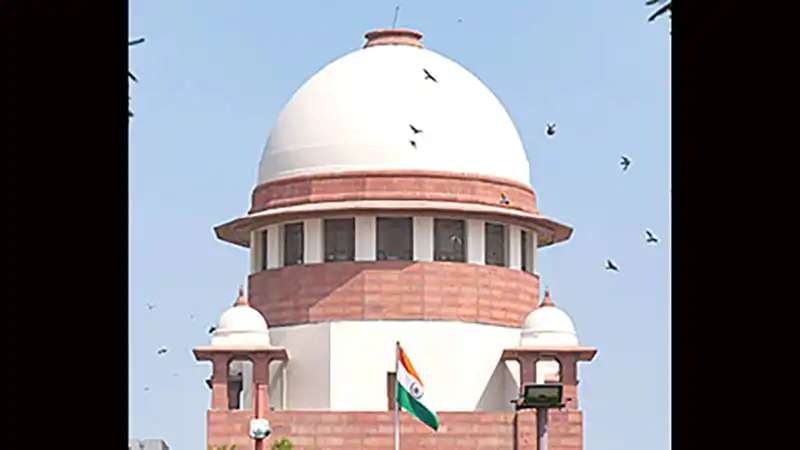
No Scheduled Caste status after conversion: Supreme Court
NEW DELHI, MAR 24