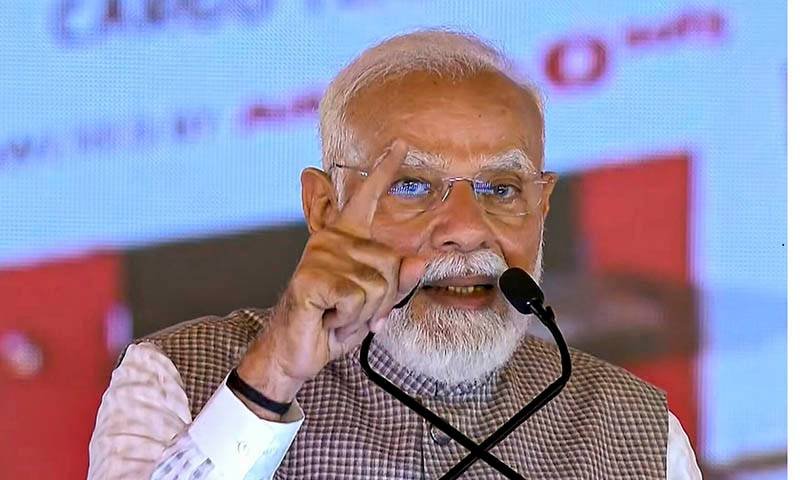
Prime Minister Narendra Modi on Sunday urged citizens to remain united and vigilant in view of the “challenging” situation arising from the ongoing conflict in West Asia, while cautioning against politicisation and the spread of misinformation.
Addressing his monthly radio programme Mann Ki Baat, Modi said the “fierce war” in India’s neighbourhood for over a month had created difficult circumstances, calling on people to join hands to overcome the crisis. He stressed that attempts to politicise the issue were misplaced, as it concerned the interests of 140 crore citizens, and asserted that there was no place for “self-serving politics” in such a situation.
The prime minister also appealed to the public to stay alert and not be misled by rumours, warning that misinformation could cause serious harm to the country. He urged citizens to rely only on official communication from the government while responding to the evolving developments.
Expressing confidence, Modi said India had overcome crises in the past through collective strength and would emerge stronger this time as well. He noted that millions of Indians live and work in Gulf countries and expressed gratitude to those nations for extending support and assistance to over one crore Indian citizens during the ongoing tensions.
Highlighting the broader impact, Modi said West Asia remains a key region for India’s energy security, and the conflict has triggered global concerns over fuel supply, particularly petrol and diesel. He added that India’s strong global relations and internal resilience built over the past decade were helping the country navigate the situation effectively.
Reflecting on global developments, Modi observed that March had been marked by turbulence, with conflicts emerging in different parts of the world even after the COVID-19 pandemic. He said expectations of a stable global recovery had been disrupted by continuing geopolitical tensions. The West Asia conflict, which began on February 28, involves strikes by the United States and Israel on Iran, followed by retaliatory actions by Tehran targeting US allies and Israeli positions. Iran’s control over the Strait of Hormuz—a vital route through which nearly 20 per cent of global energy supplies pass—has further heightened concerns, with shipping activity reportedly restricted.
Since the outbreak of the conflict, Modi has spoken with several world leaders, including those from Saudi Arabia, United Arab Emirates, Qatar, Bahrain, Kuwait, Jordan, France, Malaysia and Israel. He also spoke with US President Donald Trump on March 24, describing it as a useful exchange of views on the evolving situation.