
The Society for the Preservation of Sumi Language has rasied serious concerns over the latest Sumi Bible translation, alleging serious lapses in linguistic accuracy, theological meaning, and consistency with existing Sumi literature, and has demanded its immediate recall by the Bible Society of India.
Addressing a press conference at Badampukhuri, Retd Pastor Rev Heniji Zhimomi described the translation as more than a mere linguistic exercise, stating that it concerns the holiness of God’s word. He claimed the new version contains additions and omissions that compromise the original meaning of the Scriptures.
He said Bible must be clearly understandable in the Sumi language without external linguistic influence.
Rev. Zhimomi pointed out glaring inconsistencies between the new Bible and established Sumi literature, hymn books, and educational materials. He said changes in vocabulary, pronunciation, and phonetics have created widespread confusion and disturbed linguistic uniformity within the community.
The committee convener Aqheto Chishi echoed similar concerns and noted that many in the Sumi community were now struggling to properly read and understand the Bible in their own language.
Tracing the history of the Sumi Bible, first translated in 1928 and revised several times since, he said the current version was most problematic.
Despite repeated appeals by various Sumi organisations, Chishi said their concerns were not adequately addressed. Chishi also questioned the substantial resources spent on the project without delivering an acceptable version.
Advisor GB Kahuto Chishi said the committee has received numerous complaints from across the Sumi community regarding inaccuracies in the translation. He revealed that around 5,000 copies were printed for proofreading and feedback, but alleged the process lacked transparency and public inputs were largely ignored.
Kahuto questioned the fate of already distributed copies and asked who would take responsibility for the alleged “corruption” of the Sumi language.
Kahuto said the committee has formally approached the Bible Society of India (BSI), demanding recall of all existing copies and an immediate halt to further publication. The committee has warned that failure to comply could lead to legal proceedings.
On the legal front, Kahuto cited Section 298 of the Bharatiya Nyaya Sanhita (BNS) relating to defiling of sacred objects and invoked Article 29(1) of the Constitution, which protects the rights of communities to conserve their language and culture.
He cited the alteration of “donkey” to “horse” in the account of Jesus’ entry into Jerusalem as a key example of theological distortion.
He also raised questions about the role and authority of tribal and community organisations such as Sumi Hoho, urging them to operate within clear legal and constitutional frameworks while protecting Sumi language, culture, and faith. Kahuto stressed that no organisation should compel the use of the disputed Bible version in churches amid ongoing objections.
The committee reiterated that the current version should not be used in churches or for official purposes until all errors are rectified and a broad community consensus is achieved.
They appealed to village councils, church leaders, and community elders to safeguard the integrity of the Sumi language and religious texts.
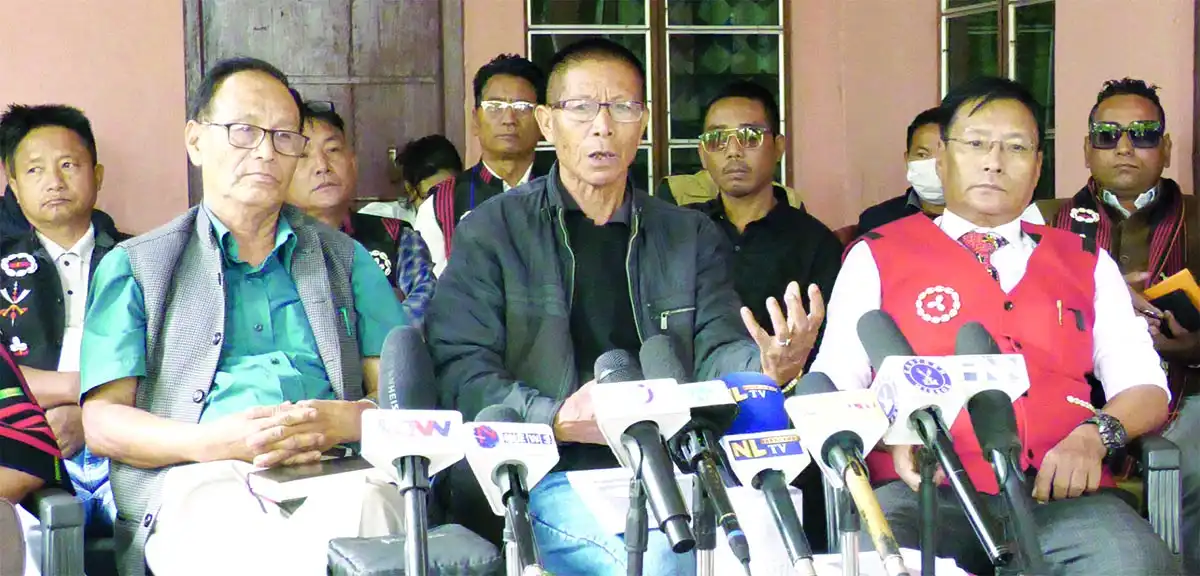
Sumi language body raises concerns over Bible translation
Staff ReporterDIMAPUR, APR 9 (NPN):