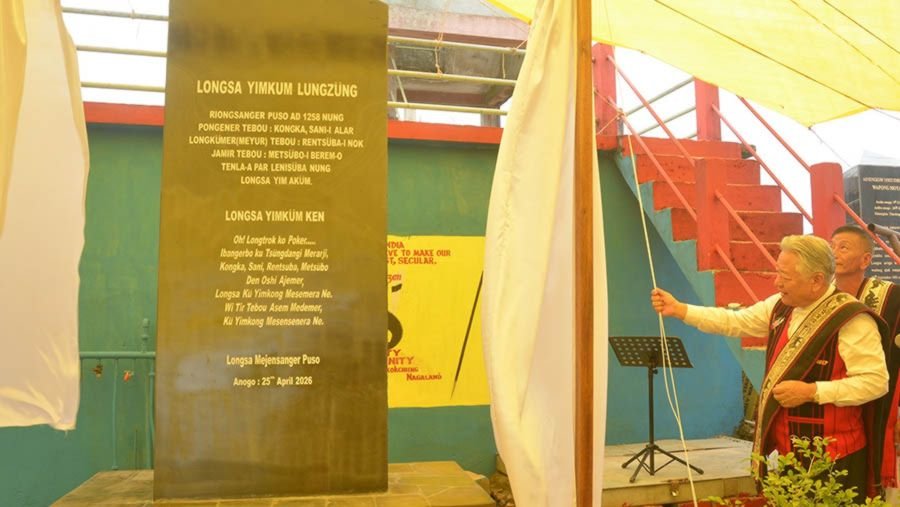
Longsa Village on April 25 witnessed the erection of a monolith foundation stone, marking a significant step in documenting and preserving its historical legacy dating back to AD 1258.
The monolith, symbolising the village’s origin, honours the Riongsanger generation and the forefathers of the three founding clans—Kongka, Sani (Pongener), Rentsüba (Longkumer/Meyur), and Metsübo (Jamir). The foundation stone was inaugurated by Alemtemshi Jamir, formmer chief secretray, who in his address underscored the importance of history in shaping identity and roots. He said that without knowledge of one’s origin, family, and village, an individual remains unrecognised.
Alemtemshi described the monolith as a reminder of the endurance and legacy of the ancestors, reflecting centuries of progress and resilience. He recalled his father, N.I. Jamir, who had once expressed a desire to write the history of Longsa “in alphabets of gold.” He noted that despite the absence of modern facilities, the forefathers sustained themselves through agriculture and upheld dignity and honour in their journeys across villages.
He further highlighted Longsa’s contributions to public service, including during the British period and after statehood, with several individuals serving in the state administration. Urging the present generation to continue contributing, he reminded them to remain mindful of their responsibilities and not forget their roots.
Earlier, Limaakum Tatar spoke on the significance of the monolith, while short speeches were delivered by Akangjungshi Tatar and Temjensosang Tatar. The programme was chaired by Bendangwati Tatar. Rev. Supongchiten, pastor of Longsa Baptist Church, offered the invocation, Alemwati Tatar delivered the vote of thanks, and the closing prayer was pronounced by Temsuyanger, secretary of Longsa Baptist Church.