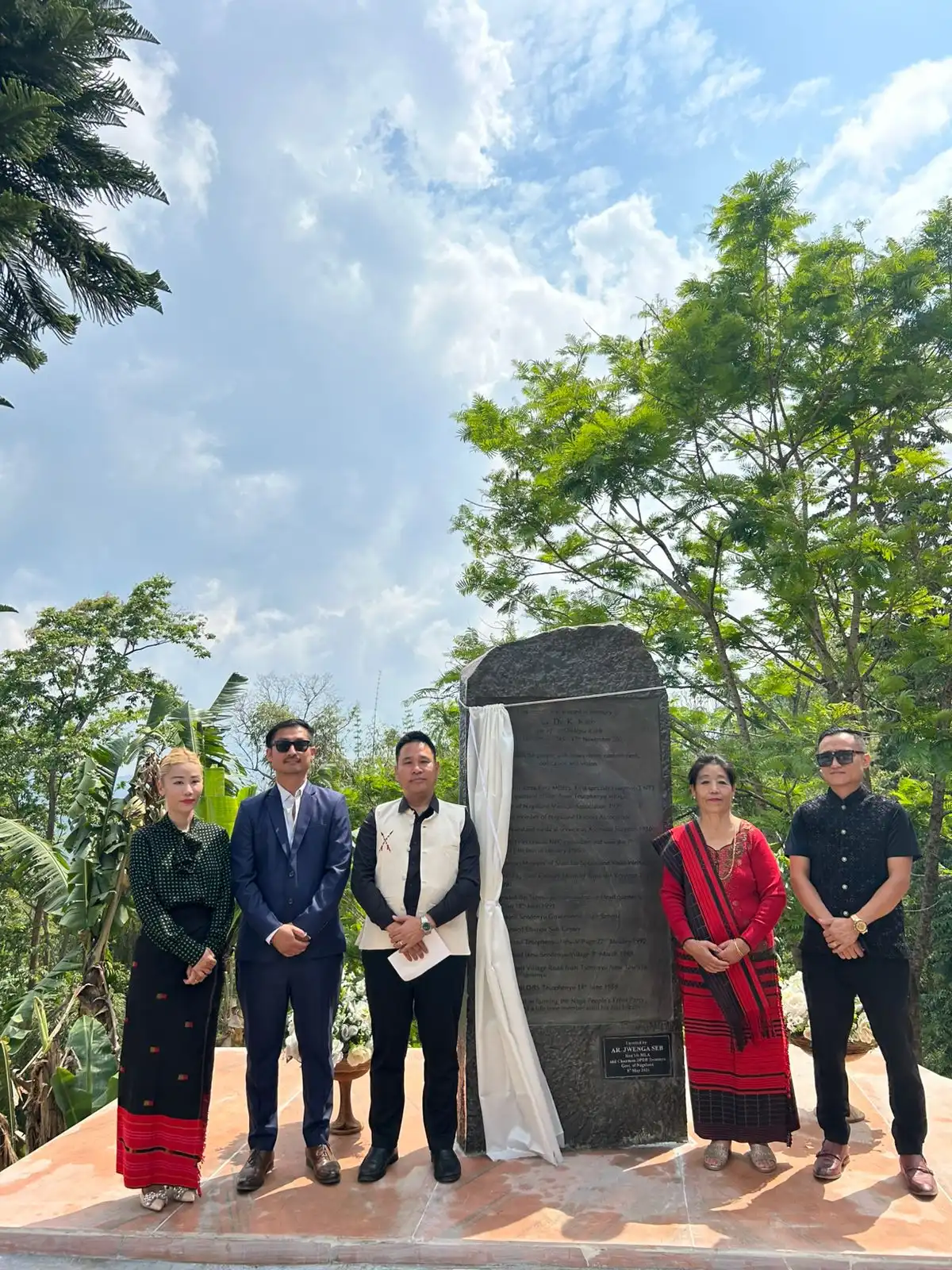
DIMAPUR: A memorial monolith programme in honour of late Dr. K. Kath, former minister, was held on May 9 at Tesophenyu New Village in the presence of dignitaries, church leaders, village authorities, frontal organisations, civil society representatives, political party leaders, officers, senior citizens and well wishers.
The monolith was unveiled by Ar. Jwenga Seb, MLA and chairman, DPDB Tseminyu. The programme was led by Meshenchu Kath, pastor TNBC, with invocation by Tekesheng Kath, senior pastor TUBC.
A brief life sketch of the late leader was presented by his brother, Agwalo Kath, who recalled Dr. Kath’s service oriented life. Beginning his career as Assistant Surgeon at Naga Hospital, Kohima in 1980, he entered politics in 1989 and made history on June 19, 1990, as the first Cabinet Minister from the Rengma community. Agwalo highlighted his contribution in upgrading the SDO Civil Office to ADC Office at Tseminyu, paving the way for the district’s eventual upgradation. He noted that Dr. Kath remained committed to the regional political movement and loyal to the NPF until his passing on November 17, 2025.
Ahino Tep, president of NPF Tseminyu district, lauded Dr. Kath’s dedication to the party and his role in strengthening NPF. He credited him for his pivotal contribution to Tseminyu’s administrative advancement.
In his address, Jwenga Seb described Dr. Kath as a towering leader and visionary whose legacy would inspire generations. He said the monolith was not merely for remembrance but to honour a life dedicated to unity, peace and progress. He added that the greatest tribute would be collective efforts towards growth and harmony, noting that Dr. Kath had brought recognition and identity to Tesophenyu New Village through his achievements.
The vote of thanks was delivered by Shenthyi Kath, chairman of Tesophenyu New Village, while Rev. Wachulo Jemu, chairman of Tesophenyu Lojvii Khekhi Jen, offered the prayer for the feast. The programme concluded with a community feast and fellowship attended by village leaders, frontal organisations, Gaon Buras, civil society representatives, political party members and the public.