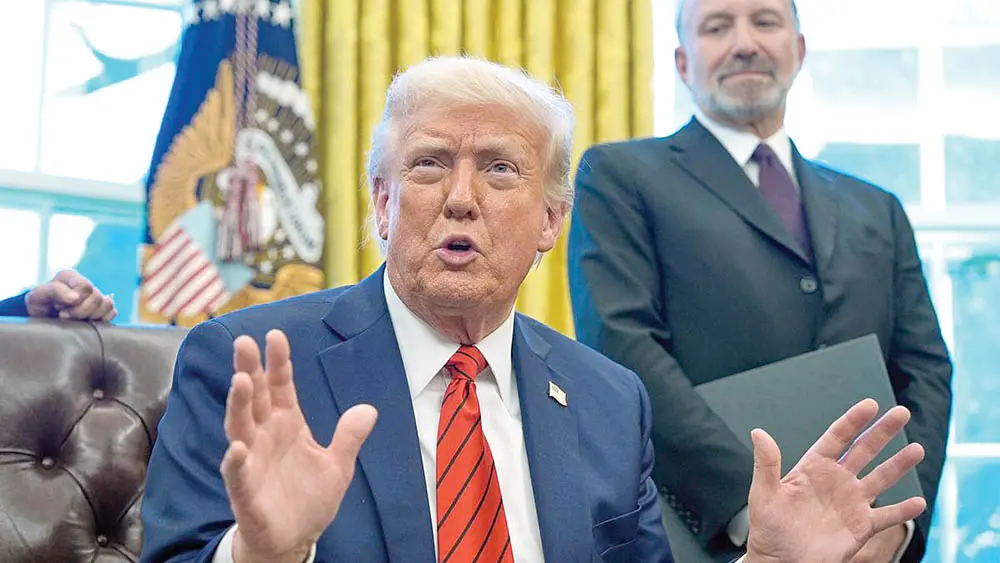
WASHINGTON, MAY 11 (PTI): US President Donald Trump has rejected Iran’s proposal to end the months-long war as “totally unacceptable” without sharing details even as a key Republican leader urged him to consider the “military option”.
Trump received the Iranian proposal on Sunday amid hopes that it could lead to a breakthrough to end the war with Iran that began on February 28, blocking the key sea route for global oil supplies, leading to fuel shortages in several countries.
“I have just read the response from Iran’s so-called ‘Representatives.’ I don’t like it — TOTALLY UNACCEPTABLE!” he wrote on his Truth Social platform on Sunday.
Earlier, Trump accused Tehran of playing games with the United States for nearly 50 years. “They will be laughing no longer!” he added.
“I don’t like their letter. It’s inappropriate. I don’t like their response,” Trump told US media outlet Axios, declining to go into further details about what was in the Iranian response.
“They have been tapping along many nations for 47 years,” he said.
Meanwhile, Republican Senator Lindsey Graham said Trump should now consider taking military action.
“I appreciate President Trump’s earnest efforts to seek a diplomatic solution to change the behaviour of the Iranian terrorist regime,” he said in a post on X.
“However, between their constant attacks on international shipping, the persistent attacks on our Middle Eastern allies and now a totally unacceptable response to America’s diplomatic proposal, it is in my view, time to consider changing course,” Graham said.
“Project Freedom Plus sounds pretty good right about now,” Graham said, referring to the naval operation to guide ships through the Strait of Hormuz that Trump abruptly suspended after less than 48 hours.
Trump told Axios he had spoken with Israeli Prime Minister Benjamin Netanyahu on Sunday and discussed the Iranian response, among other things.
“It was a very nice call. We have a good relationship,” he said of Netanyahu, but he added that the Iran negotiations are “my situation, not everybody else’s”.
The US and Israel war on Iran started on February 28 and attacks have been paused since April 8 when the warring sides agreed to a ceasefire.
The US and Iran have been negotiating a deal to end the hostilities for good, but peace has been elusive so far.
The US has been insisting that Iran give a clear commitment to end its uranium enrichment programme in exchange for lifting of sanctions and release of billions in frozen Iranian funds.
The negotiations also entail both Iran and the US lifting the blockade of the Strait of Hormuz, a key passageway for one-fifth of the global crude supplies.
Drone attacks target Gulf Arab nations
The fragile ceasefire was tested when a drone ignited a small fire on a ship off Qatar and the United Arab Emirates and Kuwait reported drones entering their airspace. The UAE said it shot down two drones and blamed Iran. No casualties were reported, and no one immediately claimed responsibility.
Qatar’s Foreign Ministry called the ship attack a “dangerous and unacceptable escalation that threatens the security and safety of maritime trade routes and vital supplies in the region.” The United Kingdom Maritime Trade Operations Centre gave no details about the ship’s owner or origin.
Kuwait Defence Ministry spokesperson Brig. Gen. Saud Abdulaziz Al Otaibi said forces responded to drones but did not say where they came from.
Iran and armed allied groups like Hezbollah in Lebanon have used drones to carry out hundreds of strikes since the war began with US and Israeli attacks on Feb. 28.