
Correspondent
MOKOKCHUNG, MAY 12 (NPN): Ao Senden organised a seminar on “Article 371(A) of the Indian Constitution” and “The Nagaland Council Act, 1978” at Mokokchung Town Hall on Tuesday, with speakers and participants stressing the need to better understand and safeguard the constitutional and traditional rights of the Nagas.
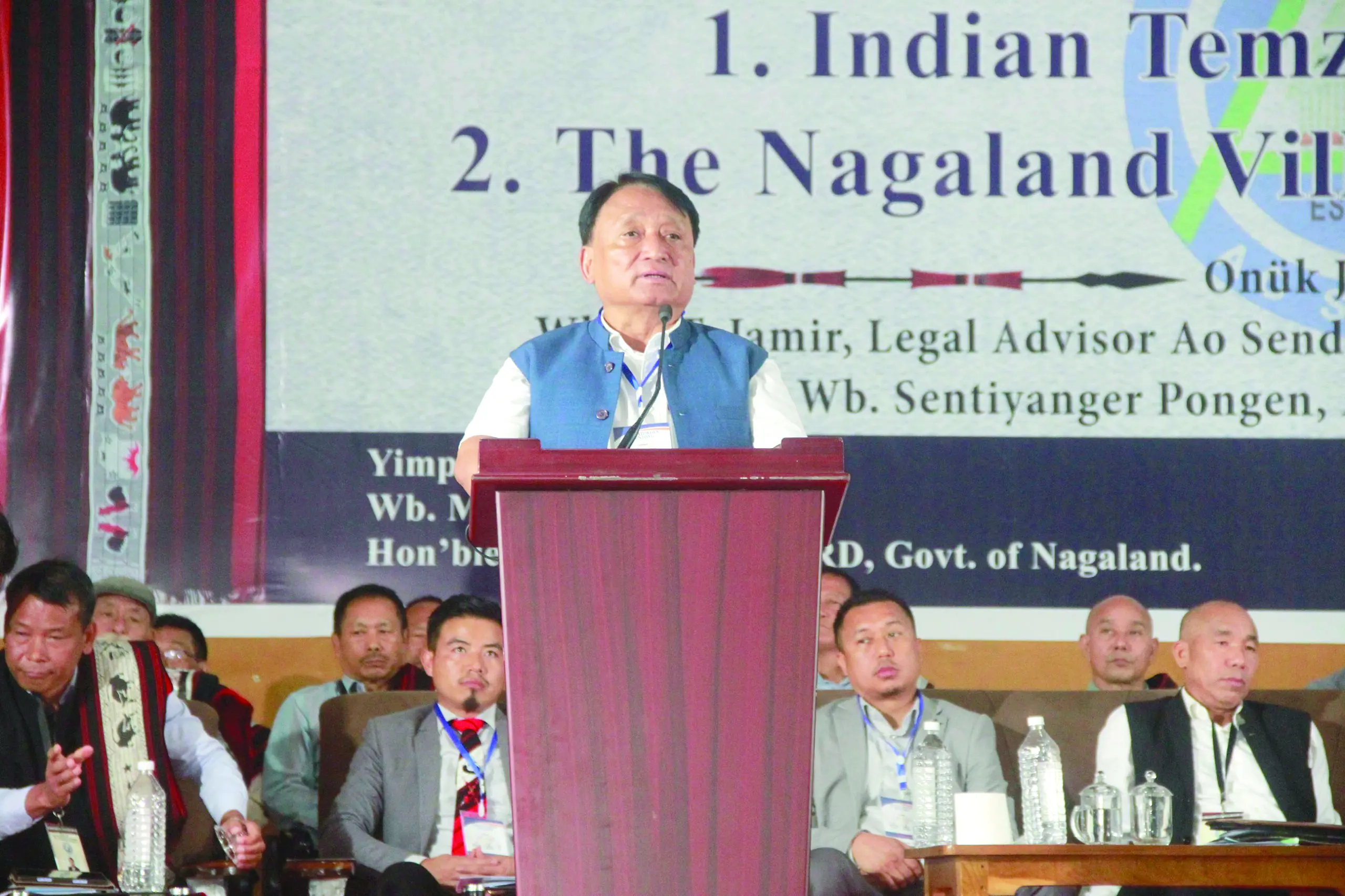
Addressing the gathering, minister for Rural Development & SIRD, Metsubo Jamir expressed concern that many Nagas do not fully appreciate the significance of Nagaland’s statehood, attained on December 1, 1963, and the constitutional safeguards granted under Article 371(A).
He pointed out that Nagaland’s statehood came with special protections such as Article 371(A), the Bengal Eastern Frontier Regulation and income tax exemption to safeguard the interests, land and resources of the Nagas, who were then a small population.
Lamenting that many people today failed to value these “hard-earned rights” secured by visionary forefathers, Metsubo said the younger generation must better understand the importance of these constitutional protections.
He also criticised reluctance to part with land for developmental projects, stating that development was often hindered because of unwillingness to provide land for infrastructure and public projects.
“Why do we complain about what we don’t have when we are unwilling to give land for development?” he asked.
The minister further urged the Ao community to move away from dependency and strive towards self-reliance and self-sustenance.
He cautioned that if Nagas were not careful, there was a risk of the Centre repealing constitutional safeguards, which could lead to an influx of outsiders and threaten indigenous control over land and resources.
State chief secretary Sentiyanger Imchen described Article 371(A) as a constitutional provision intended to protect the traditional and customary identity of the Naga people. However, he regretted that many people failed to fully comprehend the provision and often misinterpreted its purpose.
While acknowledging that Article 371(A) was conceived as a transitional provision, he called for adaptation to changing societal needs and adherence to evolving laws.
Imchen said laws were instruments of social change essential for societal progress and stressed the need for progressive legislation.
“Good governance depends not just on having good laws, but on their fair and judicious implementation for the welfare of the people,” he said, adding that even the best laws were effective only when implemented impartially.
Ao Senden president Marsanen Imsong, in his keynote address, highlighted the historical respect accorded to Naga customs and traditions.
He said that after the British entered the Naga Hills in 1832 and brought the area under administrative control, they refrained from interfering in Naga customary laws, traditions and identity. Instead, interpreters were appointed to better understand the unique Naga culture.
Similarly, he said the Government of India recognised and respected the distinct Naga identity by incorporating Article 371(A) after Nagaland attained statehood.
Imsong stressed the importance of not only knowing one’s rights but understanding them thoroughly. He said the seminar was organised to provide participants with a comprehensive understanding of constitutional provisions and customary protections so they could effectively safeguard Naga rights and interests.
He also informed that no formal resolutions would be adopted during the seminar, but a detailed report would be submitted to the Ao Senden Executive Council and General Conference for further necessary action, if required.
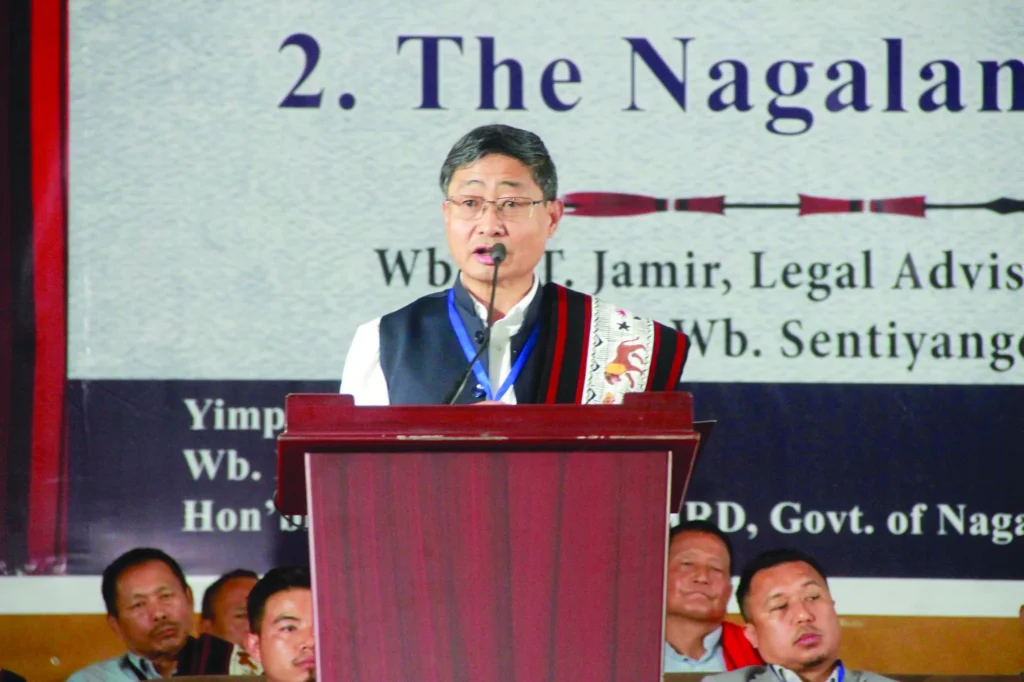
The resource persons for the seminar were Ao Senden legal advisor and senior advocate of Gauhati High Court C. T. Jamir and advocate Sentiyanger Pongen, who delivered detailed presentations on the two topics.
The seminar concluded with an interactive discussion session in which participants exchanged views with the speakers on constitutional rights, customary laws and governance issues.