
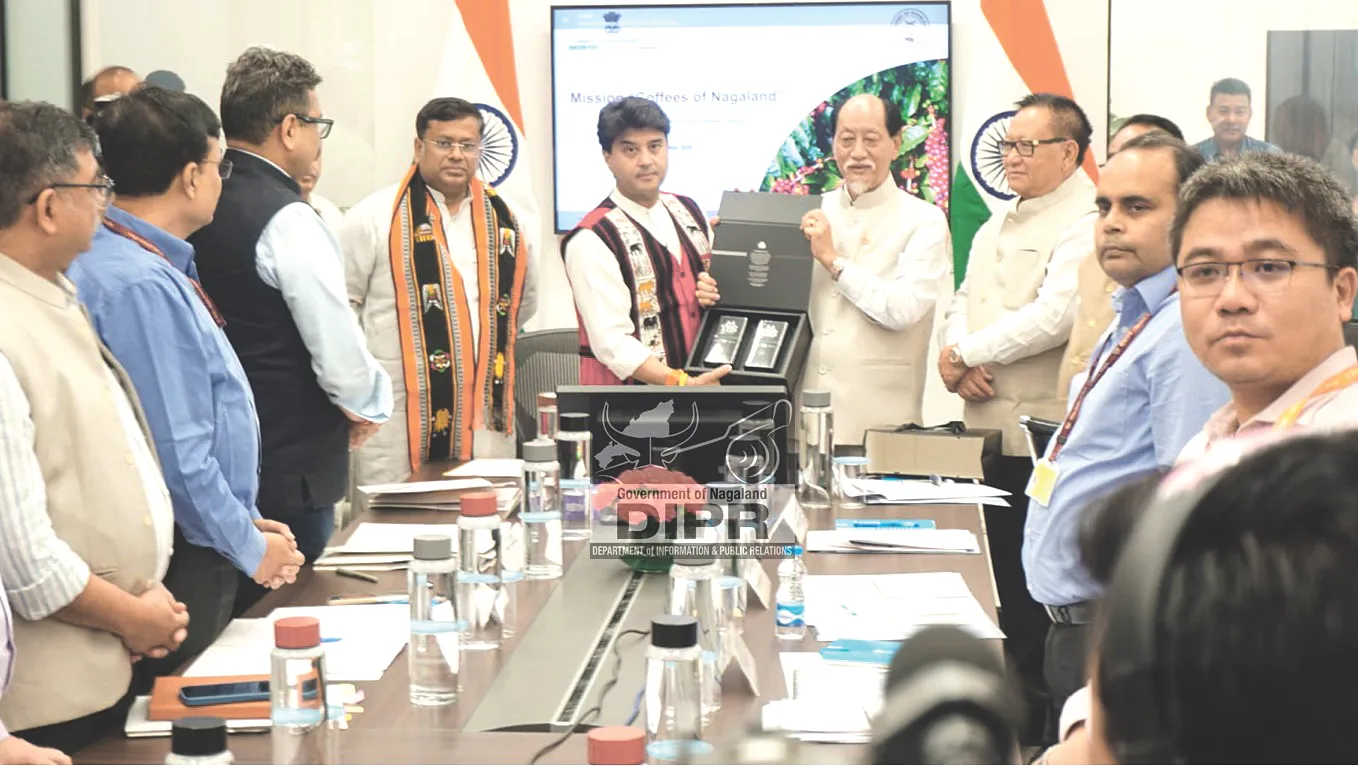
Rs 49.48-CR CLUSTER-BASED PROJECT TO BOOST NAGALAND COFFEE SECTOR
Staff Reporter
DIMAPUR, MAY 18 (NPN): In a major push towards agricultural diversification and value-added economic growth in Nagaland, Union minister for Development of North Eastern Region (DoNER) and Communications, Jyotiraditya M. Scindia on Monday virtually launched the Rs 49.48-crore Mission “Cluster-based Coffee Value Chain Development in Nagaland” from Sanchar Bhawan, New Delhi.
The programme was attended by minister of state for DoNER Sukanta Majumdar, Nagaland chief minister Neiphiu Rio, deputy chief minister T. R. Zeliang, advisor for Land Resources G. Ikuto Zhimomi and DoNER secretary Sanjay Jaju.
In Nagaland, the virtual launch programme was held simultaneously at Touphema and Niuland.
The ambitious project adopts a cluster-based model with two pilot sites—Touphema in Kohima district for Arabica coffee and Ghotovi in Niuland district for Robusta coffee. The mission aims to strengthen the entire coffee value chain, ranging from cultivation and processing to branding, marketing and exports.
Scindia says NE to drive Viksit Bharat vision: Addressing the programme, Scindia described the launch as a “historic day” and termed the mission a “whole-of-India approach” aimed at unlocking the unique strengths of the Northeast and positioning the region as a key driver of the Viksit Bharat 2047 vision.
He said the initiative reflected Prime Minister Narendra Modi’s broader vision of identifying the comparative advantage and “unique selling proposition” of each northeastern state.
According to Scindia, Nagaland was identified for coffee development due to its favourable climate, altitude and shade-grown cultivation practices.
“This is not merely a whole-of-government approach, but a whole-of-India approach involving farmers, entrepreneurs, private players and all stakeholders,” he said.
Scindia also highlighted the state’s growing potential in coffee processing, branding and exports and informed that the Centre would support establishment of processing centres, export-oriented strategies and coffee tourism initiatives to enhance value addition and market access.
Planting hope and prosperity, says Rio: Speaking at the launch, Rio described the initiative as a milestone in Nagaland’s agricultural transformation and sustainable economic growth.
He said coffee production in the state had risen from 21 metric tonnes in 2021-22 to nearly 73 metric tonnes in 2024-25, reflecting increasing farmer participation and expanding cultivation. Rio projected that Nagaland could bring nearly 50,000 hectares under coffee cultivation by 2047.
He informed that the project would establish high-tech nurseries, washing stations, roasteries and a comprehensive branding and marketing framework to promote “Coffees of Nagaland” as a premium single-origin product in international markets.
The chief minister also highlighted plans to integrate coffee tourism through farm stays and experiential visits, creating additional livelihood opportunities for youths while promoting the state’s cultural heritage.
Describing the initiative as people-centric, Rio said it would help reduce dependence on jhum cultivation, conserve forests and protect fragile hill ecology while ensuring sustainable livelihoods.
“Today, we are not just planting coffee. We are planting hope, prosperity and pride in our hills,” he said.
Short speeches were also delivered by two coffee farmers—Khevito Chophi of Kuhoxu village and Catherine Zhimomi of Ghotovi—as well as founder and managing director of Nagaland Coffee Pvt. Ltd., Vivito Yeptho. State chief secretary Sentiyanger Imchen delivered the vote of thanks.