Scientists at the University of Nottingham are helping to develop new varieties of rice that may be able to withstand drought.
Rice is a primary food staple for billions of people, with over half the world’s population eating it every single day.
Growing it, however, requires huge amounts of fresh water, and yields are being impacted as climate change makes rainfall increasingly unpredictable.
Professor Erik Murchie, one of the University of Nottingham researchers, said: “A 1C rise in global temperatures cuts rice yields by 6%, and fierce heatwaves worsen this situation.”
“UK-based research supports breeding efforts that go straight from our labs and into rice fields in rice-growing countries.”
The researchers are experimenting with rice plants with climate-resilient gene variants in special “growth rooms” at the university’s Sutton Bonington campus.
Professor Ranjan Swarup said the rooms allowed them to simulate conditions and see how different plants responded to heat stress and drought.
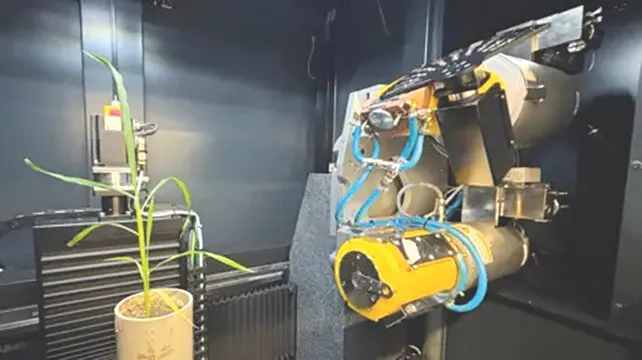
“In this day and age, when global food security is a big issue facing world agriculture and we have to improve food production in a sustainable way, we are looking at root traits which can improve resilience,” he said. The rice plants are also analysed in a micro-CT scanner at the university’s Hounsfield Facility.
Hounsfield director Professor Craig Sturrock said it allowed researchers to visualise how roots responded to changes in climate without damaging them. (BBC)