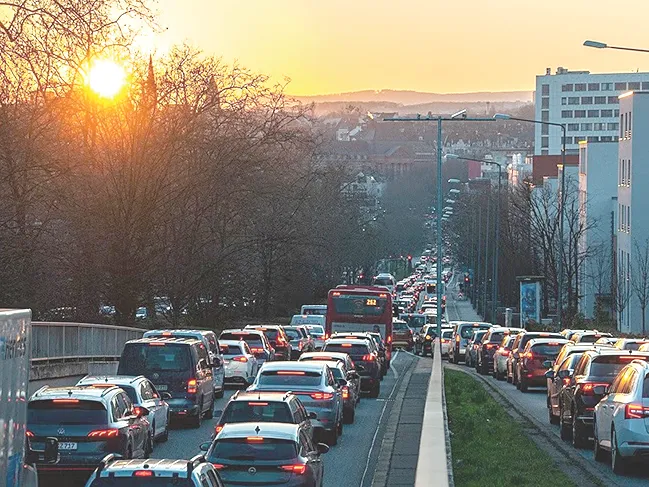
More than half the world’s population now lives in cities that are often much hotter than their rural surroundings. Roads, buildings and paved surfaces absorb and store heat during the day, then release it slowly after sunset. This is known as the urban heat island effect.
Discussions about why cities overheat tend to focus on buildings, which is understandable. As well as absorbing solar radiation, residential and office buildings consume a lot of energy through lighting, heating and air conditioning. They release waste heat, and shape the flow of air through surrounding streets.
But another source of urban heat receives much less attention: traffic.
Motorized vehicles release heat directly into the urban environment. This is especially true of petrol and diesel vehicles, where much of the fuel energy is lost as waste heat from internal combustion engines and exhaust systems. Tires, brakes and friction with the road surface all add to these heat emissions.
In streets with heavy traffic and limited ventilation, traffic can be a significant source of human-made heat—as my recent study with colleagues of two major European cities shows.
In the southern French city of Toulouse, our modeling found that traffic heat increases the average annual air temperature by about 0.4°C. In Manchester, a typically cooler city in the north of England, the average annual air temperature increased by around 0.25°C thanks to its traffic.
These numbers may sound small, but in urban climate terms they are meaningful. During heat waves, even small increases in air temperature can worsen thermal discomfort, increase health risks and raise demand for cooling.
Our past research has shown how the intensity, frequency and length of urban heat waves are projected to increase in many parts of the world by 2070. This includes cities in North America, Europe, India and China. Our latest work suggests these rises could in part be mitigated by reducing urban petrol and diesel traffic.
The role of traffic in urban heating
Awareness of urban heat risk is increasing, but the role played by traffic is still rarely considered in urban climate adaptation and transport planning.
As cities continue to grow and climate extremes become more common, governments need better tools to understand where urban heat comes from and how it can be reduced. Our work is another step towards more realistic simulations of future cities.
Our model could offer more accurate answers to important questions such as: how much will electrification of vehicles reduce heat levels? How will changes in road design, vehicle use and congestion patterns affect local heat exposure? And to what extent can changes in urban transport methods limit the effects of predicted future heat waves?
These are, of course, not just scientific questions but policy and design issues. Concerns around cities getting hotter often focus on trees, parks, cool roofs and building design. But traffic is not just a source of pollution and carbon emissions—it can also be part of how we plan cooler, healthier and more resilient cities.
(Phys Org)