
Correspondent
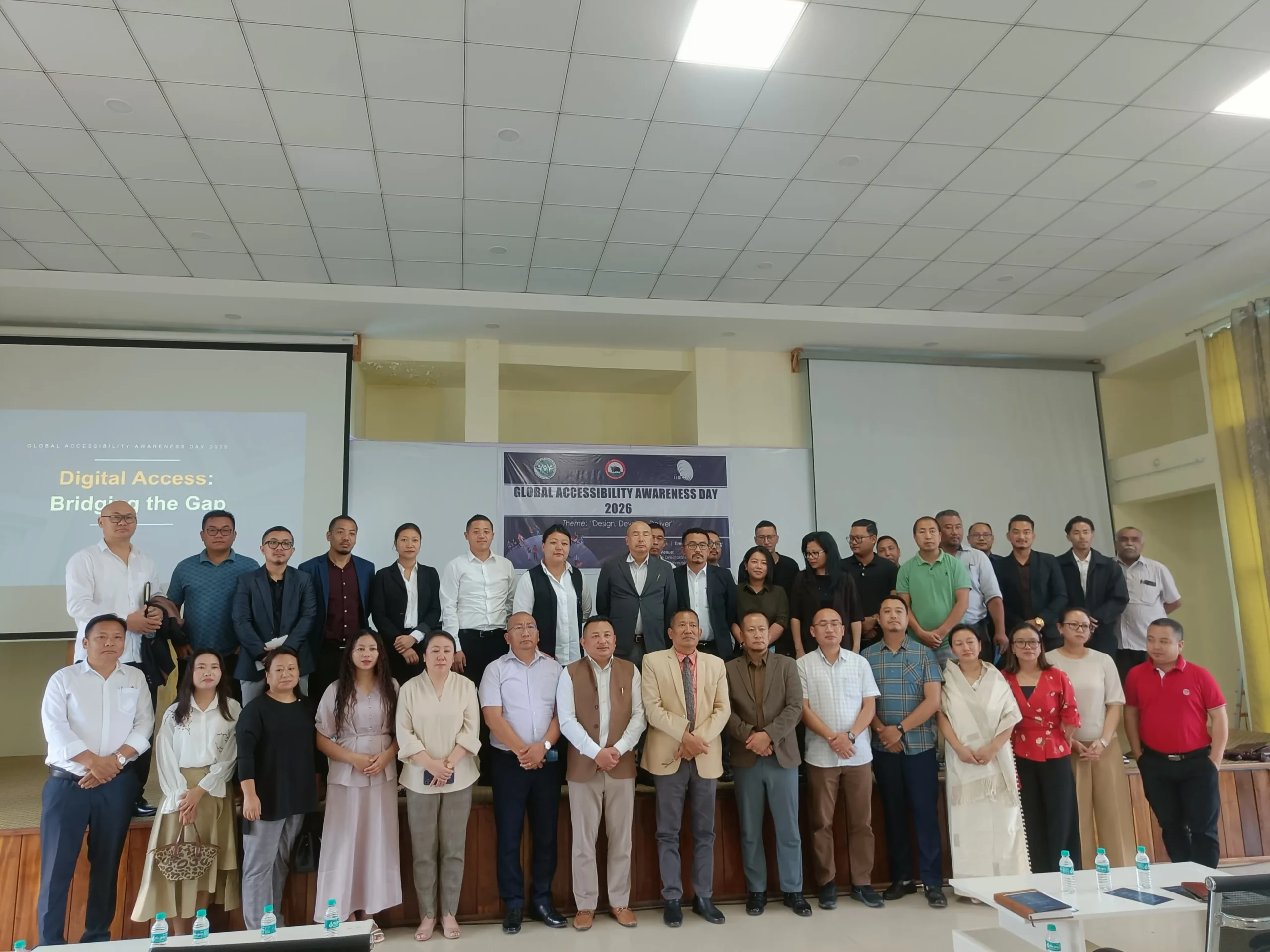
KOHIMA, MAY 21 (NPN): Global Accessibility Awareness Day (GAAD) 2026 was observed during a programme organised by the Office of the State Commissioner for Persons with Disabilities in collaboration with the Department of Information Technology & Communication at the Conference Hall of the Directorate of Information Technology & Communication on Thursday.
GAAD is an international initiative dedicated to promoting digital accessibility and inclusion for persons with disabilities. The observance aimed to sensitise stakeholders on the importance of accessible information technology and communication systems, inclusive digital services, best practices in accessibility, and physical accessibility.
Delivering the keynote address, State commissioner for Persons with Disabilities, Tongpang L. Jamir remarked that the day serves as a reminder that accessibility is a basic human right and stressed that the occasion was not only about discussing technology, policies or regulations, but also about standing in solidarity with persons with disabilities who continue to face visible and invisible barriers in daily life.
He asserted that every individual deserves equal access to information, education, healthcare, employment opportunities and full participation in society. According to him, accessibility is about dignity, equality and respect, and involves creating a world where both able-bodied persons and persons with disabilities can learn, work, communicate and live independently with confidence and freedom.
Highlighting the growing importance of accessibility in the digital era, Jamir stated that technology now influences almost every aspect of life, including banking, education, healthcare, transport, government services and communication. However, he cautioned that when digital systems are not designed inclusively, they can deepen inequality instead of eliminating it.
He maintained that true inclusion begins when accessibility is considered from the outset in every conversation, design and decision, adding that accessibility should never be treated as an afterthought or optional feature, but as a fundamental part of all systems and services.
Jamir further said governments must develop inclusive policies, educational institutions must ensure equal learning opportunities, businesses should create products and services accessible to all, and developers and designers must adopt universal design principles. He noted that prioritising accessibility benefits not only persons with disabilities but society as a whole by creating better experiences for everyone. He also highlighted the role of churches in promoting inclusion, dignity and equal participation for persons with disabilities.
Stating that inclusion is not an act of charity but a matter of fairness, equality, justice and human progress, Jamir said the occasion should also celebrate the resilience, creativity, talent and achievements of persons with disabilities who continue to inspire society in numerous ways.
He urged all stakeholders to move beyond words and take meaningful action towards building a more inclusive, accessible and compassionate world for all.
Earlier, the programme was chaired by Rüvuorienuo Juliana, while welcome address was delivered by director, Information Technology & Communication, Er. Sabou Yashü.
A presentation on “Digital Access” was delivered by senior programme officer, Information Technology & Communication, Er. Akumla Aier. Programme officer, office of the State Commissioner for Persons with Disabilities, Viketukho Nakhro, spoke on “What is Physical Accessibility and Why is it Important”.
Vote of thanks was proposed by programme coordinator, office of the State Commissioner for Persons with Disabilities, Ashe Kiba. The sign language interpreter for the programme was Ruokuokhrienuo Vizotha.