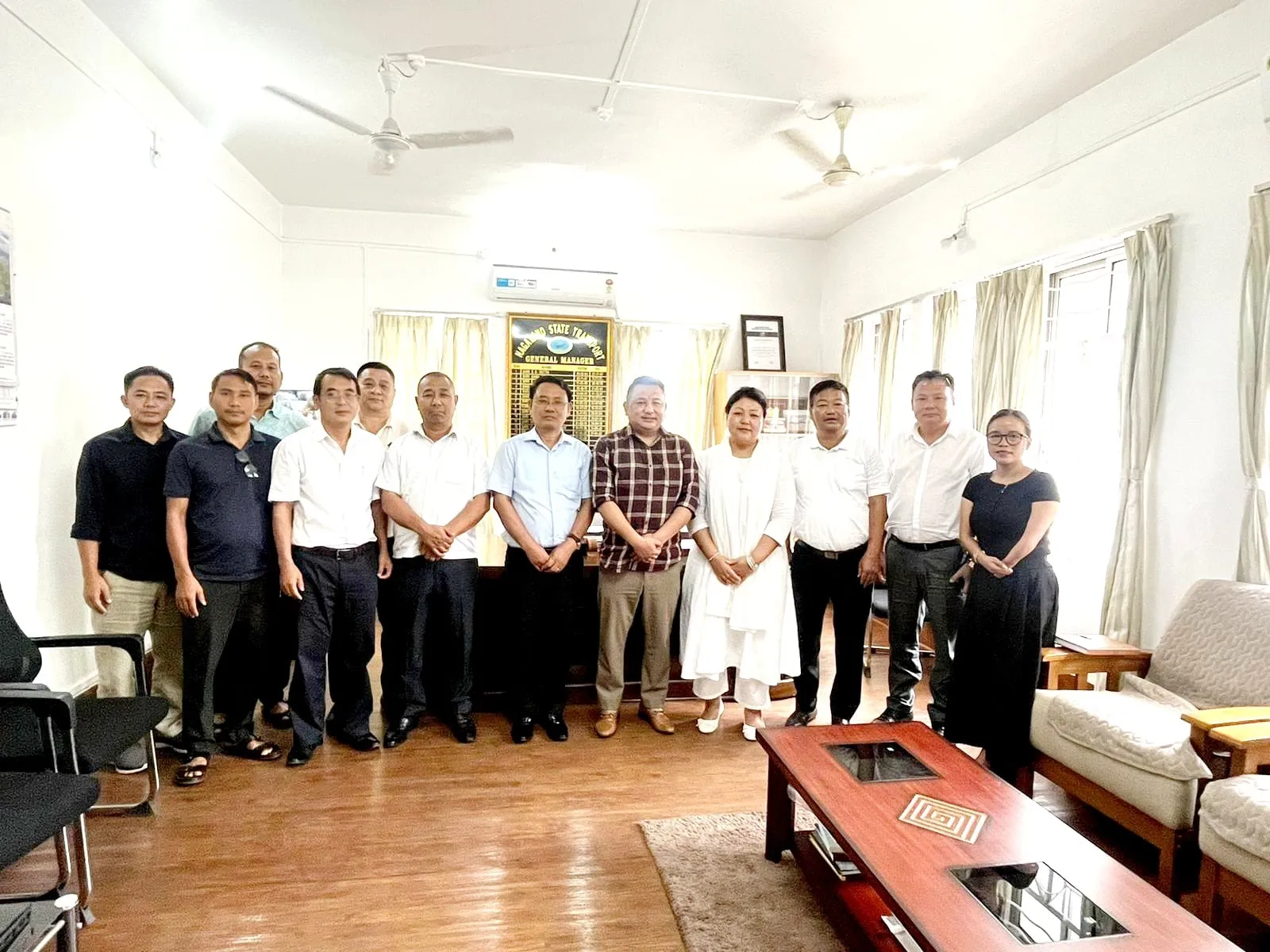
DIMAPUR: State Commission for Persons with Disabilities (SCPD), led by state commissioner Tongpang L. Jamir, conducted visits to various government departments and residential facilities on May 25 to review accessibility measures and welfare initiatives for Persons with Disabilities (PwDs) across Nagaland.
During deliberations with officials of the Nagaland State Transport (NST), the department informed that installing hydraulic lifts and integrated ramps in existing buses was not feasible due to technical constraints. It explained that buses designed for hilly terrain have floor heights of 1000 mm and above, making ramp installation difficult. While mechanically operated ramps have been introduced, they are not yet fully user friendly for wheelchair access.
NST further noted that under the latest AIS Bus Body Code, roof luggage carriers have been removed, shifting compartments beneath buses and raising floor height to nearly 1200 mm.
In view of these limitations, NST has decided to focus on accessible infrastructure at bus stations, with portable wedge type ramps to be made available at stations and sub stations. It also informed that five low floor mini buses fitted with hydraulic or pneumatic ramps will be procured for Dimapur city.
Currently, NST has installed 13 ramps with handrails across 12 districts, five dedicated service counters in four districts and eight accessible toilets in seven districts.
The department also reported 96 active cardholders among PwDs.
The SCPD team also inspected the Dimapur District Disability Rehabilitation Centre (DDRC), where gaps in rehabilitation services were identified, including the need for a dedicated centre within the District Hospital, appointment of a PMR specialist, and trained personnel such as prosthetists, orthotists, physiotherapists and occupational therapists.
Additional requirements included dedicated parking facilities, financial assistance for fabrication of assistive devices, and a proper waiting area for PwDs.
Since 2021, the DDRC has manufactured and repaired several devices including 21 above knee prostheses, 35 below knee prostheses, eight ankle foot orthoses, one ortho prosthesis and 25 repaired assistive devices.
The team also visited Prodigals’ Home (PH), where detailed discussions were held with staff and representatives on its model working system and services for PwDs.
Meanwhile, the office informed that the terminology project concerning disability related language and accessibility is expected to be completed within the year.
A consultation meeting with Tribal Literature Boards is scheduled for June 2026, with participation from church associations, literature boards and PwD representatives. A state level consultation involving NGOs working for PwDs will also be organised soon.