
Week-long survey finds over 50% drop in sales
Bendangchuba
DIMAPUR, MAY 31 (NPN): Dimapur’s commercial sector is witnessing a significant slowdown, with traders across various businesses reporting a steep decline in sales, reduced customer footfall and mounting financial pressure.
A week-long ground survey conducted by this Reporter from May 25 to May 30 found a consistent trend of declining business activity across major market areas. Traders interviewed estimated that sales had fallen by more than 50% compared to previous years.
The survey covered eight categories of businesses, including electronic stores, second-hand clothing sellers, pan shops, hardware dealers, branded clothing outlets, footwear shops, restaurants and vegetable vendors. All respondents spoke on condition of anonymity.
A clothing retailer said customer turnout had dropped drastically, adding that there were now long periods without a single sale. Similar concerns were echoed by traders across different sectors.
One of the most frequently cited reasons for the slowdown was the rise in fuel prices, which traders said had increased transportation costs and pushed up the prices of goods. “Prices of almost everything have gone up because of fuel hikes,” a retailer remarked.
An elderly vegetable vendor at New Market said there were days when she failed to recover even her daily expenses. She lamented that unsold vegetables often went to waste after accounting for transport costs and market fees.
Several traders also pointed to the shifting of godowns and wholesale supply centres to neighbouring districts in Assam as a contributing factor. According to them, the relocation has disrupted supply chains and diverted commercial activity away from Dimapur.
Interestingly, traders unanimously dismissed weather conditions as a major factor behind the downturn. They noted that even during peak summer seasons in previous years, markets remained crowded and business activity was brisk. Another major concern raised by respondents was what they described as “multiple taxation”. While acknowledging payments made to underground groups, several traders alleged that they were also compelled to contribute to various civil society organisations under the guise of donations.
“These payments add to our burden, especially when sales are already down,” a hardware dealer said. Some small-scale retailers admitted they were considering shutting down their businesses if the situation did not improve.
“We are barely managing to pay rent and meet basic expenses. On top of that, we are taxed repeatedly,” a restaurant owner said.
When asked whether the implementation of stricter Inner Line Permit (ILP) checks had contributed to the decline in customer footfall, most respondents disagreed, maintaining that the majority of customers in Dimapur markets were local Nagas.
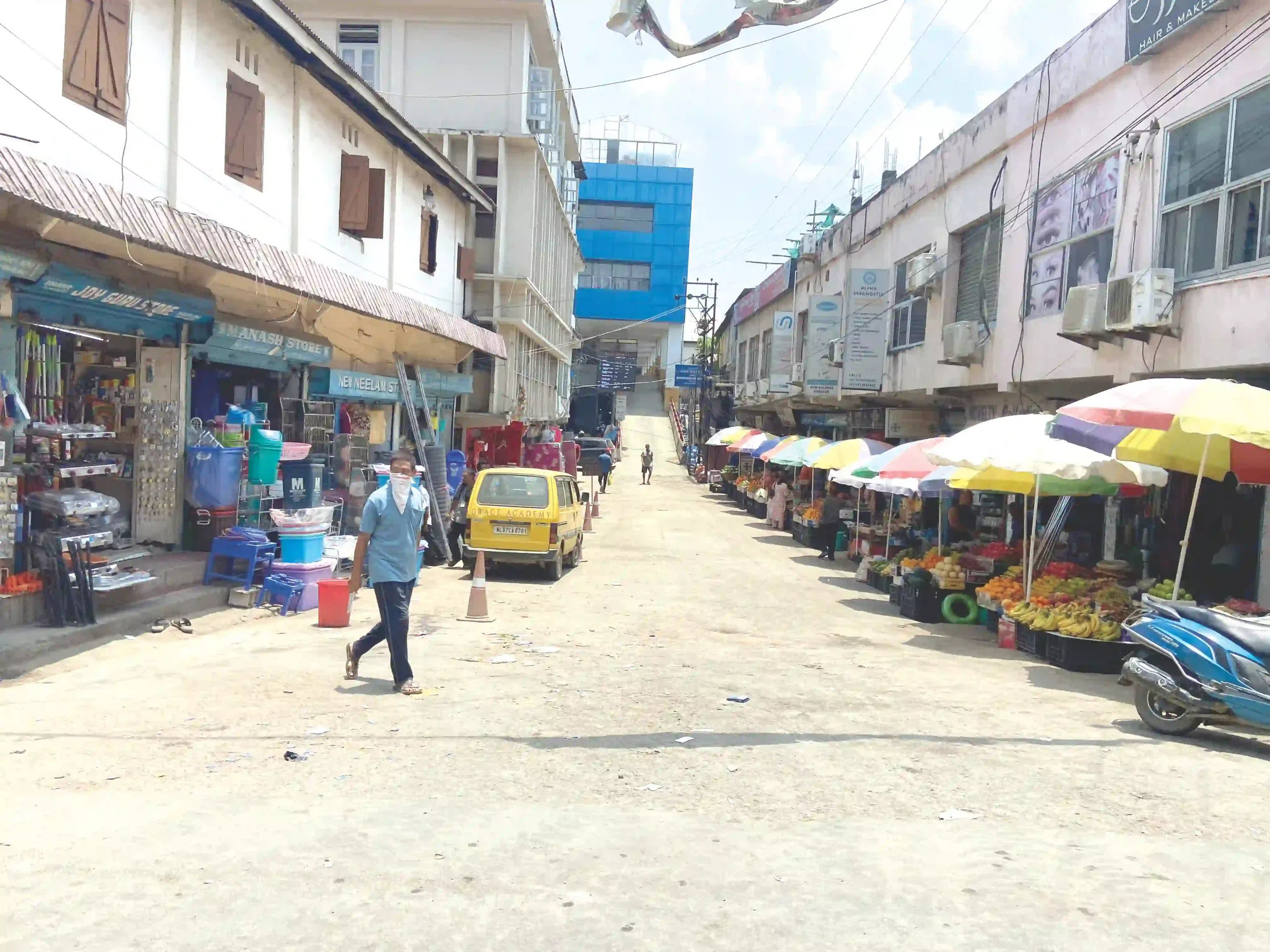
The slowdown was also visibly reflected on the streets. During the survey period, this Reporter observed noticeably lower traffic congestion and pedestrian movement in key commercial areas, even during peak business hours.
Supporting these observations, parking attendants stationed in major market zones reported a sharp decline in vehicle numbers.
“Earlier, parking spaces would remain full throughout the day. Now, many slots remain vacant even during peak hours,” one attendant said.
Traffic Police personnel also confirmed a reduction in vehicular movement and crowd density. However, one officer opined that smoother traffic flow at major junctions could partly be attributed to the recent installation of CCTV and Automatic Number Plate Recognition (ANPR) cameras, which have improved traffic management.
At the same time, the officer acknowledged that footfall in Dimapur’s markets had declined significantly compared to previous years.
Areas such as New Market, Hong Kong Market and Batta Charali, once known for heavy crowds even during the hottest summer days, now appear unusually less crowded, reflecting the broader slowdown affecting the city’s commercial activity.