
Correspondent
KOHIMA, JUN 13 (NPN): Nagaland Pradesh Congress Committee (NPCC) on Saturday launched initiated a statewide questionnaire exercise to seek direct feedback from the people and prepare a people-centric roadmap for the 2028 Assembly elections.
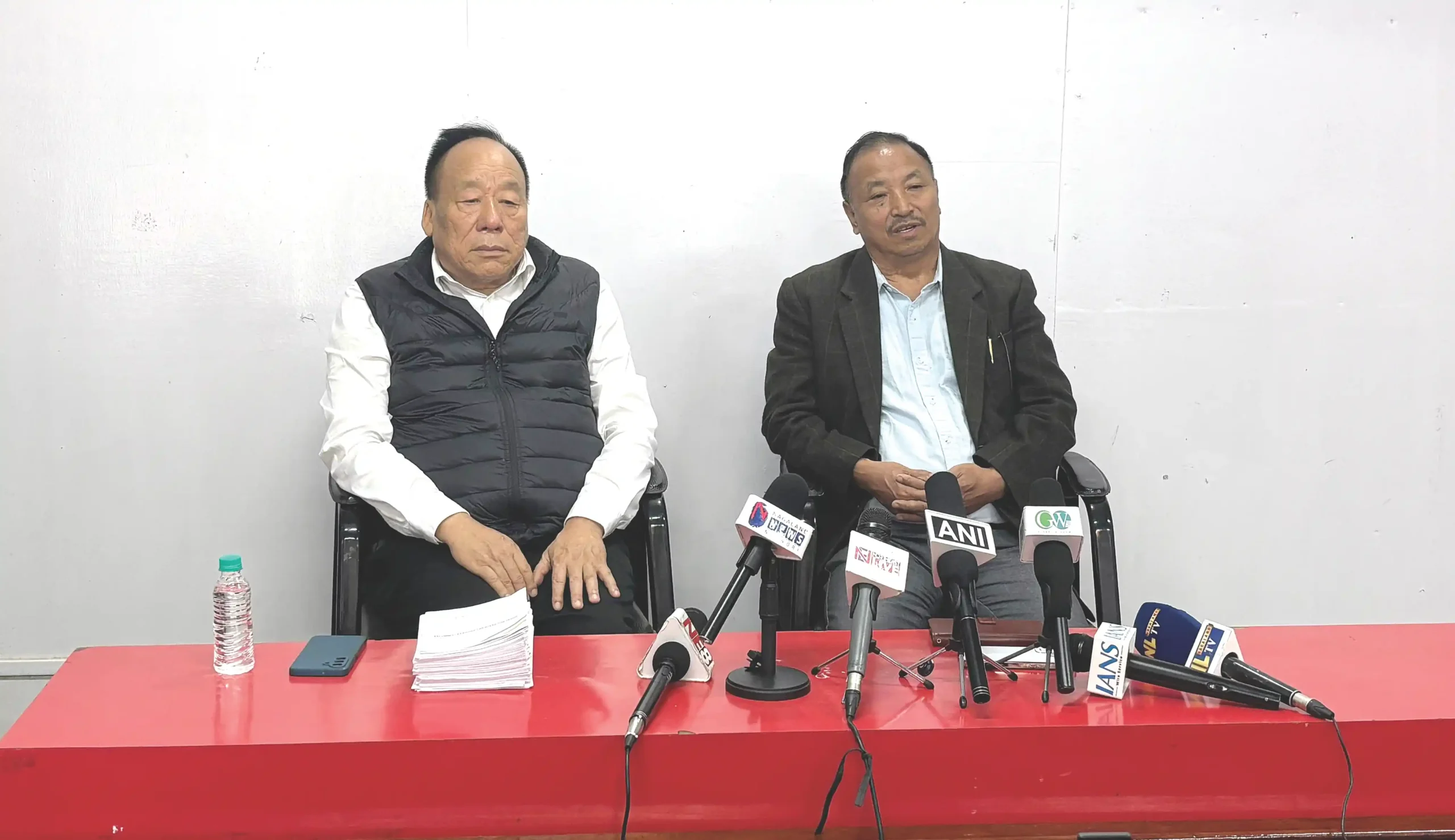
Addressing a press conference at Congress Bhavan here, NPCC president and Lok Sabha MP, S Supongmeren Jamir, said the party was reaching out directly to the people of Nagaland to better understand their aspirations, concerns and expectations after remaining out of power in the state for over two decades.
Noting that the Congress has had no representation in the Nagaland Legislative Assembly despite repeatedly contesting elections since 2003, Jamir said the exercise was intended to identify the reasons behind the party’s continued electoral setbacks and help bridge the gap between the party and the electorate.
He said unemployment remained one of the biggest challenges facing the state’s youth, while corruption continued to be a concern.
However, Jamir maintained that a clearer understanding of governance failures, public dissatisfaction and Congress’ own shortcomings could only emerge through direct engagement with voters.
Jamir said every political party seeks to serve the people through its own ideas and principles, but added that unless those align with the aspirations of the people, a communication gap would persist. NPCC president said that the Congress party was prepared to accept criticism and learn from public feedback.
On asking how the questionnaire would help the party, Jamir said Nagaland had undergone significant changes over the past two decades, particularly with the emergence of a younger generation with different aspirations and expectations.
He expressed hope that their contributions would help the Congress reassess its approach and serve the people according to the wishes of voters and the youth.
NPCC working president Khriedi Theünuo said the party had prepared a questionnaire booklet under the theme “People’s Voice”, which has already been distributed to all 12 district Congress committees (DCCs).
According to Theünuo, the exercise aims to gather public opinion from all sections of society, including church leaders, social activists, village authorities and community members, to help shape future party policies and programmes.
The questionnaire seeks views on a broad range of issues, including unemployment, governance, public satisfaction with the present government, priorities for the next administration, liquor prohibition, political change, local development concerns and perceptions of the Congress party.
It also asks respondents whether they believe Congress could provide a better alternative government and what steps the party should take to regain public trust.
Other questions focus on factors influencing voting behaviour, campaign strategies, constituency-level concerns and expectations from Congress if voted to power.
Theünuo said respondents could choose to remain anonymous and informed that the exercise would continue until the end of June, after which the responses would be compiled and analysed to form the basis of the party’s roadmap for the 2028 Assembly elections.
Jamir said the feedback would also be used to assess the party’s organisational strengths and weaknesses, including issues relating to political will, finances and policy formulation. He added that future candidate selection would be guided by grassroots opinion rather than top-down decisions.
NPCC has printed 1,000 questionnaire booklets in the first phase and has also launched an online Google Form to widen participation. Additional copies will be printed if required, party leaders said.
Meanwhile, commenting on the recent killing of six Nagas in Manipur, Jamir condemned the incident as a violation of human rights and humanity.
He said all those responsible, irrespective of affiliation, must be held accountable and urged both the Manipur government and the Centre to take stronger measures to restore peace and stability.
Jamir also cautioned that continued unrest in Manipur could have wider implications for the entire Northeast and called on the Nagaland government to remain vigilant.