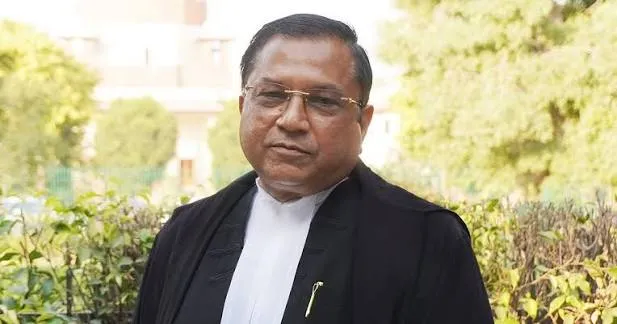
NEW DELHI, JUL 1 (PTI): All India Bar Association (AIBA) president Adish C Aggarwala has written to Chief Justice of India Surya Kant, urging him not to entertain a joint memorandum submitted by 23 opposition parties and Rajya Sabha Independent MP over the Election Commission’s Special Intensive Revision (SIR) of electoral rolls.
Congress general secretary Jairam Ramesh in a post on X on Tuesday said the opposition parties were firmly anchored in “SURE’ Solidarity, Unity and Resistance”. The memorandum, signed by 23 political parties including the TMC, AAP, DMK and others, and Independent MP Kapil Sibal, was sent to CJI Kant on Tuesday on the SIR process, the role of the Election Commission and other election-related issues.
Aggarwala, a senior advocate who is also a former president of the Supreme Court Bar Association, said that attempts to involve the office of the CJI in what he described as a political controversy relating to the electoral rolls revision were “constitutionally inappropriate and institutionally improper”. He said the constitutional remedy for any grievance against the poll panel was to approach the competent court through appropriate legal proceedings.
“The Hon’ble Chief Justice of India is not the administrative head of the Election Commission of India. If any political party or individual is genuinely aggrieved by any action of the Election Commission, the appropriate remedy is to approach the competent court on the judicial side,” the letter said.
Aggarwala argued that a memorandum addressed to the CJI could not substitute for judicial proceedings, asserting that courts adjudicate disputes on the basis of pleadings, evidence and legal arguments rather than political representations. He further questioned why the opposition parties had chosen to submit a memorandum instead of filing a writ petition, saying the move raised doubts about the legal strength of their allegations.
The senior advocate also said constitutional offices should not be used as forums for political messaging and cautioned that involving the office of the CJI in such matters could blur the distinction between constitutional adjudication and political pressure.
He requested that the joint memorandum not be considered as the basis for any administrative or judicial action, saying doing so could set an “unfortunate precedent” by encouraging political actors to bypass established legal remedies.
He also urged that attempts to draw the CJI into political controversies should be discouraged in order to preserve the dignity, neutrality and sanctity of the office.