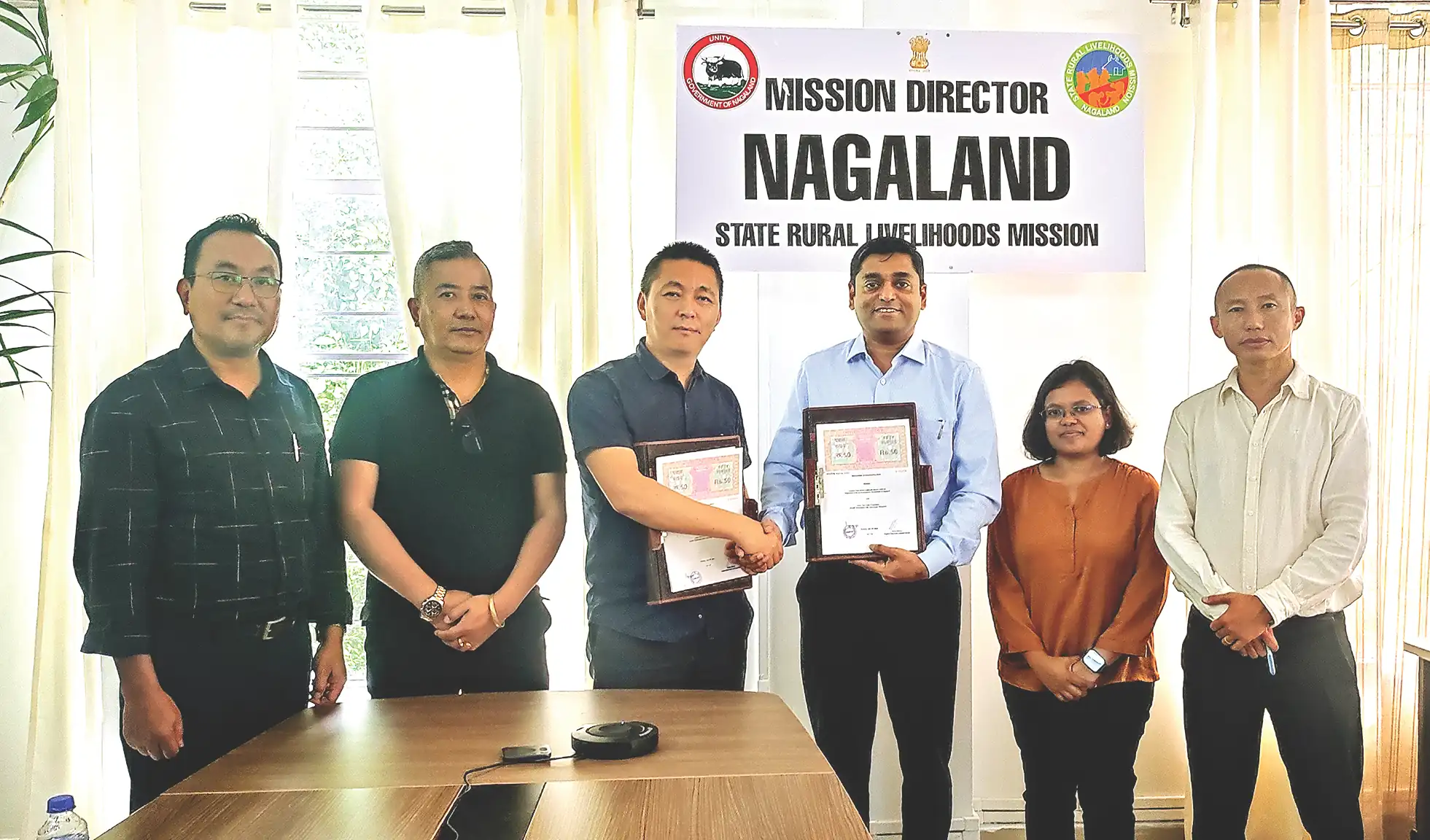
DIMAPUR: In a major step towards advancing regenerative, women led livelihoods, the Industree Foundation, a non profit working at the intersection of equity, climate and gender, signed a Memorandum of Understanding (MoU) with the Nagaland State Rural Livelihoods Mission (NSRLM) in Kohima.
The collaboration will integrate 30,000 smallholder women farmers into the bamboo value chain and establish collective enterprises using bamboo. This initiative, part of the Bamboo Sub Sector Initiative under DAY NRLM, Ministry of Rural Development, aims to empower one million rural women over the next 4–5 years through bamboo cultivation and improved market linkages.
The MoU was signed by Moa Sangtam, Joint Secretary RD & Mission Director NSRLM, in the presence of Theose Thongtsar, Additional Mission Director NSRLM; M. Rollan Lotha, COO NSRLM; Dr. Sokishumo Kithan, SPM Farm NSRLM; Neju George Abraham, CEO Industree Foundation; and Remya Devan, Senior Manager Project Operations, Industree Foundation.
Commenting on the partnership, Neju George Abraham said bamboo is deeply rooted in Nagaland’s culture and holds strong commercial potential.
He noted that the collaboration would enable certified plantations, carbon credit accreditation, processing units, new product development and market linkages, positioning Nagaland’s bamboo resources for national and global opportunities.
Industree Foundation has been enabling women farmers to cultivate bamboo on fallow and unutilised land, providing steady incomes from the fourth year of harvest with yields continuing for over forty years.
The organisation has previously signed MoUs with SRLMs in Andhra Pradesh, Arunachal Pradesh, Jharkhand, Odisha, Telangana and Tripura, and secured India’s first FSC® Forest Management certification for 6,671 women bamboo farmers in Karnataka and Maharashtra.
Established in 2000, Industree Foundation has worked for over two decades to create organised farm and off farm enterprise ecosystems for women’s economic empowerment in India and Ethiopia.
Its ecosystem approach tackles poverty by enabling rural women to set up collectively owned enterprises linked to markets, leading to increased incomes, social security, resilience and climate action.