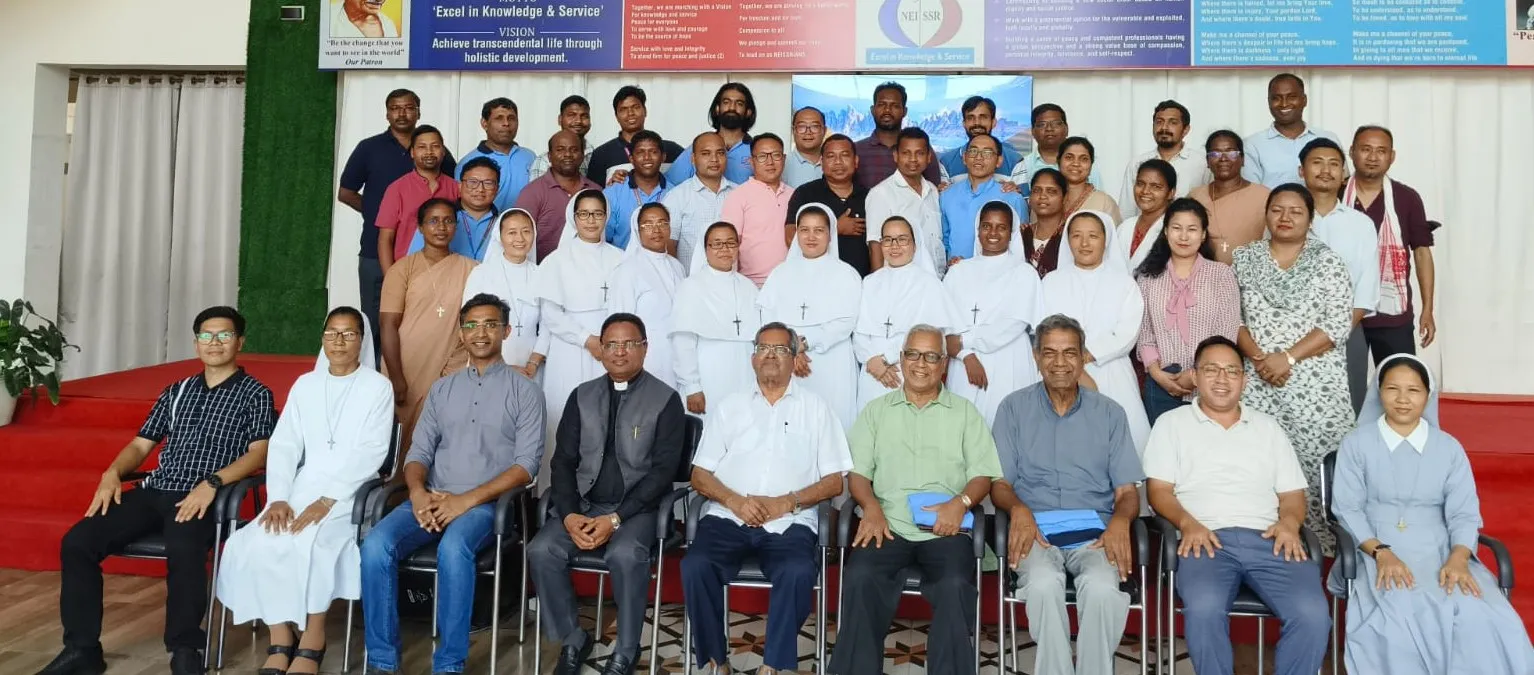
DIMAPUR: Lead Academy, in collaboration with the North East Institute of Social Sciences and Research (NEISSR) and Peace Channel, organised a national level training programme on “Religious Leaders as Peace Builders and Facilitators of Dialogue” on July 18, 2026. The programme brought together 45 priests and religious leaders from across India to strengthen their capacity in promoting peace, dialogue and reconciliation.
In his inaugural address, Fr. V. M. Thomas commended the work of Peace Channel and NEISSR in advancing peace education and conflict transformation. He stressed that priests and religious are called not only to preach the Gospel but also to act as peace builders and facilitators of dialogue, particularly in conflict affected regions such as North East India. He noted that many family, community and institutional conflicts could be prevented or resolved through meaningful dialogue, compassionate listening and reconciliation.
The sessions were facilitated by Fr. Dr. C. P. Anto, director of Peace Channel and principal of NEISSR. He explained that peace is not merely the absence of conflict but the presence of justice, mutual respect, trust, inclusion and harmonious relationships. He highlighted dialogue as a powerful tool for preventing violence, transforming conflicts, restoring broken relationships and building cohesive communities.
The programme covered principles and skills of dialogue including active listening, empathy, non violent communication, trust building, conflict analysis, negotiation, mediation and collaborative problem solving. Through interactive lectures, group discussions, role plays and simulations, participants experienced dialogue as a transformative process fostering understanding and reconciliation.
Fr. Anto emphasized that religious leaders have a unique responsibility to act as bridge builders in today’s polarized world by promoting respect for diversity, healing divisions and nurturing a culture of peace within families, parishes, institutions and society.
Participants appreciated the practical and participatory nature of the training and pledged to apply the knowledge and skills in their pastoral ministries and communities. The programme concluded with a renewed commitment to become ambassadors of peace, dialogue and reconciliation, contributing to more peaceful and inclusive communities across India.