
Rio calls for tech-driven, people-centric policing
Staff Reporter
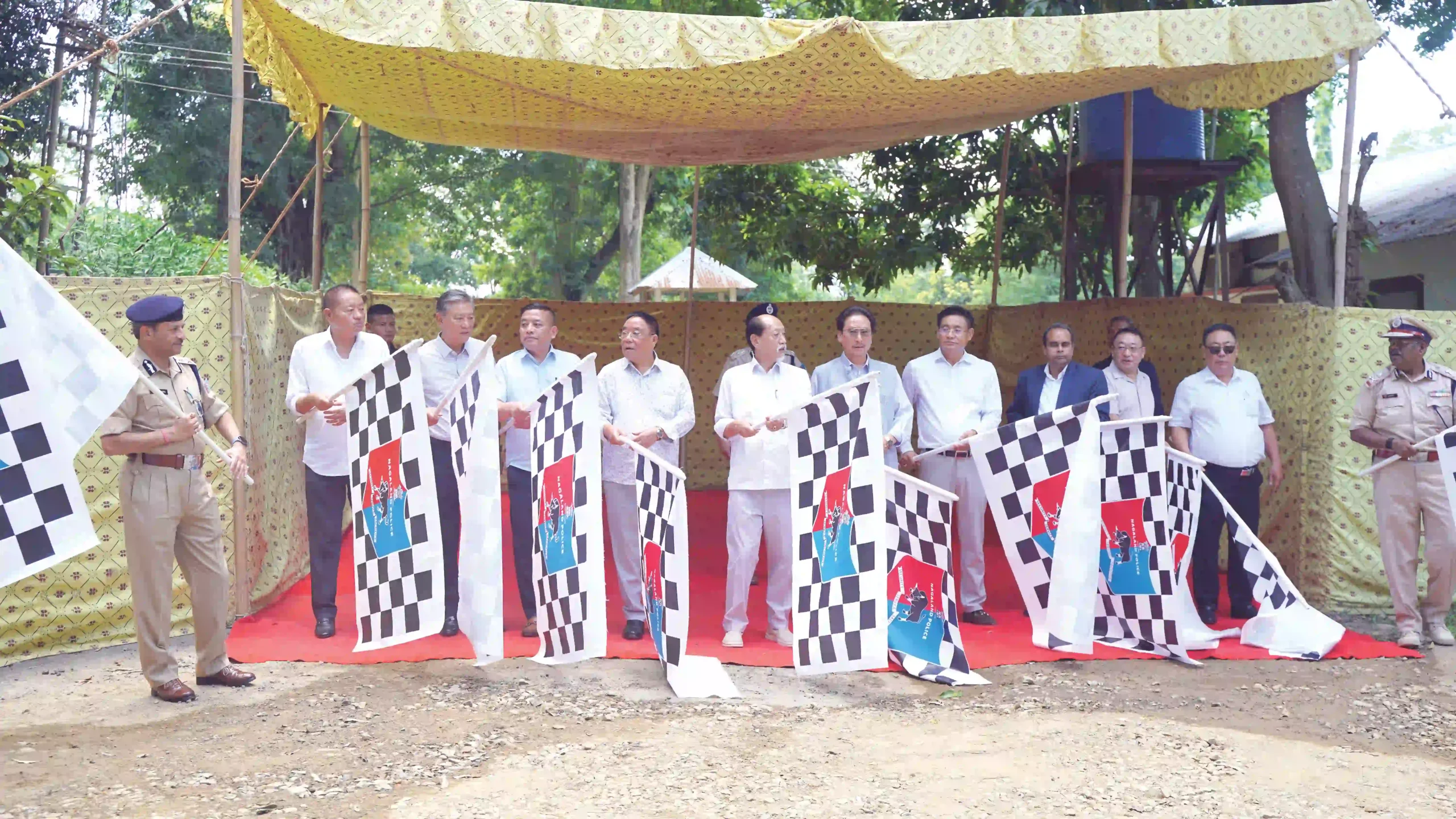
DIMAPUR, JUL 27 (NPN): In a major boost to policing and law enforcement, chief minister Neiphiu Rio on Monday flagged off 549 new police vehicles and 12 Mobile Forensic Vans under the Assistance to States and Union Territories for Modernisation of Police (ASUMP) Scheme, describing the initiative as a significant step towards building a modern, responsive and people-centric police force.
The programme, held at the Police Complex, Chümoukedima, marked a major outcome of Nagaland’s enhanced police modernisation programme for 2025-26.
Addressing the gathering, Rio said the new fleet reflected the government’s commitment to strengthening the operational capability of the Nagaland Police to meet evolving security challenges. He said the state government, with support from the Ministry of Home Affairs (MHA), had secured nearly Rs. 150 crore under the Police Modernisation Scheme– an unprecedented increase from the Rs. 4-6 crore received annually in previous years. The package includes funding for mobility, Automatic Number Plate Recognition (ANPR) systems, CCTV surveillance infrastructure, Smart Police Suite and other technology-driven policing initiatives.
Of the allocation, 549 vehicles worth about Rs. 81.65 crore were flagged off on Monday. The fleet comprises 152 light motor vehicles, 325 medium vehicles, 68 heavy vehicles and four motorcycles, besides 12 Mobile Forensic Vans for district-level scientific investigations.
Rio said mobility was an operational necessity in a hill state like Nagaland, where difficult terrain, scattered habitations and monsoon conditions often hamper policing. He noted that nearly half of the existing police fleet had become old, unserviceable or exceeded the permissible life under the Government of India’s vehicle scrapping policy. The new vehicles, he said, would replace nearly 35-40 per cent of the ageing fleet and substantially improve operational readiness.
He directed that the vehicles be deployed strictly on operational requirements rather than rank or seniority, with priority given to district police, police stations and units in remote areas. He also stressed proper maintenance and timely servicing.
Observing that policing today extends beyond conventional law and order duties, Rio said organised extortion, drug trafficking, cybercrime, financial fraud, human trafficking and crimes against women and children require specialised investigation and technological capabilities.
He said implementation of the Bharatiya Nyaya Sanhita (BNS), Bharatiya Nagarik Suraksha Sanhita (BNSS) and Bharatiya Sakshya Adhiniyam (BSA) demands greater speed, scientific investigation and better coordination. The 12 Mobile Forensic Vans have already been distributed to district executive forces, while additional forensic vans would be provided to all districts and the Crime Investigation Department (CID) in the coming years.
Rio also stressed strengthening human resources through open recruitment, specialised skills and continuous professional training in cyber forensics, digital evidence, financial intelligence and emerging technologies. He urged the police to strengthen community policing, respect citizens’ rights and dignity, and serve with fairness, impartiality and humility.
“As Nagaland pursues better connectivity, greater investments, tourism, entrepreneurship and economic growth, peace and security will remain the foundation upon which all progress depends,” he said.
Director General of Police Rupin Sharma described the induction of the vehicles and forensic vans as “the beginning of a larger transformation journey” for the force.
He disclosed that the Police Headquarters had secured nearly Rs. 155 crore under the Police Modernisation Scheme for 2025-26, compared to the Rs. 5-20 crore received annually over the past decade. He credited the achievement to the support of the state government, particularly chief minister Neiphiu Rio, and the Ministry of Home Affairs.
Sharma, however, said the MHA had not sanctioned funds for construction of police stations, outposts and residential accommodation, describing infrastructure as equally critical as vehicles and equipment. He also highlighted the need for specialised recruitment of legal officers, forensic experts, software developers, IT professionals and motor mechanics to make the Nagaland Police “future ready.”
Earlier, Additional Director General of Police (Law and Order) Sandeep M. Tamgadge, who chaired the programme, said the induction of the new fleet marked a significant milestone in strengthening the Nagaland Police. He said the Mobile Forensic Vans are equipped with portable tools for fingerprint collection, narcotics and explosives detection, cyber forensics, and collection of blood and other body fluid samples, thereby enhancing scientific investigation under the new criminal laws.
The programme was attended by ministers K.G. Kenye, G. Kaito Aye and P. Bashangmongba Chang, advisors Mhathung Yanthan and Moatoshi Longkumer, besides legislators and senior government officials.