
Staff Reporter
DIMAPUR, AUG 14 (NPN): NSCN (I-M) deputy ato kilonser V.S. Atem has thrown his weight behind the Nagaland government’s demand for a ministerial-level interlocutor to steer the ongoing Naga political talks, reiterating that the issue is fundamentally political and demands political leadership from the Government of India.
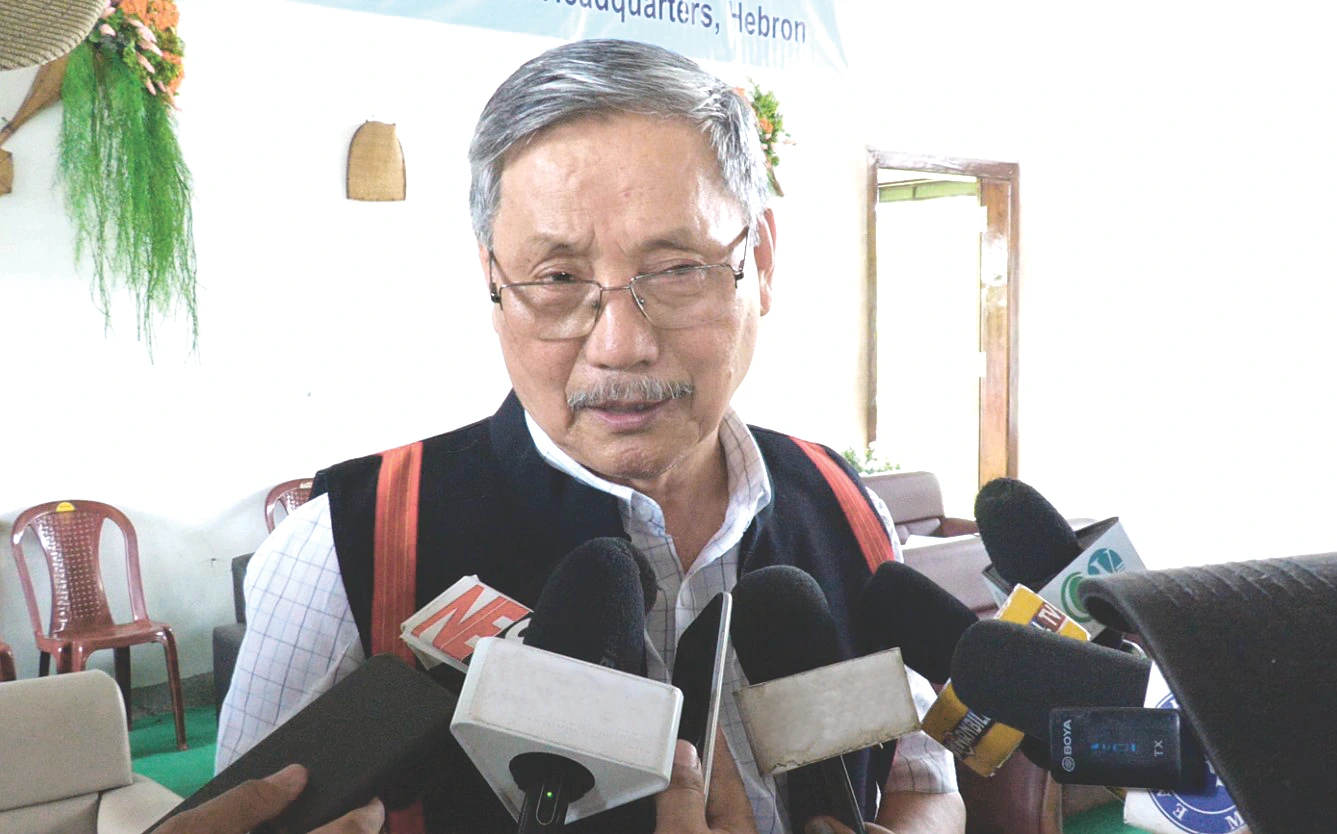
Speaking to reporters after the celebrations of the 80th Naga Independence Day at Camp Hebron, Atem confirmed that NSCN/GPRN endorsed the state government’s stand. “Yes, that is our demand. Nagaland state is only just facilitating. They are giving the boost. That’s all,” he said.
Atem said, since the political dialogue is between the Naga side and the Government of India, it should logically be headed by a political representative of the Centre. Asked about the earlier arrangement for talks to be conducted at the Prime Ministerial level, he explained that Government of India had cited Prime Minister’s inability to personally attend every round due to other commitments, leading the Naga side to accept a representative of the PM instead. “Appreciating his difficulty, we have agreed to accept a representative of the Prime Minister as interlocutor. And that has been done in the past,” he noted.
Nevertheless, Atem insisted that leadership from the Centre’s side must come from a political figure, reiterating, “We say it is a political issue and therefore a political person should take the leadership to represent the Government of India.”
He further alleged that the Centre had not fully honoured the principles agreed upon during negotiations, adding that the NSCN’s long-standing position remains that talks should shift abroad if the Government of India continues to show insincerity. Atem said that despite the Centre’s calls for an early settlement, it had yet to show adequate commitment to the agreed framework.
FA & AP: Responding to questions on whether the Framework Agreement (FA) and Agreed Position (AP) could eventually merge, especially given the Centre’s push for a “one solution” approach, Atem dismissed any possibility of convergence between the two. He argued that the Agreed Position holds no real substance, since it merely reiterates provisions already present in the Indian Constitution.
On the recurring demand to fully disclose the Framework Agreement’s competency clauses, Atem noted the agreement has been made public repeatedly, stressing it is just a single page, with detailed competencies still under discussion between negotiating sides. He added that such matters cannot be openly disclosed during ongoing engagement between parties.
Eastern Flank: When questioned on whether the separation of the Eastern Flank could be sending a wrong signal to the Government of India, Atem admitted it might, but placed the blame on what he termed the “adversary” working behind the situation.
Responding to a strongly worded statement issued by the Eastern Flank, he said issuing statements was easy, but he hoped the group would act in line with its words. On reports of attacks in Manipur on Naga Independence Day– allegedly killing two NSCN (I-M) cadres– along with violence in Arunachal Pradesh and claims of attacks on Nagas, Atem said his group had no control over adversarial actions. He questioned why such incidents occurred despite what he called the significance of the day, asking rhetorically what could be done when the opposing side remained beyond their control.
Oil exploration: On the proposed exploration of oil and natural gas, Atem referred to the Champang oilfields and questioned the present status of oil extraction there.
“Go to Champang and ask the villagers whether there is still oil spill from the field or now it is dried up. If it is dried up, how has it been dried up?” he said.
He also referred to the Borholla oilfield, which he said had been inaugurated by the Nagaland chief minister, but alleged that the state had failed to give adequate attention to its natural resources.