
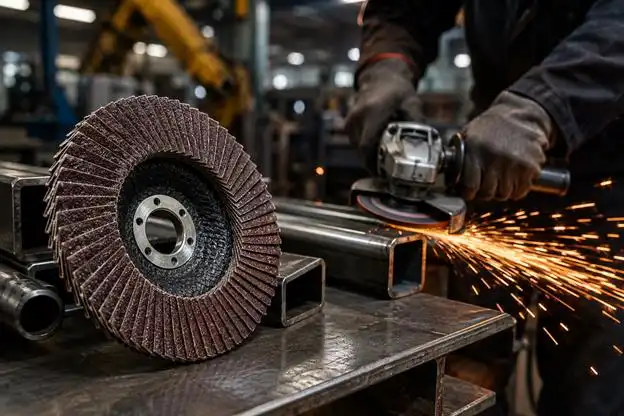
Metal fabrication does not end when welding is complete. Weld seams often need cleaning, edges require smoothing and surfaces may need preparation. These finishing tasks can take time when several abrasive tools are required.
This is where flap discs have become useful in fabrication workshops. Their design allows material removal, weld blending and surface finishing with the same abrasive tool. For regular fabrication work, this can simplify surface preparation and reduce unnecessary tool changes.
What Are Flap Discs?
A flap disc is an abrasive tool made from overlapping abrasive-coated flaps. These flaps are arranged around a backing plate and fitted to an angle grinder.
As the disc rotates, the abrasive flaps gradually wear down. Fresh abrasive material is exposed during use. This helps maintain contact with the work piece during the disc’s working life.
Flap discs are available in different abrasive grades. Coarser grades are generally used for heavier material removal. Finer grades are more suitable for blending and surface finishing.
Why Flap Discs Combine Grinding and Finishing
Fabrication often involves several finishing stages. A weld may first need excess material removed before the surrounding area is blended.
Traditional grinding discs can remove material effectively. However, they may leave a rougher surface that requires another abrasive for finishing.
Flap discs can handle both tasks when the appropriate abrasive grade is selected. This reduces the need to switch between different tools during routine work.
Fewer tool changes can make the workflow easier to manage. This can be particularly useful when workshops process several similar components in a production cycle.
Controlled Material Removal
Surface finishing requires control. Excessive grinding can remove more material than necessary or affect the work piece profile.
The layered construction of a flap disc offers some flexibility during grinding. This makes it useful for blending welds and working around edges.
The abrasive grade also affects the level of material removal. Coarse grades suit heavier weld removal while finer grades provide greater control during surface refinement.
Using the correct grade helps operators balance material removal with the required finish. It also reduces the risk of unnecessary grinding during finishing work.
How Flap Discs Support Workshop Productivity
Workshop productivity depends on more than welding speed. Small interruptions can accumulate throughout a production shift.
Switching between grinding, blending and finishing tools can add extra handling time. Flap discs can reduce some of these changes because one disc can perform several related tasks.
This can be useful for fabricators working on stainless steel railings, gates, furniture and kitchen equipment. These applications often involve weld removal followed by surface finishing.
The right abrasive can therefore help simplify repetitive finishing operations. However, productivity still depends on correct equipment settings, suitable abrasive selection and proper operator technique.
Better Surface Preparation and Finishing
Surface preparation can influence the appearance and subsequent treatment of a fabricated component. Surfaces may need painting, polishing or another finishing process after fabrication.
Flap discs can help blend weld areas and remove surface irregularities before these stages. The operator can select a suitable abrasive grade according to the required finish.
Excessive pressure should be avoided during use. High pressure can generate unnecessary heat and accelerate abrasive wear.
Using the recommended operating speed and allowing the abrasive to work can support more controlled results. Good technique is therefore as important as selecting the right disc.
Choosing the Right Flap Disc
The right flap disc depends on the material, material removal requirement and desired surface finish. Consider these factors before selection:
- Abrasive grit: Coarser grits support faster material removal. Finer grits offer better control for blending and finishing.
- Backing material: Different backing materials provide varying levels of rigidity and support. Selection should suit the application.
- Operating speed: The disc’s recommended operating speed should match the grinder being used.
Considering these factors can help achieve the required finish while supporting safe and effective grinding.
Why Consistent Consumable Supply Matters
Consistent consumable quality can affect workshop workflow. Uneven performance may result in inconsistent finishes or more frequent replacements.
For businesses handling regular stainless steel fabrication work, access to multiple consumables through one source can also simplify procurement.
For example, brands like Superon offer stainless steel fabrication consumables including welding electrodes, filler wires and related products. Its one-stop approach can help businesses manage recurring consumable requirements through fewer supply relationships.
Availability is another practical consideration. Easy access to required products across India can help reduce sourcing delays. Consistent pricing can also make recurring purchases easier to plan.
Conclusion
Flap discs have become a useful choice for fabrication workshops because they combine material removal with surface finishing. Their layered design supports weld blending, edge finishing and controlled grinding. They can also reduce abrasive changes during repetitive fabrication work. Selecting the right grit, backing material and operating speed remains essential. When matched to the application, flap discs can simplify surface preparation while supporting efficient and consistent workshop operations.