Water scarcity and climate change is driving communities to restore traditional water structures built centuries ago, bringing them back into use in the 21st Century.
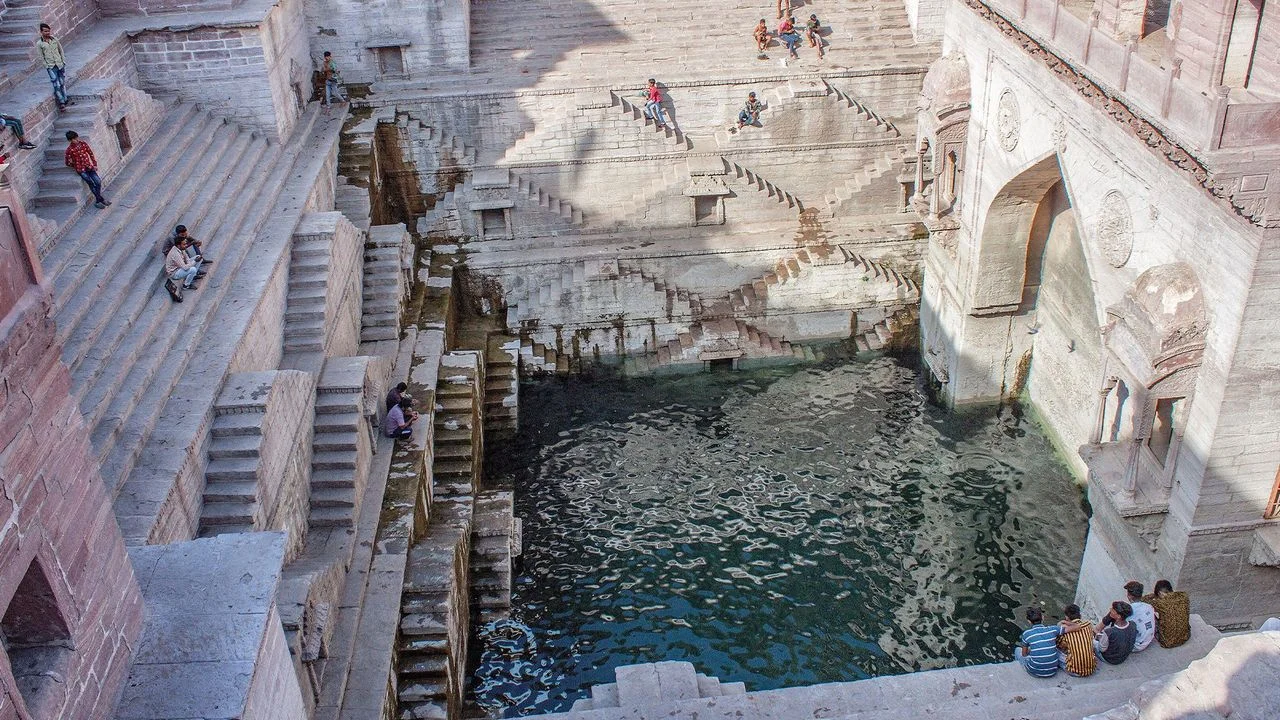
In 2025, water from the Moosi Rani Sagar, a stepwell in the city of Alwar in Rajasthan, India, spilled over the footpath for the first time in more than 30 years.
The stepwell, a large storage tank where water is accessed through flights of steps, is part of a historic water-harvesting system built in the early 1800s. Until 2021, water levels in the stepwell, which covers around 1.3 acres (0.5 hectares), were inconsistent and heavily contaminated. Today, though, it holds water at depths of up to 30ft (9m). Vijay Sarswat, a 60-year-old Alwar resident, says it rarely drops below 20ft (6m) even in the driest months of the year.
The restored stepwell is a testament to the idea that some of the most useful tools for managing water in a warming, increasingly erratic climate are millennia old and half-buried in silt.
Across India, hundreds of communities are reaching the same conclusion. Once viewed as cultural relics, long abandoned ways of managing water are now being recognised as climate-resilient systems that functioned for over 1,000 years – and are ready to be brought back into working use.
In recent years, India is increasingly looking to revive ancient water structures as a way to help address the country’s looming water crisis. In Moosi Rani Sagar’s case, it was a consortium of non-profits that set out to restore the system in 2021, hoping to combat severe water scarcity and rescue the 200-year-old heritage landmark.
It’s just one example of what new investment can do when it engages with traditional infrastructure, rather than replacing it. India’s revived systems have many names: baori, johad, kund, tanka, nadi – all traditional structures which supplied most of rural India for centuries, with many falling out of use only in the last 200 years. They all work differently but share one purpose: to slow water down, allowing it to percolate into the soil.
Baoris, or ancient stepwells – large scale tiers of carved stone with steps that descend down into the water table, allowing access to groundwater – are the most striking. Thousands of disused subterranean stepwells, built from the 7th to the mid-19th Centuries, famously dot India’s landscape. From New Delhi to Jodphur, dozens have been restored in recent years. India is home to 18% of the world’s population but just 4% of its freshwater resources, much of it contaminated. The country pumps more groundwater – water stored in aquifers, replenished by the slow downward seep of rainfall – than any other nation, with groundwater supplying most of its rural drinking water and irrigation, supporting some 1.4 billion people. In some areas, though, far more water is extracted each year than is replenished by rainfall.
Climate change compounds the problem, with warmer air drying soils faster and making rainfall more intense – meaning more of what falls runs off before anything can soak in.
While modern open reservoirs like canals and dams can also help somewhat to restore groundwater, they are far less effective at doing so, and can lose water to the Sun at a surprisingly high rate. Open traditional structures like stepwells do not escape evaporation completely, but by helping to move water beyond reach of the Sun into aquifers they allow it to stay both cool and reachable by any well or handpump nearby. (BBC)