
To hold national seminar on BEFR, 1873
Staff Reporter
DIMAPUR, AUG 22 (NPN): Naga Students’ Federation (NSF) has called for a centralised and dedicated mechanism to enforce the Inner Line Permit (ILP) system in Nagaland, asserting that fragmented implementation has created loopholes and undermined the purpose of the Bengal Eastern Frontier Regulation (BEFR), 1873.
The demand comes ahead of a national seminar on BEFR, 1873, organised by NSF on August 28 and 29 at Town Hall, Dimapur. The seminar will bring together legal experts, academics and representatives from states where ILP is in force to discuss its relevance, implementation and future in Nagaland.
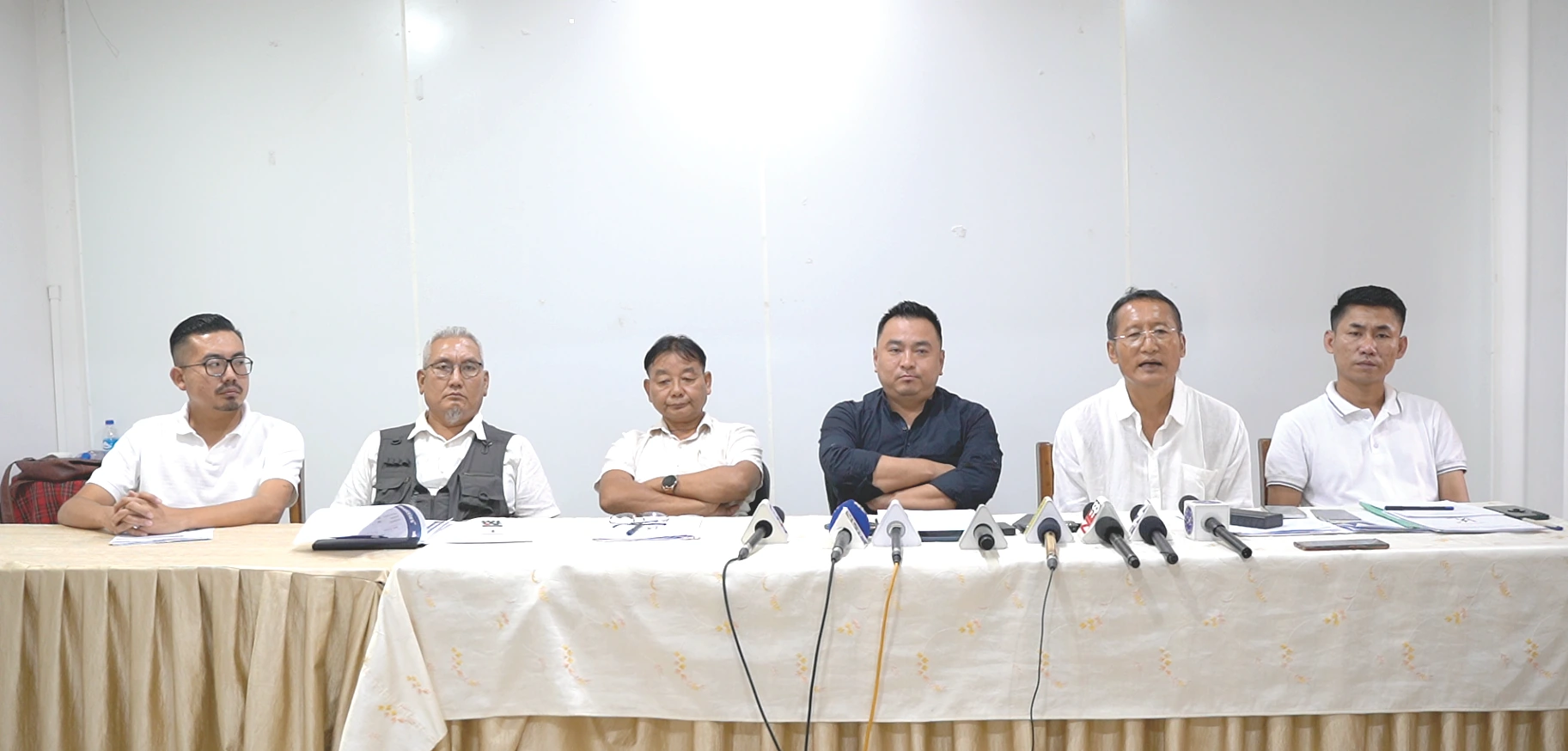
Addressing a press conference at Hotel Saramati, NSF president Mteisuding Heraang said the seminar aimed to educate the public on the importance of ILP and create greater awareness of BEFR provisions. He said NSF had constituted an independent Inner Line Regulation Commission (ILRC) during its Fourth Federal Assembly at Molungyimsen on December 4, 2024, headed by former NSF president NSN Lotha. The commission was formally appointed on March 7, 2025, and has since examined issues surrounding ILP implementation. Representations submitted to the government were yet to receive a response, he said.
Heraang also said Supreme Court senior advocates Prashant Bhushan and Shomona Khanna, among others, would participate in the seminar. NSF has reserved 20 seats for members of the public.
ILRC chairman NSN Lotha said the seminar was not intended to target any particular establishment but to facilitate a comprehensive discussion on ILP. He said NSF had advocated enforcement of BEFR since the 1970s and that the seminar would bring the issue into wider public discourse.
Comparing Nagaland with Mizoram, Lotha said the neighbouring state had “fully capitalized” on BEFR provisions, with stricter ILP enforcement helping protect indigenous economic interests. He cited the ILP counter established at Sairang railway station after its inauguration in September 2025 as an example.
Lotha said weak enforcement in Nagaland had contributed to increasing occupation of economic space by non-locals. However, he clarified that NSF was not opposed to genuine Indian citizens coming to Nagaland.
“We are not against any genuine citizens of India coming to Nagaland. They are welcome freely. The only concern that we would like to convey to them is that they must abide by the existing provisions and laws of the state,” he said.
Terming ILP an “economic lifejacket” for the Naga people, Lotha called for effective utilisation of its provisions to safeguard future generations.
He proposed a separate implementing authority dedicated to ILP enforcement, saying temporary or stopgap arrangements had resulted in confusion and inconsistent enforcement.
“The issue of enforcement has become a cancer,” Lotha said, stressing the need for a holistic rather than piecemeal approach.
He, however, cautioned that stricter enforcement should not lead to discrimination or exploitation of genuine non-Naga residents with legitimate reasons to live and work in the State.
Lotha said the seminar would examine ILP from constitutional, legal, administrative and economic perspectives. Professors from Mizoram, Manipur and Arunachal Pradesh have been invited to discuss enforcement in their respective states, while a representative from Assam would present the mainland perspective and examine ILP’s relevance in a globalised world.
Legal experts would also examine whether any conflict exists between fundamental rights and BEFR provisions. Lotha said speakers had been given the freedom to critically examine the ILP system, even if their views differed from NSF’s position.
He said the seminar would also examine the absence of a permanent administrative mechanism for ILP checking in Nagaland. Unlike Mizoram, he said, Nagaland lacks a clearly designated department or agency authorised through a permanent administrative order to conduct ILP checks, leaving enforcement dependent on temporary orders or the discretion of police and administrative officials.
Lotha clarified that NSF and its federating units were not authorised to conduct ILP checks but were acting as pressure groups to highlight the need for effective enforcement.
“The seminar would seek to bring together previous recommendations, identify loopholes, and formulate a workable roadmap for the government,” he said.
He expressed hope that the deliberations and subsequent documentation would provide greater clarity on the future of ILP enforcement and place the issue before the political class and wider public.