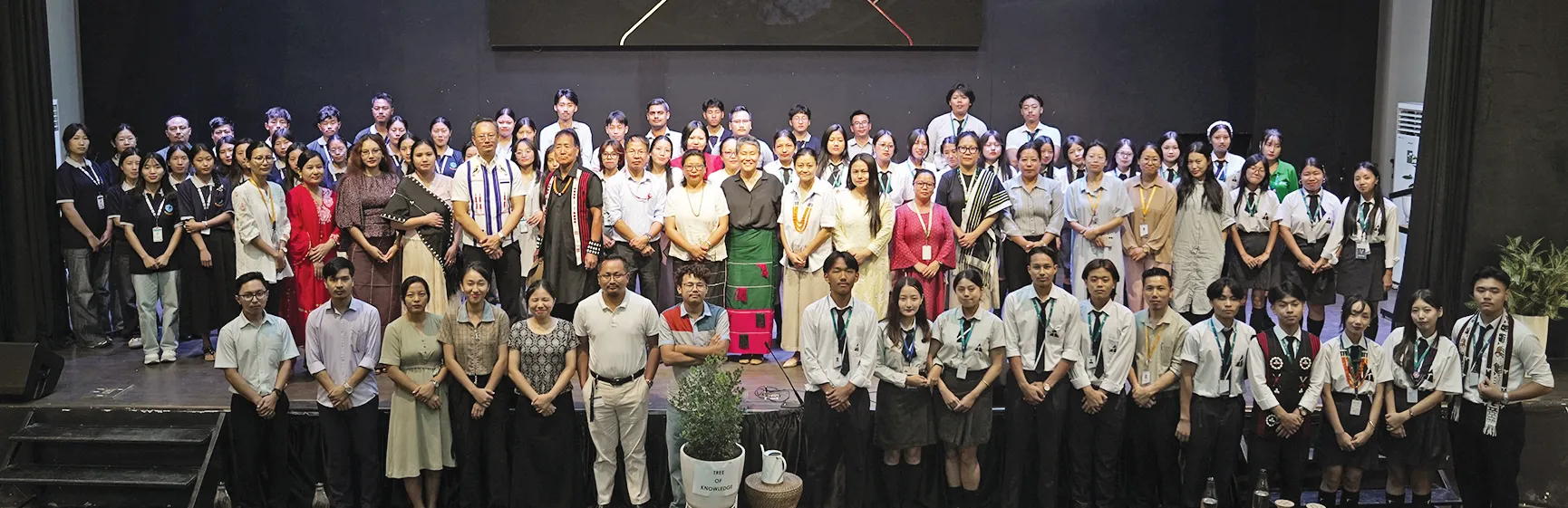
DIMAPUR: A two day international workshop on “Ecologies of Care: Food & Well being in Naga Society” concluded at Tetso College, Chümoukedima, on August 25, bringing together scholars, academics, farmers, food practitioners and students to reflect on Naga food systems, indigenous knowledge, seed preservation, ancestral foodways, farming, faith and community well being.
Organised collaboratively by Tetso College, Unity College, Asufii Christian Institute (ACI), Mao, and the University of California, Santa Cruz, the workshop examined the relationship between food, culture, ecology, agriculture and well being, while emphasising the need to preserve traditional crops, seeds, practices and cultural values.
The programme opened on August 24 with the watering of the “Tree of Knowledge” and traditional blessings. Welcoming participants, Dr. Hewasa L. Khing, principal of Tetso College, stressed progress through collectivity and conservation through action.
Assistant Professor, Department of Political Science, ACI, Kaini Lokho, spoke on the origins of the collaboration, noting that Naga ancestors had long been concerned with their well being, which contributed to the foundation of the workshop. Dr. Lichumo Enie, principal of Unity College, highlighted the richness of Naga culture, heritage and food, stressing the need to protect and preserve them.
Prof. Dolly Kikon delivered the vision of the workshop, reflecting on ancestral ties to land and food systems. Delivering the keynote, Indigenous Food Sovereignty activist Seno Tsuhah highlighted the inseparable link between seeds and food systems, cautioning against dependence on market based food and urging intergenerational knowledge exchange.
Seed libraries were launched at Tetso College, Unity College, and ACI Mao under the initiative “Save a Seed Today: Save the Future.” Conceived under the guidance of Prof. Kikon, the initiative aims to promote seed preservation and foster a greener future among students. Dr. Prithibi Prathibha Gogoi, HoD Sociology, Tetso College, explained that seed saving is a cultural tradition and stressed its importance for future food security.
Day Two featured technical sessions on ancestral foodways and the Naga plate. Dr. Daili Neli, principal of ACI (Autonomous), spoke on the nutritional importance of millet, while Dr. Mary N. Odyuo of Nagaland University and Dr. Vinitoli Zhimo expressed concern over the decline of traditional seeds and oral knowledge systems. A panel discussion with Chef Aketoli H. Zhimomi, Dr. James Kalong, and farmer Thejiano Makritsu explored the relationship between food, farming and faith, highlighting the need to preserve traditional seeds and promote Naga cuisine.
The workshop concluded with the signing of the Naga Well being Pedagogy Vision, led by Prof. Dolly Kikon, affirming commitment to seed libraries, ecological knowledge and community well being.
A vote of thanks was delivered by Rose Kikon, HoD Sociology, Unity College.