
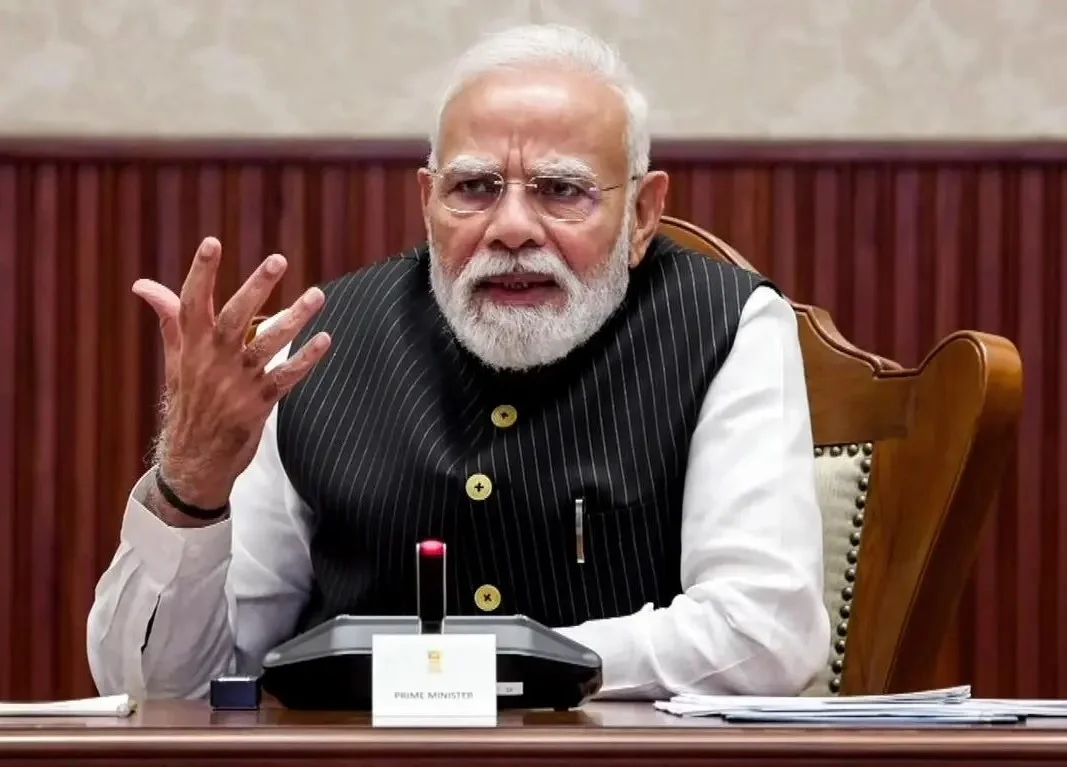
NEW DELHI, AUG 25 (PTI): On completion of a decade of the Unified Payments Interface, Prime Minister Narendra Modi on Tuesday hailed it as a major turning point in India’s digital payment journey and said its sheer scale is something every Indian must be proud of.
The UPI was launched on August 25, 2016 by the National Payments Corporation of India (NPCI) under the regulatory oversight of the Reserve Bank of India (RBI). The UPI has emerged as the backbone of India’s digital payments ecosystem and a critical driver of financial inclusion.
“A decade ago, UPI was rolled out, marking a major turning point in India’s digital payments journey. The sheer scale and reach of UPI are something every Indian must be proud of,” Modi said in a post on X.
The prime minister also asked people to share with him their UPI experience and how it impacted the life.
Over a decade of operations, the UPI has demonstrated extraordinary scale and momentum in the country. Annual transaction volume expanded from just 1.78 crore in 2016-17 to over 24,162 crore transactions in 2025-26, representing an almost 13,000 fold surge in transaction volume.
Parallelly, transaction value rose sharply from Rs 0.07 lakh crore in 2016-17 to approximately Rs 314 lakh crore in 2025-26, translating into a more than 4,000 fold increase in transaction value.
The UPI has emerged as one of the most successful pillars of India’s Digital Public Infrastructure (DPI), providing an interoperable, real-time payments platform that enables seamless peer-to-peer and peer-to-merchant transactions through a single application, an official release said on Monday.
PM Modi reviews Rs 30,000-crore projects, incidents of digital arrest
Prime Minister Narendra Modi on Tuesday reviewed six key infrastructure projects worth over Rs 30,000 crore spanning nine states and said that delays of such works have consequences beyond cost escalation, as they also postpone the benefits intended for citizens, businesses and the economy.
Chairing the 53rd meeting of PRAGATI, the ICT-enabled multi-modal platform for Pro-Active Governance and Timely Implementation here, the prime minister also took stock of cyber fraud cases, including incidents of digital arrest, and said that prevention must be strengthened through a sustained focus on training, awareness and education.
He stressed the need for continuous and targeted public-awareness campaigns, particularly for senior citizens, youth and other vulnerable sections, to familiarise them with common fraud techniques, warning signs and safe digital practices, an official statement said.
Modi also called for regular capacity-building of personnel involved so that emerging modes of cyber fraud are identified and acted upon swiftly.
During the meeting, he reviewed six key infrastructure projects across the railway, road and power sectors, with a cumulative cost of more than Rs 30,000 crore.
The projects, significant for strengthening connectivity, supporting industrial and economic activity and improving public services, were reviewed with particular emphasis on adherence to timelines, inter-agency coordination, resolution of pending issues and expeditious completion.
The prime minister emphasised that delays in infrastructure projects have consequences beyond cost escalation, as they also postpone the benefits intended for citizens, businesses and the economy, the statement said.
He said that infrastructure projects should be viewed and monitored as an integrated whole, rather than as isolated sections, stretches or packages.
Modi noted that progress in individual packages should ultimately translate into timely completion and operationalisation of the entire project.
Ministries and states were therefore asked to adopt an end-to-end approach, and address critical gaps that could delay the overall commissioning and delivery of benefits.
The prime minister called for fostering a proactive work culture across ministries and state governments, with greater ownership at every level of project implementation.
He stressed the need to explore common utility corridors for infrastructure services, wherever feasible, particularly while planning major transport and infrastructure projects.
He called upon ministries and states to examine such integrated approaches at the planning stage itself, keeping in view their technical and economic feasibility.
Modi said that speed of execution must be accompanied by uncompromising quality.
He called upon ministries, states and implementing agencies to adopt modern technologies and strengthen quality assurance and supervision at every stage.
While reviewing AgriStack under the Digital Agriculture Mission, the prime minister emphasised the need to leverage the latest digital technologies, including artificial intelligence, to derive greater value from agricultural data.
He stressed that the data ecosystem should be effectively utilised across the agricultural value chain, from input planning to processing, enabling more informed interventions, better targeting and data-driven decision-making.
He appreciated the efforts of the states and the Central government in building the AgriStack ecosystem and called for further strengthening its use for delivering better outcomes for farmers, the statement said.