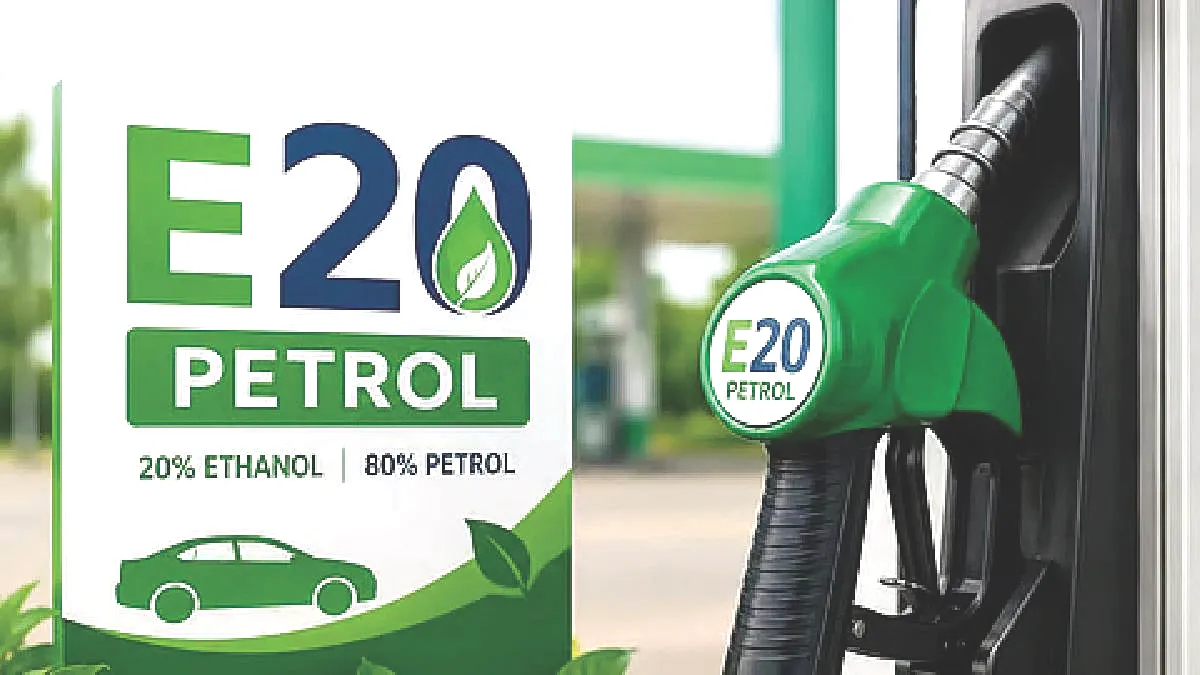
NEW DELHI, SEP 9 (PTI): The government is working to permit ethanol blending beyond the existing E20 level through flexi-fuel vehicles, Advisor to the Prime Minister Tarun Kapoor said on Wednesday.
Addressing virtually the fourth edition of The India Sugar & Bio-Energy Conference 2026, Kapoor said the E20 programme had been “very successful” and several automobile companies had announced plans to roll out flexi-fuel vehicles soon.
“E20 has been very successful. Now our focus is on going into flexi-fuel vehicles and allowing blending at a percentage which will be higher than E20 and it will have to be through flexi-fuel vehicles,” he said. E20 is petrol blended with 20 per cent ethanol.
Kapoor said biofuels and other alternative energy sources were important for India, with government policies focused on promoting biofuels on a large scale. He said the industry had been supportive and the country had built substantial production capacity.
The push has gained importance amid the West Asia crisis, which has disrupted supplies and pushed crude oil prices towards USD 100 a barrel, with fears of further increases. “It is important that we try to have whatever is available in the country,” Kapoor said.
Ethanol production capacity has surpassed current blending requirements, he said, making it necessary to explore additional uses to utilise surplus capacity. Kapoor said criticism of E20 was largely driven by misinformation or “motivated reasons”, asserting that studies and experiments had shown the blend worked well. While fuel efficiency may decline slightly in some cases, he said this was compensated by ethanol’s higher octane.
Several automobile companies are expected to introduce flexi-fuel vehicles soon, Kapoor said, adding that supplies of pure ethanol and related additives at petrol stations must expand alongside their availability. This, he said, would provide greater traction for biofuels in the transport sector.
On diesel, Kapoor said the government was examining biofuel-based additives, including isobutanol, which could open a “large” new avenue for biofuels if successful, given diesel’s significant share of refinery output.
Products derived from ethanol or related feedstocks, including sugarcane residues, byproducts and surplus foodgrains, are already seeing good market uptake. Kapoor said the government wanted to expand the market to resolve the industry’s overcapacity issue at the earliest.
He also highlighted the GOBARdhan scheme, which combines incentives from various ministries to promote compressed biogas (CBG), though progress has been limited. Kapoor urged ethanol manufacturers to take up CBG production and maximise value from biofuel products and byproducts, including potash.
He said maximising value addition would help meet India’s fuel needs while strengthening the sector. Kapoor assured the industry that the government remained fully committed to promoting biofuels and expanding the market so that investments and production capacity created by the industry did not face challenges or uncertainty.
Kapoor said the transition to higher ethanol blending would require coordination among fuel suppliers, automobile manufacturers and petrol pump operators. The availability of compatible vehicles and fuel infrastructure would be essential for consumers to adopt higher blends. He also stressed the need to develop markets for ethanol-based products beyond transport, so producers could utilise capacity efficiently and improve the economics of the sector.
He said India should make use of agricultural resources and waste streams to reduce dependence on imported fossil fuels. Greater use of residues and byproducts could create revenue opportunities for farmers and biofuel producers while supporting the country’s energy security.