
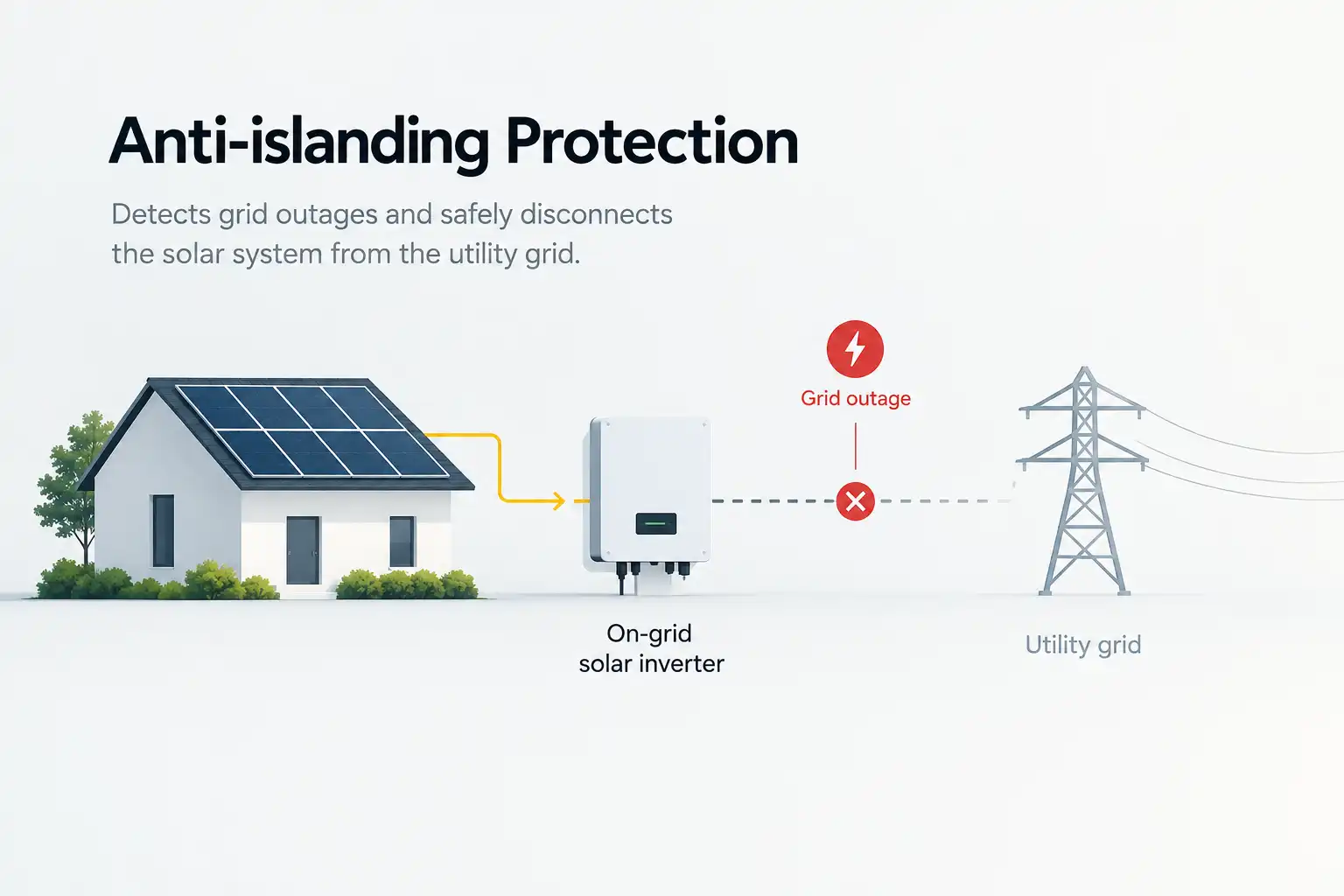
An on-grid solar system allows homes and businesses to generate electricity while remaining connected to the utility grid. In this system, the solar inverter plays an important role in converting the electricity generated by solar panels into usable power and managing the connection between the solar system and the grid.
One important safety feature in this setup is anti-islanding protection. Let’s look at how this feature works, why it is an essential part of an on-grid solar inverter, and how it supports safer solar operation.
What is Islanding in a Solar System?
Islanding occurs when a solar system continues supplying electricity to a local area even after the main electricity grid connection has been interrupted.
In a normal grid-connected solar setup, the solar system works together with the utility grid. If the grid stops supplying electricity due to maintenance, faults, or outages, the solar system should also stop feeding power into the grid.
However, if a solar inverter continues operating during a grid outage, it can create an unintended “island” where electricity is still being supplied without the utility grid being active.
This condition is known as islanding.
What is Anti-islanding Protection?
Anti-islanding protection is a safety mechanism that detects when the utility grid becomes unavailable and automatically disconnects the solar system from the grid.
The primary purpose of this feature is to prevent an on-grid solar inverter from continuing to export electricity during a grid outage.
When the inverter detects abnormal grid conditions, such as changes in voltage or frequency, it stops supplying power to the grid connection until normal conditions are restored.
Why is Anti-islanding Important?
Anti-islanding protection is important because grid interruptions require controlled electrical conditions for safety and maintenance activities.
Key reasons include:
- Protecting Maintenance Personnel
During a grid outage, utility workers may work on electrical lines assuming that the supply has been disconnected. Anti-islanding protection helps prevent solar systems from unintentionally energising these lines.
- Maintaining Grid Stability
Multiple solar systems connected to the same network can affect grid behaviour if they continue supplying power during an outage. Anti-islanding helps maintain predictable grid operation.
- Supporting Safe Solar Operation
A properly functioning on-grid solar inverter uses protection mechanisms to ensure that electricity is supplied according to grid requirements.
How Does Anti-islanding Work in an On-grid Solar Inverter?
An on-grid solar inverter continuously monitors the electricity grid connection during operation. It checks parameters such as:
- Voltage levels
- Frequency changes
- Phase conditions
- Grid availability
If the inverter detects that the grid supply has been interrupted or conditions move outside permitted limits, it immediately disconnects from the grid.
Once the grid returns to normal operating conditions, the inverter can reconnect according to predefined safety requirements. This automated process allows the solar system to operate efficiently while maintaining safety standards.
Do All On-grid Solar Inverters Have Anti-islanding Protection?
Anti-islanding protection is a standard safety requirement for grid-connected solar systems. However, the exact protection methods and features may differ depending on the inverter manufacturer, model, and applicable regulations.
When selecting an on-grid solar inverter, buyers should check:
- Compliance with applicable safety standards
- Grid protection features
- Certification requirements
- Monitoring capabilities
- Manufacturer specifications
Choosing a reliable inverter helps ensure that the solar system operates safely and effectively with the electricity grid.
Anti-Islanding vs Backup Power: What is the Difference?
Anti-islanding and backup power serve different purposes.
| Feature | Purpose |
| Anti-islanding protection | Disconnects the solar system from the grid during outages |
| Battery backup | Stores electricity for use when grid power is unavailable |
| Hybrid inverter | Can manage solar generation, batteries and backup loads |
An on-grid solar inverter prioritises safe grid interaction, while systems designed for backup require additional components to continue supplying selected loads during outages.
What Should You Check Before Installing an On-grid Solar System?
Before choosing an on-grid solar inverter, homeowners should consider:
- Solar system capacity requirements
- Inverter efficiency
- Grid compatibility
- Safety protection features
- Warranty coverage
- Monitoring options
- Installation standards
A properly designed system ensures that solar generation, inverter operation, and grid interaction work together effectively.
Understand Anti-Islanding Before Choosing Your Solar Inverter
Anti-islanding protection is an important safety feature that allows an on-grid solar inverter to work responsibly with the electricity grid. It ensures that the solar system disconnects during grid failures and reconnects only when safe operating conditions are restored.
Understanding this feature helps homeowners evaluate inverter specifications beyond basic power conversion. A reliable inverter should combine efficient energy management with essential safety mechanisms.
Solar solution providers like Eastman Auto & Power Limited offer solar solutions designed for residential and commercial energy requirements. Contact Eastman to explore suitable solar inverter options and understand how safety features like anti-islanding protection support reliable solar performance.