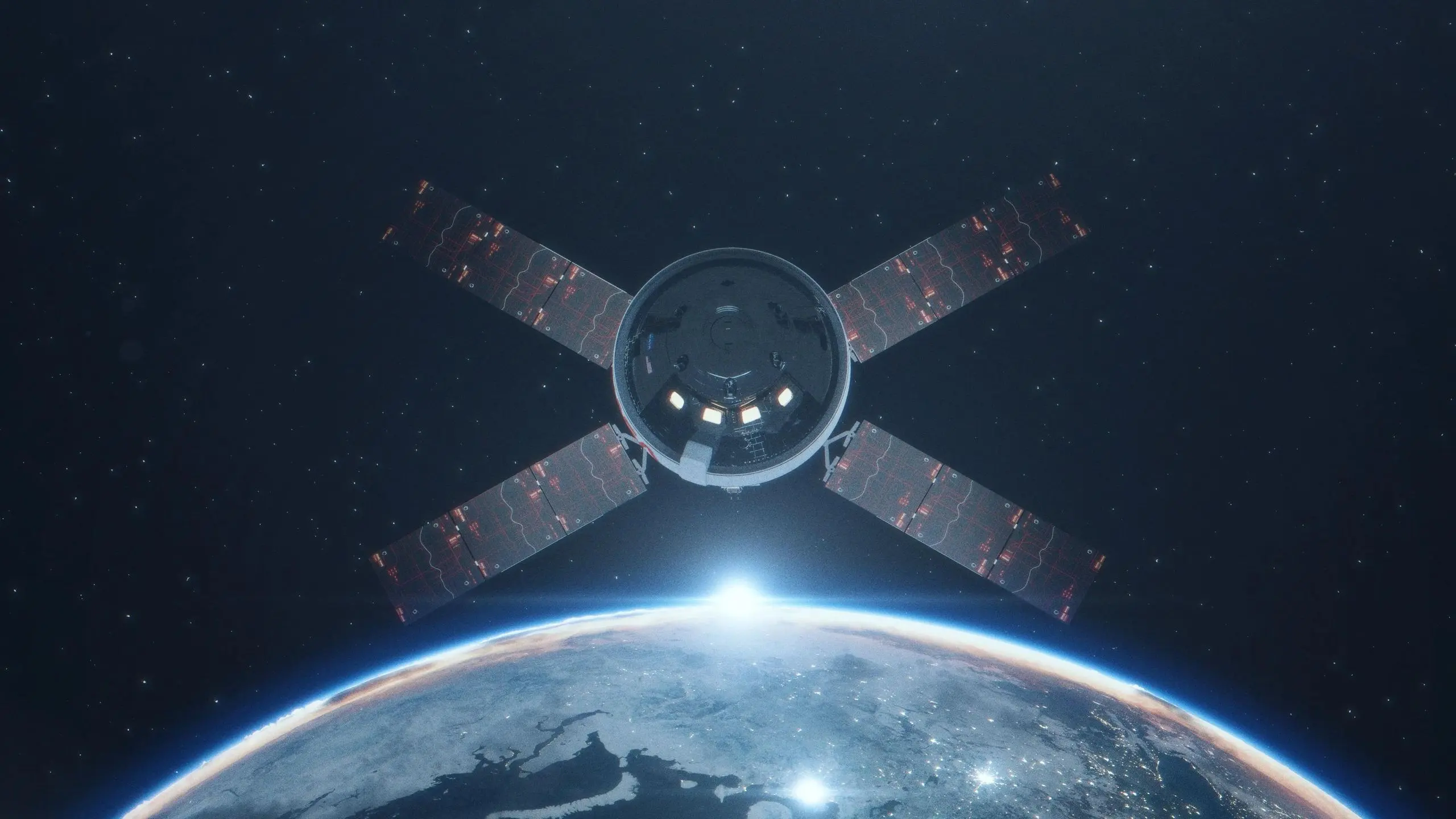
Artemis III, U.S. spaceflight that will launch in 2027 and test lunar landers in Earth orbit in preparation for astronauts to land on the Moon on Artemis IV. Artemis III will be the second crewed mission in the Artemis program after Artemis II flew around the Moon in April 2026.
Originally Artemis III was to be the mission that returned astronauts to the Moon for the first time since Apollo 17 in December 1972. However, in February 2026 NASA announced that the mission would test the docking of the Orion spacecraft with the lunar landers planned to be built by the American companies SpaceX and Blue Origin.
Changing the mission plan allows the landers to be tested safely in Earth orbit, rather than have their first flights be landings on the Moon. (By having a mission to test lunar landers in Earth orbit after a mission that flew around the Moon, NASA was following the Apollo program, which had Apollo 9 test the Lunar Module in Earth orbit after Apollo 8 flew around the Moon.)
The Artemis III mission will have three spacecraft: Orion, the Blue Origin lander, and SpaceX’s Starship lander. The Blue Origin lander will launch first. Orion will launch second and then spend two days docked with the Blue Origin lander. Orion will then leave the Blue Origin lander and wait for the launch of Starship. Orion and Starship will be docked for about a day, and then Orion will return to Earth. The mission is expected to last two weeks.
The Orion spacecraft has two parts: a cone-shaped crew module that carries the astronauts and a cylindrical service module that has Orion’s main engine and carries water and air as well as four solar arrays to power the spacecraft.
The service module, built by the European Space Agency (ESA), is based on the Automated Transfer Vehicle, an uncrewed spacecraft that supplied the International Space Station (ISS). Both the Blue Origin and Starship landers are still being developed.
Orion will be launched on the Space Launch System (SLS), one of the largest and most powerful rockets ever built, from a pad at the Kennedy Space Center in Florida in 2027. The central stage of the SLS is powered by four liquid hydrogen–liquid oxygen engines.
Flanking the central stage are two solid rocket boosters, which will fall away two minutes after launch. The central stage will later carry Orion to Earth orbit. It weighs 2.6 million kg (5.74 million pounds) when fully fueled and has a maximum thrust of 39 million newtons (8.8 million pounds).
The Blue Origin lander will be launched on that company’s rocket New Glenn. However, in May 2026 a New Glenn rocket exploded during a test and severely damaged Blue Origin’s launchpad, casting doubt on whether Blue Origin would be ready for Artemis III.
The Starship lander will be a variant of SpaceX’s Starship spacecraft that is specifically designed for lunar landing in that it lacks components that would allow it to return to Earth. On lunar landing missions, it is designed such that Orion will dock with it, astronauts will take Starship to the Moon’s surface, and then return to Orion for the journey back to Earth.
The crew of Artemis III will consist of four astronauts Randy Bresnik Luca Parmitano Frank Rubio Andre Douglas. (Britannica)