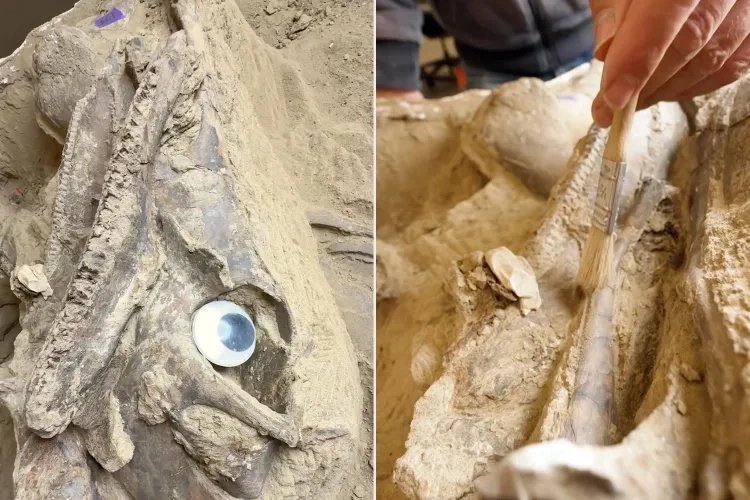
A museum in Seattle is giving dinosaur enthusiasts a behind-the-scenes look at what goes into cleaning and preserving fossils.
In a recent TikTok post, the Burke Museum shared a video from its fossil lab showing staff carefully detailing the skull of a hadrosaur, a plant-eating, duck-billed dinosaur. In the picture, one worker can be seen gently brushing the fossilized bones with a paintbrush. They even added googly eyes to the skull, marking where the dinosaur’s eyes are believed to have been.
Later in the video, the museum showed a drawing of what the dinosaur is thought to have looked like, along with the bones researchers have recovered.
“Meet our new sub-adult dinosaur from Montana,” the text beneath the drawing reads. “Nicknamed ‘cold harted’ this edmontosaurus annectens would have been around 20 feet long nose to tail.”
In a follow-up video, the museum shared more details about where the dinosaur was found and what researchers have learned from the plant remains buried alongside it.
“This may look like a fossil fish tail, but it’s actually a 65-million-year-old palm frond! The hadrosaur we’re working on was buried in a sandy stream bed after it died and is mixed together with a lot of plant remains that were also buried there,” they captioned the post.
“It’s rare to see plant remains so well preserved in a setting like this because the sand is often too course to preserve fine details, so this is a lucky find!” they added.
Those plant remains have also helped researchers piece together what the environment may have looked like when the hadrosaur was alive. nd the museum isn’t just giving viewers a glimpse at the fossils themselves. In another social media post, Kelsie Abrams, who has worked at the Burke as the fossil prep lab manager for the past eight years, shared more about the delicate — and sometimes unpredictable — process of preparing them. Abrams has also led dinosaur digs for 16 years and prepared hundreds of fossils.
“Have you ever broken a fossil?” she said in the video. “This is the question I get all the time from different field trips, and the answer is yes.”
“Fossils are very, very delicate,” she added. “I might look at it funny or or touch it funny and the weight distributes and it causes a break. Sometimes we have to break things on purpose. So if we have a dinosaur that is preserved and all of the bones are jumbled together and we have to get the bones apart so that we can put the skeleton back together.” Even when a fossil breaks, Abrams explained, there are ways to repair and document the damage. (People)